Hello and welcome to another YouTube live. My name is Patrik Hutzel from intensivecarehotline.com and intensivecareathome.com. Today, we are covering the topic of tracheostomy tomorrow, what critical questions do you need to ask in those situations. And then, obviously, as a long-term solution is also the home ventilation care with 24-hour intensive care nurses with Intensive Care at Home.
So, just let me know where you’re watching from and let me know your questions. Of course, type your questions into the chat pad. If we have time at the end of this presentation, we’ll be having time to answer questions, of course, but you can type your questions into the chat pad below the video even if you’re watching this on replay, because I know we’re getting quite a few views on replay as well.
So, welcome. I’m so glad to have you here. Whether you’re watching from ICU, from a hospital bedside, from home, or you’re a healthcare professional looking for answers, you are exactly in the right place.
My name is Patrik Hutzel from intensivecarehotline.com and intensivecareathome.com. I’m the founder and managing director of both intensivecarehotline.com and intensivecareathome.com. I’m a critical care nurse by background, having worked in critical care nursing for over 25 years in three different countries, where I worked as a nurse manager for over five years in intensive care. I’ve been consulting and advocating for families in intensive care since 2013 with intensivecarehotline.com. I can very confidently say that we have saved so many lives for our clients in intensive care. You can verify that on our testimonial section at intensivecarehotline.com and you can verify it on our intensivecarehotline.com podcast section, where we’ve done client interviews.
I’m also the founder and managing director of Intensive Care at Home. With intensivecareathome.com, we’ve been also operating since 2012 in Australia, successfully operating in Australia, where we’re sending our critical care nurses into the home, 24 hours a day, to basically provide a genuine, permanent and predictable alternative to a long-term stay in intensive care where our clients stay at home predictably and permanently. So, that’s a little bit about me.
Today, we’ll dive into what do you need to do if the ICU team tells you, “Do you want to do a tracheostomy tomorrow?” So, that means we’re tackling one of the most stressful conversations families can face in ICU. The doctors want to do a tracheostomy tomorrow. What questions should you ask first?
In the second half, we’re going to talk about something most doctors or ICUs won’t tell you, which is that patients with tracheostomies, even those on ventilators, can go home with 24/7 intensive care-trained nurses and live a significantly better quality of life at home than actually staying in ICU or staying in hospitals.
But before we dive in, let me ask you, type 1 in the chat if you or a loved one is facing a tracheostomy decision now. Type number 2 in the chat pad if your loved one already has a tracheostomy and you’re exploring options. Type number 3 if you’re a healthcare professional here to learn. Or type number 4 if you’re a healthcare executive wanting to learn about options to free up your ICU beds or other hospital beds. You’re all going to get massive value today.
Now, quick housekeeping, this is a live show. Ask your questions in the chat anytime. Hit the like button, the subscribe button, and turn on your notifications, and share this live stream with anyone who needs this information. We’re going to drop some valuable resources today, and have a pen ready. But also, this, obviously, recording will go on my YouTube channel, on our website at intensivecareathome.com.
So, again, who am I and why should you listen? Again, my name is Patrik Hutzel, and I run two critical care services, intensivecarehotline.com and intensivecareathome.com. With intensivecarehotline.com, we help families navigate complex ICU decisions, get treatment limitations such as DNR (do not resuscitate) or withdrawal of treatment decisions removed, and bring your loved ones home and keep them alive.
With Intensive Care at Home and intensivecareathome.com, we provide 24/7 ICU-level nursing care at home for ventilated patients, including adults and children with tracheostomies, but also home ventilation with (BIPAP) Bilevel Positive Airway Pressure, CPAP (Continuous Positive Airway Pressure) without tracheostomy, tracheostomy care without ventilation, ventilation weaning at home, cough assist management at home, Home TPN (Total Parenteral Nutrition), home IV potassium, home IV magnesium, home IV antibiotic infusions, central line, PICC (Peripherally Inserted Central Catheter) line, Hickman’s line, port management at home, PEG (Percutaneous Endoscopic Gastrostomy) tube, nasogastric tube, nasojejunostomy tube management at home, as well as SPC (suprapubic catheter)/IDC (indwelling catheter) management at home, as well as palliative care management at home.
Also, we’ve helped hundreds of families avoid unnecessary tracheostomy decisions, and we’ve brought dozens of ventilated patients home to live full, meaningful lives with community access.
So, today, we’re going the first 30 minutes, roughly, critical questions to ask before agreeing to a tracheostomy. And the next, the last 30 minutes, evidence-based home ventilation care with Intensive Care at Home and why home is better than hospital for tracheostomy or ventilated patients. Let’s get started.
So, understanding tracheostomy decisions. Why are doctors recommending a tracheostomy or potentially even denying it? But let’s look at the recommending a tracheostomy. Let’s get clear on why this conversation is happening. Doctors typically recommend a tracheostomy when prolonged ventilation, usually after 10 to 14 days on a breathing tube, weaning difficulties, trouble getting off the ventilator, airway protection issues, secretions, aspiration risk, long-term ventilation anticipated, which means neurological injury, chronic respiratory failure. Here’s what most families don’t understand. A tracheostomy is often presented as inevitable or urgent, but in many cases, it’s a choice. Once it’s done, it can be, but doesn’t have to be, very difficult to reverse.
The two key questions you must answer first:
- Question 1: Is the tracheostomy being done for the right reasons? Is it truly medically necessary? Or is it just convenient for the hospital or for the ICU?
Some hospitals push for tracheostomies because they need the ICU bed, and then, especially for our audience in the U.S., they want to send out basically ICU patients to a long-term acute care (LTAC) facility, and we strictly advise against that. I’m not going into too much detail now. Might have time to talk about it later, but we strictly advice against LTACs. This is, again, for our U.S. audience only. In other countries, such as the U.K. or Australia, if a tracheostomy is being done and patients can’t be weaned off the ventilator, again, Intensive Care at Home is the best option. We will talk about that. But even in the U.S., intensivecareathome.com is the best option.
- Question 2: When it comes to tracheostomy, what’s the real prognosis and life expectancy? Will your loved one have a meaningful recovery or a meaningful quality of life? What will quality of life look like? If prognosis is potentially poor, is aggressive treatment aligned with the patient’s or the family’s value?
When I talk about, “Will your loved one have a meaningful recovery?” What’s meaningful for you might be very different compared to what the ICU team thinks about what’s meaningful. I have heard a lot of ICU teams saying, “Oh, there won’t be any meaningful recovery.” Again, what is meaningful? Meaningful is what you think is meaningful, not what the ICU team thinks it’s meaningful. Meaningful might be to have your family member at home and have them pass away at home in peace. Whereas ICU teams might say, “No, let’s just stop everything here. Let’s take the one-size-fits-all approach and let people die here and then.” Well, that’s not up to them to decide.
When those conversations in ICU about tracheostomy often come up, you are often at a critical point. If your loved one is not improving and doctors are suggesting a tracheostomy, you need independent expert advice before you give consent. This is where our work and our expertise comes in at intensivecarehotline.com. We provide independent medical record reviews by ICU specialists, ICU advocates, second opinions when you’re being pressured, advocacy to get treatment limitations such as withdrawal of treatment or DNRs removed, strategic guidance to bring your loved one home with Intensive Care at Home. Also, we facilitate family meetings with you and the ICU team, where you bring us in as your advocate and consultant so that you have a voice in these meetings and you have a voice of someone that speaks the intensive care language. It’s the biggest challenge that many families in intensive care do not speak the intensive care secret language and can’t read between the lines.
So, let’s look at the next point here. Let’s look at the 10 critical questions to ask. When the doctors tell you they want to do a tracheostomy tomorrow, what should you ask?
Well, the first question you should ask is: Why are they only telling you now?
This should be a conversation that is had over many days. It shouldn’t just tell you today, “We need to do a tracheostomy tomorrow,” because it is such a big decision. But that’s the first question. “Why are you telling me today and why didn’t you tell me two days ago, three days ago? Why are you putting me on the spot now? It’s very unprofessional.” That’s the first question.
Second question is: What is the specific medical indication for the tracheostomy?
What you are listening for is vague answers like, “Oh, your family member has been on the ventilator for a while.” Such answers are not good enough. You want specifics. Your family member has or is at risk of ventilator-associated pneumonia, had failed extubation attempts, has neuromuscular weakness, needs advanced secretion management, which can only be done with a tracheostomy often. Watch for a red flag such as if they can’t give you a clear, specific reason, you need to push back.
Question 3: What are the alternatives to a tracheostomy?
Options that should be discussed are one-way extubation attempt with aggressive respiratory therapy, non-invasive ventilation, such as BIPAP or CPAP with a mask, if appropriate, trial of spontaneous breathing, palliative care if prognosis is poor. Key point: Tracheostomy should not be the default. It should be the last resort after other options are exhausted.
Question 4: What is the realistic timeline for weaning off the ventilator?
So why does this matter? If doctors say weeks or many weeks, that’s one scenario. If they say months or never, you’re looking at long-term or permanent ventilation. This completely changes your decision-making. Ask specifically, “Based on similar patients, how many successfully wean off? What percentage of patients like my loved one in this situation end up ventilator dependent?”
Question 5: What will life look like with a tracheostomy?
Demand answers about speech ability, speaking valves, communication, eating and drinking, aspiration risk, feeding tubes, mobility and activities, long-term care needs, where will they live, hospital, ICU, or at home with Intensive Care at Home. Most families are not told, with proper support, tracheostomy patients can live at home with Intensive Care at Home, go to the park, attend family events, and have meaningful quality of life.
Question 6: What are the risks and complications of a tracheostomy?
Short-term risks: Bleeding, infection, pneumothorax, damage to surrounding structures, accidental decannulation. Long-term complications are tracheal stenosis, narrowing of the airway, granulation tissue, swallowing difficulties, chronic infections, and of course, there’s also a psychological impact. Ask them, “What’s your complication rate for tracheostomies in this ICU?”
Question 7: Can we trial a speaking valve or see if my loved one can tolerate capping the tracheostomy?
Why does this matter? If they can tolerate capping the tracheostomy, which means they can breathe around it through the nose, they may not need it at all. Speaking valves improve quality of life dramatically. Early assessment of decannulation potential is critical. Push for speech pathology assessment before final decision. But I also need to mention here that a speaking valve can only really be done once weaning off the ventilator has been done and has been successful. So, we can only really talk about a speaking valve here with a tracheostomy once weaning off the ventilator has been done.
Just to illustrate that, when patients have a tracheostomy, need weaning off the ventilator, they might be able to wean off the ventilator, but then they still are stuck with the tracheostomy. So then, the next steps are to remove the tracheostomy.
Question 8: What is the plan for decannulation (removing the tracheostomy)?
Many hospitals have no plan for getting the tracheostomy removed. Ask, “Who will manage the decannulation process? What criteria needs to be made? What’s the timeline for a reassessment?” If they don’t have clear answers, that’s a red flag. But again, we can guide you through all of that, what is the best plan to move towards decannulation, i.e., removing the tracheostomy, as quickly as possible.
Question 9: If we proceed, can my loved one go home with a tracheostomy, whether they need a ventilator or don’t need a ventilator?
This is where many hospitals fail families. Standard hospital answer, “They need to go to a nursing home or a long-term facility or a ventilator unit, or they need to stay in ICU until they’re weaned off the ventilator.”
Well, here’s the truth. With proper support from a service like Intensive Care at Home, which is what we will be discussing in much detail later, patients with tracheostomies, even on ventilators, can go home with 24/7 intensive care nurses. We’ll talk more about this in the second half of today’s show. They can go home with ventilators to either wean off the ventilator, if that’s a possibility, or to have tracheostomy plus-minus ventilation long-term, or can wean off the tracheostomy if they’re already off the ventilator. We’ve got case studies around that on our website at intensivecareathome.com.
Question number 10: What would you do if this was your family member?
This question cuts through the medical jargon. Listen carefully to their tone, whether they hesitate, if they dodge the question altogether. Experienced ICU professionals such as experienced ICU doctors, ICU nurses will give you an honest and a human answer.
Then, I have a bonus question. Question number 11: Can we get a second opinion before proceeding?
Because you have every right to ask for a second opinion, another ICU specialist’s opinion, independent expert review, time to consider unless it’s a true emergency. If doctors pressure you or refuse, contact us at intensivecarehotline.com immediately. We specialize in rapid second opinions, chart reviews, family advocacy, talking to doctors and nurses in intensive care directly, and stopping inappropriate treatment de-escalations, or also inappropriate treatment escalations, if that’s what it is.
Also, two other bonus questions. As I go along here, my brain is working in overdrive, and obviously, I can talk from 25 years of intensive care nursing here. Two other very important questions: (1) What are they doing to move your family member towards extubation, have the breathing tube removed, without the shadow of a doubt?
Again, let me repeat that. Let them show you evidence that they’re trying to get your loved one off the ventilator and the breathing tube without the shadow of doubt. I’ve made videos about that, “How to wean a critically ill patient of the ventilator and the breathing tube?,” and you’ll find that video on our intensivecarehotline.com website, because that is really what it’s all about.
The other question you should be asking, (2) What are they doing, beyond the shadow of a doubt, to avoid the tracheostomy? Both questions and answers go hand in hand, and listen to what they say.
So, let’s look at the next segment and other red flags and when to push back. Let’s talk about when you should seriously question the tracheostomy recommendation.
Red flag 1: Pressure and urgency without clear explanation.
“We need to do this tomorrow,” without medical justification, is just a red flag. True emergency requiring urgent tracheostomies is, for example, massive facial trauma, airway obstruction that can’t be managed without a tracheostomy, severe upper airway burns. Those are situations where a tracheostomy needs to be done right now as a matter of urgency and in an emergency. Well, what are not emergencies? For example, if a patient has been on a ventilator for, let’s just say, 7 to 10 days, can’t be weaned off the ventilator, that’s when the discussions need to start.
Or another red flag and not an emergency is when you see the ICU is full and you think they need the bed, because that means they need to do a tracheostomy, especially if you’re in the U.S. watching this. If you’re in the US watching this, ICUs often do a tracheostomy and then want to send your love one to LTAC (Long-Term Acute Care). LTACs are horrible places. Do not let your loved one go to LTAC. But if they need a tracheostomy, then it comes down to the advocacy of keeping your family member in ICU.
Once again, we’ve helped countless families achieve exactly that, where your loved one might need the tracheostomy, where your family members simply might need a tracheostomy, but still you want to keep them in ICU and not let them go to LTAC. Again, that is if you are in the U.S. only. It’s different in different countries.
Again, in Australia, for example, you can go home with Intensive Care at Home pretty quickly. If you are faced with a tracheostomy and once your loved one is stable, you can go home pretty quickly. But even in the U.S., we can help you. Depending on your location, you reach out to us and we can help you in the U.S. as well. Reach out to us and have that discussion how we can help you in the U.S.
It’s also a red flag if ICU says: It’s now been two weeks on the ventilator and they want to do a tracheostomy and they haven’t warned you.
After 7 to 10 days of mechanical ventilation with a breathing tube and your family member can’t be weaned off the ventilator, they should be starting the discussion around tracheostomy. That would make sense. That would be timely. Then no one will say to you, “Oh, we got to do the tracheostomy tomorrow, by the way.” Or if they say things like, “Oh, this is our protocol.” Don’t get me wrong, hospitals have protocol, and everything happens according to policies and procedures, and that’s not necessarily a bad thing, but there could be some give-and-take situations.
Let’s just say the cutoff for someone, or generally speaking, the cutoff is two weeks on a ventilator without the ability to wean off the ventilator. That’s when a tracheostomy should be done. But if the ICU team is confident that another two days on the ventilator and your family member can come off the ventilator, then it would be foolish to do a tracheostomy. So, there’s a little bit of give-and-take, of course.
The other thing you need to be careful of, let’s just say an ICU is full and you can see they’re struggling for beds and that’s a concern for you. You could also take another example. Again, that only comes from after having worked in ICU for decades. Sometimes an ICU might have empty beds, and I can tell you they’re still full, and here is why.
Let’s just say it’s a 20-bed ICU, and you can see 5 beds are empty. So you think, “Oh, there’s space.” And you might be wrong simply because they don’t have the staff for 20 beds. So, just be mindful of that. Another scenario often is that the longer the ICU stay, the less money usually comes from the insurances or departments of health or wherever the money is coming from. So, the longer the stay, usually the less financially viable is a patient in ICU. So, keep that in mind.
Next, another red flag is if there’s a poor prognosis with aggressive treatment. If your loved one has multiple organ failure, no neurological improvement after many weeks, poor baseline function before ICU admission, terminal diagnosis with limited life expectancy, you have to ask yourself, of course, “Is a tracheostomy providing more quality of life or just prolonging dying?” This is a value-based question, not a medical question as such. You might answer this question with, “Look, I do want to still continue and proceed with a tracheostomy, take your loved one home for a few days.” Again, this is a value-based question. It’s not so much a medical-based question.
Next red flag is if there is no discussion about quality of life or goals of care, if doctors haven’t asked, “What would your loved one want? What does meaningful recovery look like to you or to your family member? What are you hoping to achieve?” then they’re making medical decisions without considering human factors.
Red flag 4: There is no discharge plan or, in the U.S., the discharge plan is to an LTAC, to a long-term acute care facility only, that would be a red flag. Or if they are not mentioning Intensive Care at Home as an option, those are red flags.
Tracheostomy has its time and its place. That’s what we’re here to discuss today. But if they have no long-term goal for you, no long-term solution, if they only have the goal for you, “Oh, yeah, we’ll either stop treatment and let your loved one die, that’s often too premature, or we do a tracheostomy, then keep your loved one here for however long, or we’ll send your loved one to a nursing facility or to an LTAC,” those are huge red flags.
There needs to be a clear plan, and that plan often shows towards Intensive Care at Home if your family member can’t be weaned off the ventilator. Because you have options. If ICUs tells you, “Oh, they need to stay in ICU long-term or need to go to a long-term facility,” these are not your only options. Forget about that. Many patients, if not all, can go home in those situations, but we’ll cover this extensively soon.
So, what can you do if you see those red flags that we just discussed? Well, first of all, request a family meeting with the entire intensive care team, have myself there as an advocate, ask the 10 critical questions we just covered, request 48 to 72 hours to consider, unless it’s a true emergency, that we also discussed, and get independent expert advice from intensivecarehotline.com, and go from there.
Now, phone consultations are available seven days a week with intensivecarehotline.com. We review medical records, provide second opinions, advocate for families in meetings, set you up with the right questions to ask, but we talk to doctors and nurses directly, and you will see the dynamics change in your favor very quickly.
Before we go to the second half of this presentation where we talk about Intensive Care at Home options, just as a reminder, you need to get access to all medical records, doctor’s reports, nurse’s reports, ventilation charts, vital sign charts, medication charts, all pathology and lab results, arterial blood gases, fluid balance charts, everything. Leave no stone unturned. This is so critical so that you can stop flying blind.
So, now that we’ve covered the critical questions for the tracheostomy decision in ICU, now let’s talk about what happens after the tracheostomy and the life-changing option that many hospitals, if not most, won’t tell you about going home with full intensive care-level support with Intensive Care at Home.
Also, again, I also want to welcome our viewers on replay that watch this video on replay. We always have a lot of people watching this on replay. If you’re getting value from this, like the video, subscribe to my YouTube channel for regular updates for families with intensive care and Intensive Care at Home, click the notification bell, and share this video with someone who needs to hear it. Let’s get to 500 shares today.
Now, let’s look at the next presentation where here’s what many ICUs and hospitals don’t tell you about life with a tracheostomy. The hospital narrative is, your loved one will need 24-hour care in a hospital. They’ll have to stay in a hospital or in a facility. They can’t go home. And they can’t also go home to a nursing home because nursing homes are not equipped to look after tracheostomies or ventilation. Or in the U.S., they say they need to go to a long-term acute care facility, in LTAC, which we strongly advise against. I have seen so many catastrophic outcomes for patients once they go from ICU to an LTAC, and we don’t see those catastrophic outcomes if patients stay in ICU until they’re ready to go home with Intensive Care at Home.
So, let’s look at the reality. With proper support, patients with tracheostomies, even those on full-time ventilators, can live at home, go to the park, beach, shops, restaurants, attend family gatherings, weddings, graduations, have pets, hobbies, meaningful lives, meaningful relationships, live with dignity, privacy, and quality of life, surrounded by family, because this is what we live and breathe and what we do at Intensive Care at Home. You can find more information at intensivecareathome.com. There, we provide 24-hour intensive care-trained registered nurses in your home, full ventilator management, tracheostomy care, evidence-based policies and procedures and protocols. We care for adults and for children, and we provide community access and quality of life focus.
So, I can tell you about numerous of our clients that have community access every day with critical care-trained nurses, even though they’re ventilated with a tracheostomy, they’re ventilated without a tracheostomy, or they have a tracheostomy without ventilation. I can give you so many examples where, again, our clients go out every day, have community access now, especially around Christmas time. They don’t have to stay in an ICU. They can celebrate Christmas at home with their families around.
Imagine what that looked like for those clients months or years ago even. We’ve looked after some of our clients 10 years at home, even though they were deemed to be a “palliative care client” or palliative care patients. Now they’re living at home and live their best quality of life. Otherwise, the hospitals would’ve just withdrawn treatment instead of letting those patients live at home, or they would’ve stayed in an ICU long-term. It’s crazy what happens to your family member or to yourself if you don’t do your research. It’s quite literally a difference between life or death, day and night, black or white, whichever way you want to say it.
We have taken families from being in despair, desperate in ICU, not knowing what to do, to now having their family member go home with 24-hour nursing care and living a good quality of life at home, and they’re alive. The outcome would’ve been often death if it wasn’t for our intervention, whether it’s with intensivecarehotline.com, the consulting and advocacy side of our businesses, or with Intensive Care at Home, taking patients home, giving them a second chance at life.
Let’s look at evidence-based Mechanical Home Ventilation Guidelines with Intensive Care at Home. Is home ventilation and is Intensive Care at Home safe? Is it evidence-based? Is it accredited? Absolutely, yes.
Let’s look at two sections of our business with Intensive Care at Home. Number one is that we are the only service in 2025 in Australia that is actually NDIS (National Disability Insurance Scheme) and third-party ISO (International Organization for Standardization) accredited for Intensive Care at Home nursing. No other service in Australia has achieved that high level of accreditation, because we have the expertise, the team to provide Intensive Care at Home and being third-party and NDIS accredited.
We have the intellectual property. We have hundreds of case studies on our belt. We have employed hundreds of years of critical care nursing experience in the community. No other service provider brings in a higher skill level into the community than we do. No other service provider is accredited for Intensive Care at Home because, it’s such a unique skill that we built from scratch and that our staff and our team have built from scratch.
By the way, on this note, I want to thank our staff and our team to keep our clients safe at this time of the year at Christmas. It’s such an important time for our families but also for our staff. I can’t thank our staff enough to be with our clients at Christmas. When they feel the most vulnerable, imagine they would be going back to hospital. So, I know what our team is sacrificing, especially around this time of the year, to keep our clients safe. So, thank you to our team here that’s doing an outstanding job.
Coming back to accreditation and also to quality and evidence-based. So, again, go to our website at intensivecareathome.com. There’s a section where it talks about accreditation and quality and safety, what levels of accreditation we have achieved. You can also look up on our website the Mechanical Home Ventilation Guidelines that are evidence-based. They are a result of over 25 years of Intensive Care at Home nursing in Germany, which is where the gold standard of Intensive Care at Home really started. Then I brought this concept to Australia in 2012, where we also operate not only as the only accredited home care service for Intensive Care at Home, but we also operate with Mechanical Home Ventilation Guidelines that are evidence-based.
So, the safety outcomes and the key evidence points here are that home mechanical ventilation with Intensive Care at Home is well established and safe, reduce infection rates compared to hospitals and facility care, better quality of life and quality of end-of-life outcomes, lower healthcare costs long-term. As a matter of fact, we’re cutting the cost of an ICU bed by over 50%. Whilst I will talk about the funding a bit later, any funding body will have an interest in cutting their costs by 50%, doesn’t matter who it is. So, just keep that in mind from a funding perspective.
Next, improved psychological wellbeing for patients and for families. I mean, this goes just without saying. Compare being in ICU long-term as opposed to being at home. Do I need to say more? I don’t think I need to say more than that. It goes without saying. It’s common sense. But as we all know, common sense doesn’t seem to be all that common these days.
So, who can go home? Adults with chronic respiratory failure, neuromuscular diseases such as MND (motor neurone disease), ALS (amyotrophic lateral sclerosis), muscular dystrophy, spinal cord injury, etc., COPD (chronic obstructive pulmonary disease) requiring ventilation support, post-ICU ventilation dependence, tracheostomy with or without ventilation, but also ventilation without tracheostomy such as BIPAP or CPAP. Also, children go home with congenital conditions requiring mechanical ventilation, bronchopulmonary dysplasia, neuromuscular disease and neuromuscular weaknesses, spinal cord injuries, tracheostomy for airway management.
Next, requirements for safe home ventilation, medical stability, no acute unstable medical condition, such as inotropes, vasopressors, stable ventilator settings, controlled secretions, home environment, adequate space for equipment, reliable electricity with backup, ideally, and of course, the professional support such as 24/7 ICU-trained nurses, which is what we provide.
Like I said, I am very proud to say that we are employing hundreds of years of intensive care nursing experience combined. No other provider in Australia employs more intensive care nursing experience in the community than we do. No other provider in Australia has got the intellectual property, the know-how and the team to make Intensive Care at Home happen and make it safe. We also have access to OTs (occupational therapists), physiotherapists, and so forth, or in the U.S., to respiratory therapists. We have access to medical equipment suppliers. And we have, of course, ICU consultant oversight when needed and if appropriate.
Also, want to acknowledge the chat here, Riddiish, who says, “Thank you for your videos, you are a great help for loved ones that suffer.” Thank you, Riddiish, for your kind words. Thank you.
So, let’s look at the Intensive Care at Home difference and what makes Intensive Care at Home unique. What makes Intensive Care at Home unique? Some of it I already touched on, which is our ICU-level expertise, all nurses are ICU-trained registered nurses, ventilation management specialists, tracheostomy care experts, emergency response trained.
Like I said, we are third-party accredited for Intensive Care at Home nursing. We created the space. No other provider in Australia has created this space like we have. And no other provider in Australia actually is accredited for Intensive Care at Home nursing. There might be copycats, cheap copycats who’re trying to sell you Intensive Care at Home with support workers. I can tell you that’s a death sentence, and I mean that with all sincerity. I have evidence for everything that I’m saying here.
We also provide 24/7 coverage, around-the-clock intensive care nursing, presence, no gaps in the rosters, consistent team who knows your loved one.
Next, we have a community access focus. We don’t keep patients trapped at home. Outings, appointments, events, activities, portable ventilators, portable cough assist machines, portable suction machines, transport expertise, even traveling expertise. We have travelled with some of our clients, including traveling with them on airplanes.
Family-centered care goes without saying. We’re providing respite to families 24/7. We’re providing emotional support, care plan collaboration. We document care plans and create care plans with your input. Some of our clients, they even write their own care plans, and we are very supportive of that. Like I said, everything that we do is evidence-based. We’re following best practice guidelines with the evidence-based Mechanical Home Ventilation Guidelines. When you look, other providers don’t even follow guidelines, they’re just following their gut. If that, that is simply dangerous.
Next, regular equipment checks, of course, infection control best practice, which leads to infection prevention, and quality monitoring and surveillance, and of course, regular accreditation so that we bring in third parties to look at our service. We have nothing to hide in what we do.
So, let’s look at some real patient examples, some de-identified real patient examples, of course. We have, actually, three clients at the moment with motor neurone disease who have been on ventilators via tracheostomy for a long time, but we also have motor neurone disease patient who is at home on non-invasive ventilation such as BIPAP.
Because today, we are mainly talking about tracheostomy, let’s talk about the motor neurone disease clients who are at home with tracheostomies. One of them is at home since 2019, has a young family, lives good quality of life, and with our service there, the client’s family can go out, the client can go out. There’s a lot of independence. But most of all, the client can be at home and is not stuck in ICU. This particular client often picks up their kids from school with their spouse, and that is just amazing. Compare that to a hospital bed or an ICU bed.
Also, we had children at home with tracheostomies and ventilation. We’ve weaned some of them off successfully. We had two examples where we weaned children at home off the ventilator and the tracheostomy whilst they were also going to school or to kindy. Now, they’re living a great quality of life, because without our service, they would’ve been stuck in ICU for God knows how long, and they potentially would’ve died in hospital. Those children now have lives, not just existence.
We’ve also had patients discharged from hospital after months in ICU, told they’d never leave a facility. Within weeks of home support, they were weaning ventilator and was participating in family life, and again, eventually, decannulated, because home really is healing. Home is a really healing environment. There is no question about that, that home is a healing environment. Again, it goes without saying that home is a healing environment. Common sense.
Now, let’s also look at comparing hospital versus home. Let’s be brutally honest about the difference between hospital facility care and home with ICU support. Let’s look at ICU life and look at the bleak realities there: Shared rooms or isolation, institutional food and schedules, limited family visiting, which clearly became evident during COVID, high infection risk, hospital-acquired infections, minimal personalization, little to no community access, depression, anxiety, loss of hope, high staff turnover, no continuity of care, noise, interruptions, no privacy.
I’ll give you another reality that comes from having worked in ICU for such a long time. After a while, nobody wants to look after a long-term patient in ICU. They are seen as a “nuisance.” They’re seen as “difficult to deal with.” That’s why you should come to Intensive Care at Home, because we love to look after you and your family member, because that’s our area of expertise. You’re not seen as difficult by us. You’re seen as, “We can help you,” and “We can do our best work with you.”
Let’s also look at the psychological impact in ICU: Loss of autonomy, dignity, and privacy, disconnection from families and friends, no pets, no personal belongings, it’s all limited. You’re potentially feeling like a burden in hospital, and loss of hope and purpose.
Now, one of our clients at home is actually working from home, and is on a ventilator with a tracheostomy. That is amazing. So, let’s compare that to home with Intensive Care at Home, own bedroom, own home, family present anytime, home-cooked meals if you are in a position to eat and drink, pets, hobbies, personal items, lower infection risk, consistent care team, quiet, peaceful environment, privacy and dignity, and of course, there’s huge psychological benefits, sense of normalcy, family connection and support, purpose and meaning, hope for improvement, and you are in control of everyday life. And of course, community participation.
So, to make this even more tangible, there are clear quality-of-life indicators such as going to the park, attending church, concerts, sports events, movies, shopping, restaurants, cafes, family celebrations, beach, movies, social activities. This isn’t just about medical or nursing care. It’s about living with quality of life versus existing with no quality of life.
So, let’s also address common concerns and objections. I know what you’re thinking. Let me address the common concerns and objections. Answer: Yes, when done properly with ICU-trained staff, lower infection rates than in hospitals, immediate response to emergencies, evidence-based protocols, regular equipment checks and maintenance.
What if something goes wrong? Answer: Our ICU nurses are trained for emergencies, advanced life support, certified, most of our nurses, ventilator troubleshooting experts, direct doctor access. But emergencies are rare with proactive care. One of the things that I’m always asking when I’m interviewing staff is, “What is it that we need to do today to keep our clients home tomorrow?” That’s one of the most important questions we need to ask every day.
Next, “Can my family handle this to have people in their home 24 hours a day?” But the good thing is you don’t have to handle this alone because our nurses do the hands-on 24-hour nursing care. We can get you involved in the care aspect at your comfort level, of course, but you can be a spouse, parent, child first, not a nurse. That is what we provide. So, you can be involved in the care if you want to, but that’s optional. We do the care so that you don’t burn out. You couldn’t do the care anyway because it is so specialized that patients have died when they’re looked after by families. That would be a horrible situation. Because we can make it safe for you with 24-hour nursing care.
So, what about the cost? More affordable than ICU, of course. Many funding options are available, NDIS for eligible patients, private insurance coverage, Medicare support in some cases, Department of Health support in some cases. We also, obviously, have privately funded patients. Again, contact us at intensivecareathome.com.
The bottom line is that, an ICU bed costs $5,000, $6,000, $7,000 per bed day. In some areas, might be even up to $10,000 per bed day, depending on location, depending on condition. Intensive Care at Home is half of that cost. So, any funding body will have an interest in cutting their costs by 50%.
Next, “Will my loved one improve at home?” Many do, many don’t, and here’s why: Number one, better sleep and rest, reduced stress and anxiety, family support and motivation, consistent rehabilitation, lower infection rates, purpose and meaning in daily life. We’ve seen remarkable recovery once patients leave the hospital environment, the ICU environment. By the same token, others, depending on the nature of their disease don’t improve, but we still make a big difference and we still improve their quality of life and they still have a very meaningful quality of life at home.
So, call to action and next steps. Here’s exactly what to do next. If you’re facing a tracheostomy decision, ask the 10 critical questions we covered today. Request 48 to 72 hours to consider, unless it’s a really true emergency. Get independent advice from us here at intensivecarehotline.com. We consult with doctors and nurses directly. We consult with you and your family directly, of course. We review medical records and we give you a second opinion. We have all the family advocacy and support there for you.
If your loved one already has a tracheostomy, explore the home care options immediately with Intensive Care at Home. Don’t accept ICU or long-term hospital stays or facility stays as your only option. Contact us at Intensive Care at Home directly. We provide free initial consultation, assessment for home readiness, helping you with funding and exploring of such with discharge planning support.
Also, with Intensive Care at Home, we’re providing Level 2 and Level 3 NDIS support coordination., and also Transport Accident Commission (TAC) and WorkSafe case management.
So, resources, again, we mentioned today. First is intensivecarehotline.com for consulting and advocacy for families in intensive care, where we review medical records. Then, of course, the long-term solution, if your loved one does need a tracheostomy or ventilation long-term, it’s Intensive Care at Home. You can find us at intensivecareathome.com, 24-hour intensive care nursing at home, ventilator, and tracheostomy care, evidence-based Intensive Care at Home nursing, third-party accredited, NDIS accredited, and ISO accredited.
Finally, if you take this one thing away today: You have options, you have choices. You are not powerless in this situation. You actually have a lot of power. You just need to exercise it and do the right things.
A tracheostomy is a major decision. Ask the hard questions, get independent advice, and don’t be rushed. If your loved one needs a tracheostomy, life doesn’t end there. With proper support, they can go home and live a life of dignity, purpose, and meaning, not trap in a hospital or ICU. We’ve helped hundreds of families navigate these decisions and bring loved ones home. We can help you too.
So, if you like my videos here, subscribe to my YouTube channel, click the like button, click the notification bell, and most of all, share this video with anyone who needs it. I will be back again here in a few days with either quick-tip videos or another YouTube live.
Also, let me know what topics you want covered here. Contact us at intensivecareathome.com and intensivecarehotline.com, or just leave a comment below the video with your questions so I know what content you like, and we will go from there.
Have a wonderful Christmas. Merry Christmas, and a Happy New Year! Take care for now.
So, with all of that said, with Intensive Care at Home, we are currently sending our critical care nurses into the home 24 hours a day. Therefore, we are providing a genuine alternative to a long-term stay in intensive care for ventilation, tracheostomy, home BIPAP (Bilevel Positive Airway Pressure), home CPAP (Continuous Positive Airway Pressure), ventilation without tracheostomy and tracheostomy care without ventilation, home TPN, home IV potassium, home IV magnesium, home IV antibiotic, and home IV fluids. We’re providing cough assist management at home, ventilation weaning management at home, central line, PICC line, Hickman’s line, as well as port management at home. We’re also providing nasogastric tube, nasojejunostomy tube, PEG, PEJ tube management at home, as well as IDC (indwelling urinary catheter) and SPC (suprapubic catheter) management at home as well as palliative care services at home.
We’re also sending our critical care nurses into the home for emergency department bypass services. We have done so successfully as part of the Western Sydney Local Area Health District, their in-touch program, saving approximately $2000 per patient that we keep at home instead of them going into an emergency department.
That also means we’re in a position to cut the cost of an ICU bed by around 50%. An intensive care bed costs between $5,000 to $10,000 per bed day depending on location.
Intensive Care at Home costs approximately 50% of that and we’re freeing up the most sought-after bed in the hospital, which is the ICU bed. Most importantly, we’re improving the quality of life for patients and their families, which is a win-win situation for all stakeholders.
With Intensive Care at Home, we’re currently operating all around Australia in all major capital cities as well as in all regional and rural areas. We are an NDIS approved service provider all around Australia, TAC (Transport Accident Commission) and WorkSafe in Victoria, as well as the Department of Veteran Affairs all around Australia, we’re also ISO 9001:2015 accredited.
Our clients and we as a service provider have also received funding through public hospitals, private health funds, as well as departments of health. We are the only service provider in Australia that has achieved third party accreditation for Intensive Care at Home nursing in 2025. We have been achieving this high level of accreditation since 2012. No other provider in Australia has achieved the Intensive Care at Home level of accreditation in the community and has created more intellectual property when it comes to Intensive Care at Home nursing than we have.
This puts us in a position to employ hundreds of years of critical care nursing experience combined in the community. No other service provider in 2025 employs a higher skill level in the community than we do, and that enables us to look after the highest acuity adults and children in the community in Australia safely.
If you’re at home already and you’re watching this or you’re stuck in an ICU and you realize that you don’t have the right level of support, I can give you many examples where we helped clients with funding, how we advocate for funding. We had to go from our first case study to advocate successfully for funding to many other case studies where we had to advocate successfully for funding with the right evidence, of course, because it is crystal clear that, disability support workers, for example, who are registered nurses without ICU experience cannot look after ventilated clients at home, whether adults or children with or without a tracheostomy, and it’s simply dangerous and negligent.
Plenty of examples where clients with support worker models or even RN models without ICU experience have died at home and have evidence to back up everything that I’m saying here because it’s a bit like flying the airplane with a cabin crew instead of the pilot, and it could simply be deadly, and this can be avoided by having, simply 24 hour, critical care nurses at home, because our clients are at high risk of medical emergencies or worse without critical care nurses 24 hours, and this is actually also evidence-based in the community and is documented in our evidence-based Mechanical Home Ventilation Guidelines on our website at intensivecareathome.com.
Think about it, in an intensive care unit in a hospital, you wouldn’t have support workers or general registered nurses looking after a critical care patient on a ventilator with a tracheostomy, so why would anyone in their right mind do that in a home care environment where there are fewer resources?
Clients that have found us have been at home long-term, predictably and permanently with critical care nurses. They are, alternative would have been to either die or stay in ICU long term and our clients don’t go back to ICU. They stay at home permanently and predictably, and the insurance bodies save half of the cost of an ICU bed it’s a win-win situation all around.
We can do the same for you if you’re stuck in ICU or if you’re not safe at home, which includes the advocacy for funding and the network that goes along with it. We have always successfully advocated for our clients or we have the network to successfully advocate for you and for your family member, otherwise we wouldn’t be in business. The same, again, is applicable for those stuck in an ICU which is similar to many of our, if not most of our cases.
This is also why we are providing NDIS Support Coordination. We have a team of experienced NDIS support coordinators, and they have a wealth of knowledge. We’re also providing TAC case management and WorkSafe case management in Victoria with Lucy McCotter. If you’re an NDIS support coordinator or a case manager or a social worker from another organization or a hospital watching this and you’re looking for nursing care for your participants, please reach out to us as well.
If you’re looking for funding for nursing care for your participants and you don’t know how to go about it and how to advocate for it, what evidence to provide, I encourage you to reach out to us as well, we have the network to make that happen.
We will help you with the right level of funding and with the right level of advocacy. We’re also providing NDIS specialist nursing assessments done by critical care nurses with a legal nurse consulting background.
If you are a critical care nurse and you’re looking for a career change, and you want to join a very progressive, dynamic, successful and high performing team of critical care nurses in the community, we are employing hundreds of years of critical care nursing experience combined.
If you’re looking for a career change, we’re currently hiring for jobs for critical care nurses in Melbourne, Sydney, Brisbane, in Albury, Wodonga, in Bendigo, in Geelong, in Warragul, and also in Wyelangta in Victoria.
If you have worked in critical care nursing for a minimum of 2 years, adult ICU, pediatric ICU, ED, and you have already completed a postgraduate critical care nursing qualification, we will be absolutely delighted hearing from you.
I have a disclaimer though, because we are offering a tailor-made solutions for our clients which includes regular staff. Our clients also do want the same staff coming over and over again because they are so vulnerable and so special, that’s why we need regular, reliable staff.
If you’re looking for agency, work where you can come and go, this will not be the right fit for you. We’re looking for consistency and our clients are looking for consistency, so please only apply with us if you can give us regular and consistent availabilities for shifts and you’re really keen on building relationships with us and with our clients. Reliability is also a must.
If you’re an intensive care specialist or an ED specialist, we also want to hear from you, we’re currently expanding our medical team as well. We can also help you eliminate your bed blocks in your ICU and in your ED for your long-term patients or for your regularly readmitting patients with our critical care nursing team at home.
We’re here to have to take the pressure off your ICU and ED beds, and in most cases, you won’t even pay for it, even if you do pay for it, it is so much more cost-effective than what you’re paying for in ICU and ED settings. You get the same level of care and simply more patient and family satisfaction because you also want to partner with your consumers.
If you are a hospital executive watching this, we can help you free up your ICU and ED (Emergency Department) beds.
If you’re in the U.S. or in the U.K. and you’re watching this and you need help, we want to hear from you as well. We can help you there privately with one-on-one consulting and with hiring nurses privately.
Once again, our website is intensivecareathome.com, call us on one of the numbers on the top of our website or simply send us an email to [email protected].
If you like my videos, click the like button, subscribe to my YouTube Channel for regular updates for families with Intensive Care at Home and intensive care, click the like button, click the notification bell, and share this video with anyone who has a family member in intensive care long term or needs to see this.
Thank you so much for watching.
This is Patrik Hutzel from intensivecareathome.com, and I’ll talk to you in a few days.
Take care for now.
RELATED LINKS:
 Introduction
Tracheostomy and weaning off the ventilator in Intensive Care, how long can it take?
From and with “HIGH TECH” medicine to “HIGH TOUCH” INTENSIVE HOME CARE services!
ABC reports, Home health care “cheaper and safer”!
Introduction
Tracheostomy and weaning off the ventilator in Intensive Care, how long can it take?
From and with “HIGH TECH” medicine to “HIGH TOUCH” INTENSIVE HOME CARE services!
ABC reports, Home health care “cheaper and safer”!
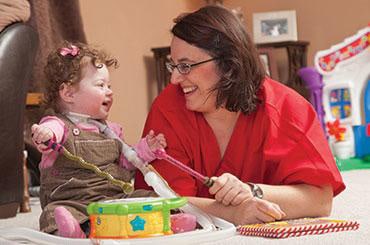 How to transition a ventilated adult or child from Intensive Care to a home care environment!