Hello and welcome to another Intensive Care at Home live stream. My name is Patrik Hutzel from intensivecareathome.com and I am today’s host. I want to welcome everyone joining this live stream this morning or this night, depending on where you are watching from. I know we have viewers from the U.S., Canada, and other time zones as well. It is 10:30 a.m. Sydney, Melbourne time here in Australia, Sunday morning, the 30th of August.
Today’s topic is: my loved one has been in ICU for 6 months — is home care still possible?
I also want to welcome our viewers on replay, because I know we often have a number of viewers on replay. If you like my videos, like this video, subscribe to my YouTube channel so you get updates for families in intensive care and Intensive Care at Home almost daily. Share the video with anyone that has a family member in intensive care and leave your comments.
Before we dive into much detail about today’s topic, here at Intensive Care at Home, we provide tailor-made solutions at home for long-term ventilated adults and children with tracheostomies. We provide tailor-made solutions at home for long-term ventilated adults and children on BiPAP (Bilevel Positive Airway Pressure) and CPAP (Continuous Positive Airway Pressure) ventilation without tracheostomy. We provide tailor-made solutions for tracheostomy clients, adults and children at home without ventilation, home ventilation and home tracheostomy weaning when medically appropriate, home cough assist management, home TPN (Total Parenteral Nutrition), home IV fluids, home IV potassium, home IV magnesium and other electrolyte infusions at home via central line, PICC (Peripherally Inserted Central Catheter) line, Hickman’s line, and port. We also provide management for PEG (Percutaneous Endoscopic Gastrostomy) and PEJ (Percutaneous Endoscopic Jejunostomy) tubes at home, nasogastric tube and nasojejunostomy tubes, as well as SPC (Suprapubic Catheter) and IDC (Indwelling Catheter) management. We also provide palliative care services at home, and we also provide Level 2 and Level 3 NDIS (National Disability Insurance Scheme) support coordination as well as TAC (Transport Accident Commission) and WorkSafe case management.
Today’s topic is a big one and I know it is going to hit very close to home for a lot of you watching live right now and watching on replay. My loved one has been in ICU for 6 months — is home care still possible? Stick with me for the next roughly 45 minutes, because by the end of this you will know exactly what your options are. We will also have a questions and answers at the end of today’s presentation. If you have any questions related to today’s topic, you can type them in the chatpad right now.
In case you are wondering what makes me qualified to cover today’s topic, I have worked in critical care nursing for over 25 years in three different countries, where I have worked as a nurse manager for over five years in intensive care. I have worked with Intensive Care at Home services in Germany in the early 2000s, where I was part of pioneering Intensive Care at Home in Germany — and then I brought the concept to Australia in 2012. That is how long we have been operating here in Australia. We are the only and first fully third-party accredited Intensive Care at Home nursing service in Australia. We are accredited towards ISO 9001:2015 as well as NDIS registered. No other service has achieved that high level of accreditation. No other service has replicated what we do on a day-by-day basis — sending intensive care nurses into people’s homes as a genuine alternative to a long-term stay in intensive care.
My Loved One Has Been in ICU for 6 Months — Is Home Care Still Possible?
This is a question that came through recently, and I know so many of you are living some version of this right now. Your loved one might have been in ICU for 6 months, might have been in ICU for 12 months, for 6 weeks — anything.
The question that came in was:
“Hi Patrik,
My father has been in ICU for just over 6 months now. He has a tracheostomy and is still on the ventilator most of the day, although the team has tried weaning him a few times without lasting success. He is medically stable, but the hospital has started talking to us about long-term care or keeping him in ICU long-term instead of him coming home. We want him home with us and family. Is that even realistic after his long stay in ICU, or have we missed our window?”
That last line — have we missed our window? — that is the bit I want to answer clearly right now up front. No, you have not missed your window. Let’s talk about why.
The Clinical Picture After Six Months in ICU
Let’s break down what is actually happening clinically for a patient like this. Six months in ICU with a tracheostomy and ongoing ventilator dependency almost always follows a pattern:
- Acute respiratory failure
- Prolonged intubation
- One or more failed extubation attempts
- Then a tracheostomy for a more sustainable airway and easier weaning
From there, a lot of patients enter what we call PMV (Prolonged Mechanical Ventilation) or chronic critical illness. What does that actually look like day by day?
Number one: Spontaneous breathing trials that work for a little bit, then plateau or fail.
Number two: ICU-acquired weakness — the respiratory muscles themselves are deconditioned after months of machine support.
Number three: Alternating periods of full ventilator support and partial spontaneous breathing.
Number four: Overall medical stability — infections cleared, organs slowly recovering — but no clear short-term path to full ventilator liberation.
I want to really emphasize this next point. This is exactly the patient population that mechanical home ventilation as a field of medicine was built for. This is not a fringe idea. It has been standard and evidence-based practice in countries like Germany, Austria, Switzerland, and now Australia for decades. You can verify that when you go to the Mechanical Home Ventilation Guidelines on our website at intensivecareathome.com. Those evidence-based guidelines are a result of over 25 years of Intensive Care at Home nursing in Germany and in Australia. They represent best practice for all of the situations described earlier — ventilation with tracheostomy, non-invasive ventilation on BiPAP and CPAP, and tracheostomy without ventilation. You need 24-hour critical care nurses at home, similar to an ICU, so that people can go home predictably, permanently, and can improve their quality of life.
On top of that, ICUs can free up their much-needed beds for other patients without letting someone die. And whoever is paying for the ICU bed can cut the cost by approximately 50%. It is a win-win situation.
Whilst today’s presentation will be mainly around ventilation and tracheostomy, many of you might be watching this and might have a family member in ICU, HDU (High Dependency Unit), or step-down ICU also for 6 months — or you might be going in and out of that environment for long periods of time. You might be in for two weeks, home for two weeks, but keep bouncing back because you do not have ICU nurses at home. This presentation is also for you. Many of our clients had their loved ones going in and out of ICU all the time, and we fixed their problem by bringing the intensive care into the home. We are a genuine alternative for a long-term stay in ICU, as well as for ongoing intermittent stays.
Why ICUs Often Push Towards Long-Term Stays, Rehab Facilities, or End of Life
I want to be fair to hospital teams here, because I have worked in ICU myself for over 25 years in Germany, in the UK, and in Australia — and I have been a nurse manager in ICU for over five years. I understand how ICUs operate in the grand scheme of things within the hospital system. ICU beds are incredibly scarce and expensive. Once a patient is stable but not progressing further with weaning, there is enormous pressure on ICU teams to move that patient on.
The problem is that the two or three options usually in front of mind for a busy discharge planning team are either: long-term ICU — staying in ICU for long periods of time or indefinitely — or going on to substandard weaning facilities, or the third option that is also often pushed — end of life — because ICU teams often say: “This person won’t have any quality of life because they are long-term ventilator-dependent.” Well, nothing could be further from the truth. ICU teams should not be talking about quality of life, because that is not for anybody to decide. Quality of life is a subjective measure and a subjective experience — not an objective one. That means it is up to patients and families to decide what quality of life is acceptable for them — and not for anybody else.
Also, what I have been hearing from our clients over and over again in recent years is that they often say: “We value life over quality of life.” Let that sink in and let me repeat it. Families say to us: “We value life over quality of life.” That is a fair point and it is something intensive care teams need to pay attention to — that patients and families actually value life over quality of life.
So to recap: three options are often presented to ICU patients and their families when their loved ones are stuck in ICU long-term. The first option is often to stay in ICU indefinitely until they might be weaned off the ventilator. The second option is to move on to a rehab or long-term acute care facility, which is not really appropriate for a long-term ICU patient. And the third option is often discussions around end of life — letting patients die because of a lack of perceived alternatives.
Well, the good news is Intensive Care at Home is that perceived alternative — and it is not a perceived alternative. It is actually a real alternative. Like I said, we have been doing this since 2012 very successfully here in Australia. And there are dozens of Intensive Care at Home nursing services, if not hundreds, in countries like Germany, Austria, and Switzerland.
What is often not front of mind for ICU teams is that Intensive Care at Home is a fully third-party accredited Intensive Care at Home nursing service — a specialist home ICU nursing provider that can genuinely replicate ICU-level airway management and monitoring in the client’s own home, surrounded by family, with 24/7 intensive care nurses. That is not a criticism of any individual clinician. It is not a criticism of busy ICU teams. It is a clear systemic gap, and it is exactly the gap we exist to close.
The Pathways That Exist for Ventilation and Tracheostomy Care at Home
There are only three categories we work in, and I want to be really clear about this because it matters for safety.
Number one: Invasive ventilation with tracheostomy — full-time or part-time ventilator dependency through a tracheostomy tube. Patients might be 24/7 ventilator-dependent, but they might also be ventilator-dependent for parts of the day — mainly overnight — and can be off the ventilator during the day. Sometimes it can be the other way around, or a combination of all of that. But even if your loved one has a ventilator and tracheostomy, you need 24-hour critical care registered nurses. It is evidence-based. Even if you are intermittently ventilator-dependent and you have a tracheostomy, you still need 24/7 critical care registered nurses.
Number two: Non-invasive ventilation with BiPAP and CPAP — mask-based ventilation support — also needs 24-hour critical care registered nurses. Once again, this is all evidence-based. You can check out our Mechanical Home Ventilation Guidelines on our website at intensivecareathome.com. Those guidelines are a best practice and evidence-based result of over 25 years of intensive care at home nursing in Germany, Austria, and Switzerland, as well as over 14 years of intensive care at home nursing in Australia with Intensive Care at Home.
Number three: Tracheostomy clients — adults and children — without ventilation. For adults and children who have been weaned off the ventilator but still need the tracheostomy self-managed. This is critically important because a tracheostomy is an artificial airway — that is why you need 24/7 critical care trained nurses, similar to an ICU, similar to a hospital. You cannot take any shortcuts here.
Everything we do is based on clinical evidence, on clear guidelines and protocols — the evidence-based Mechanical Home Ventilation Guidelines. Those guidelines cover ventilation requirements, humidification standards, staffing ratios — i.e., only critical care trained nurses with a minimum of two years critical care experience in ICUs. It is all underpinned by evidence — by decades of intensive care at home nursing in different countries — and those standards all say the same thing: the minute you take shortcuts and try to bring in registered nurses without ICU experience, the minute you try to bring in community registered nurses without ICU experience, the minute you try to bring in disability support workers or enrolled nurses, people will die. Every time shortcuts are taken, people unfortunately will die.
There are also some sub-segments we cover at home, which includes high flow nasal cannula, but also home TPN, central lines, PICC lines, Hickman’s lines, and port management. Those clients often do not need 24-hour nursing, but they still need ICU nursing to manage the infusions via the central line, PICC, Hickman’s line, or port — because that is also an ICU nursing skill. But most clients at home on TPN, IV fluids, IV potassium, IV magnesium, whatever it is, do not need 24-hour nursing care. The nurse can come in during the period where the infusion is running. Keep in mind, sometimes it could be a combination of ventilation and tracheostomy plus TPN plus IV fluids.
It Has to Be ICU Nurses
It has to be ICU nurses — critical care trained nurses — not general registered nurses without ICU experience, not community registered nurses without ICU experience, definitely not enrolled nurses, and definitely not disability support workers.
A ventilated adult or child with a tracheostomy in any of those three categories needs 24/7 critical care registered nurses — not general registered nurses, not community nurses, not enrolled nurses, and definitely not disability support workers. Think about it like this: you would never put a co-pilot with a few weeks of training in the cockpit of a commercial aircraft, no matter how capable or well-meaning they are. And you would not ask the cabin crew to fly the airplane instead of a trained pilot.
It is the same principle with a ventilated airway at home — suctioning, cuff pressure, changing inner cannulas, recognizing the early signs of a tube displacement or blockage, recognizing the early signs of a ventilator failure. Responding in seconds, not minutes. Preventing emergencies. Changing tracheostomy tubes at home electively when they are planned, so that they do not need to be changed in an emergency. Those are critical care nursing skills built over years of ICU or intensive care at home experience.
The Case of Noah Johnston
I want to bring up something I have discussed before because it is a very sobering warning for all of us — the case of Noah Johnston, where his tracheostomy tube became displaced in December 2025 — not even 12 months ago — with no critical care registered nurse present. That is exactly the kind of outcome that a downgraded staffing model risks — and a downgraded staffing model risks nothing less than death. I know that is very sobering and very confrontational, but that is unfortunately the reality.
I am not raising this to scare anyone unnecessarily. I am raising it because families in intensive care — and the biggest challenge is simply that they don’t know what they don’t know — deserve to understand what is clinically at stake before they agree to a lower level of nursing care. The good news is that whenever we discharge patients from ICU directly, the ICU would not discharge unless there are 24-hour critical care registered nurses at home. So ICUs do recognize our skill in the community.
Noah Johnston was only 22 years of age. He had cerebral palsy. He was fully ventilator-dependent with a tracheostomy. The NDIS — the funding body — downgraded his nursing care from 24-hour critical care registered nurses to 12 hours a day. When this happened, we immediately went back to the NDIA (National Disability Insurance Agency). The family immediately went back to the NDIS because Noah obviously could not speak for himself — to flag that Noah would die when no critical care registered nurse was present.
Also, what his mother Kylie did at the time was remarkable. She actually went to disability support worker agencies and said: “Can you look after Noah during periods when critical care registered nurses are not funded?” Interestingly enough, she could not even find a disability support worker agency, because no disability support worker agency in their right mind would take on a client like Noah who is basically an ICU patient — and yet the NDIS thought he could be looked after by disability support workers.
What happened was this: when Noah was without a critical care registered nurse, he passed away because his ventilator and tracheostomy became dislodged and nobody picked up on it — which is exactly what we predicted. As reported in the Daily Telegraph, sadly Noah’s case was at the NDIS tribunal at the time. He passed away in December. The hearing was scheduled for March of this year. He never made it to the hearing. The evidence was overwhelming — there were doctor’s letters and nursing reports, all independent, confirming that Noah needed 24-hour critical care registered nurses. The AAT (Administrative Appeals Tribunal) NDIS tribunal would have probably ruled in Noah’s favour, but unfortunately it was too late.
That is one warning. I can give several others that I have spoken about publicly. We had two other clients in the same time period that were at home on non-invasive ventilation, also NDIS-funded. The independent evidence was overwhelming — with nursing assessments, independent nursing assessments, OT (Occupational Therapy) reports, physiotherapy assessments, and doctor’s letters — that two clients on non-invasive ventilation also needed 24-hour critical care registered nurses to keep them alive. The NDIS ignored that overwhelming evidence and both clients passed away. Even though we had written to the NDIS, had provided the evidence, and had notified the NDIS Quality and Safeguards Commission — all of that got ignored and clients passed away unnecessarily. I will keep talking about it until things will change so that life is actually valued for vulnerable clients that we know we can help.
Using Medical Records to Advocate — What You Can Actually Do Right Now
If you are in a situation where you have a family member who has been in ICU for 6 months — or you might be a patient yourself in ICU watching this — what can you actually do?
Number one: Request access to all medical records — and I mean all of it. Doctor’s notes, nursing notes, specialist reports, chest X-rays, CT scan results, MRI scan results, vital signs, ventilation charts, tracheostomy charts, lab results, blood gas results, medication charts, fluid balance charts, weaning trials — everything. Leave no stone unturned. It tells you exactly what has been tried and why ventilation weaning has not yet succeeded. It tells you whether the team considers this long-term or still evolving. It shows you what the treating team is actually recommending or discussing behind the scenes versus what might just be bed pressure talking. It also gives you insight into what is being documented in the notes versus what is being shared with you in discussions.
Once you have access to the medical records, you can get a second opinion. You are entitled to ask the right questions and ask for a second opinion. I argue it is almost your duty to ask for a second opinion — it is a life or death decision, why would you not? You are entitled to ask specifically whether a home ventilation program with a third-party accredited Intensive Care at Home nursing service like us has been formally considered as part of the discharge plan. Do not assume the hospital has already ruled it out. Often nobody has simply raised it yet.
I will give you a very tangible example. We took a client home just a couple of months ago from ICU. The ICU was initially considering us and they called the NDIS, and the NDIS told them they would not fund 24-hour nursing care. I said to the ICU: “Of course that is what the NDIS would tell you because they do not want to fund it. But there is a process that you need to follow, and if you are not experienced in the process, they just assume you do not know any better — and the easy way out for a funding body is to say we do not pay it.” We showed the hospital that we could get the funding. We said to the hospital: “Please let us do the advocacy and we can show you that we will get the funding.” We showed them. It took a few weeks and we took the client home with 24-hour nursing funding via NDIS. It is all about evidence. It is all about advocacy. It is all about presenting evidence in a light where it also ties in with NDIS legislation.
Medical records are absolutely vital because we can help you dissect them. ICUs are not even telling you half of what is actually going on. I see this over and over again when me and my team look at medical records and ask families: “Have they told you about this? Have they told you about that?” — and families often say, “This is the first time we are hearing this.” This is not a criticism of an ICU. I know how busy doctors and nurses in ICU are. There is simply not enough time to break down all the important details. That is why you need access to the medical records. That is why you need a second opinion. That is why you need an insider who is on the outside to explain the jargon to you, tell you what it all means, and how it ties in with intensive care at home services.
Why Intensive Care at Home Exists
This is why we actually exist — to fill the gaps for patients and families in ICU who have been there for months, for weeks, sometimes for years. The longest patient I have seen in an ICU was three years. He is now at home. I have also heard of a case of 14 years in ICU. Can you imagine? But this is why we exist. This is why we do what we do.
We focus on improving quality of life for long-term ICU patients with tracheostomy, but also non-invasive ventilation such as BiPAP or tracheostomy without ventilation, where 24-hour nursing care is needed at home to make a smooth transition home.
We have built Intensive Care at Home from scratch — creating all the policies, procedures, and the intellectual property that goes along with it — which led us to being the only third-party accredited Intensive Care at Home nursing service specialist home intensive care nursing provider in Australia. In 2026, we are third-party accredited for intensive care at home — ISO 9001:2015 — as well as NDIS registered. You can look that up on our quality page at intensivecareathome.com/accreditation-quality.
We work exclusively with critical care trained registered nurses across the categories mentioned earlier — invasive ventilation with tracheostomy, non-invasive ventilation and BiPAP, and tracheostomy without ventilation. All of it needs 24-hour critical care trained nurses. And beyond the nursing, we also provide Level 2 and Level 3 NDIS specialist support coordination, plus TAC and WorkSafe case management, to help families, patients, and hospitals navigate the funding maze and get the right model approved and funded — not just a cheaper one or none at all.
How to Get Help and Take the First Steps
If you are facing this decision right now, you do not have to work through this alone. The best next step for you is to reach out to me directly at intensivecareathome.com. You can call on one of the numbers on the top of our website, or you can call me directly if you are in Australia on my mobile phone on 0410 942 230 — that is again 0410 942 230. You can book a call with me by clicking on the Schedule Appointment button on our website at intensivecareathome.com, or you can send me an email to [email protected].
I know some of you watching this are in the US, in Canada, in the UK, in Ireland, in South Africa, in India, or in other countries. If you need intensive care at home there, please reach out to us. We can help you there. We have some international phone numbers on our website.
For our viewers in Australia, we operate in all states and territories, in all major capital and regional and rural areas. For us, it is just a case of hiring people wherever the clients are — because that is what we have been doing from day one.
For those of you watching who might be at home already but have disability support worker funding only and are not satisfied and need to upgrade the care, please reach out to us. We have helped many families go from disability support workers to critical care registered nurses if that is what is clinically indicated — which it definitely is for ventilation, tracheostomy, and the topics we covered today.
Just keep in mind that it does not matter which funding body it is. All funding bodies are insurance schemes and they work on evidence. It is just a case of providing the evidence — whether it is doctor’s reports, nursing reports, or similar. We can help with all of that.
Questions and Answers
Question: Does the NDIS actually fund 24/7 nursing for tracheostomy and ventilation, or will they push us towards support workers?
NDIS funding for this level of care is assessed case by case. Yes, we do see funding bodies attempting to downgrade to a support worker model to reduce cost. That is exactly why NDIS specialist support coordination matters — which is what we provide — building the clinical evidence for why CCRN (Critical Care Registered Nurse) level care is required, not just requested. That is part of what our Level 2 and Level 3 NDIS support coordinators do. If you are an NDIS support coordinator and you have not been involved in gathering the evidence, I also encourage you to reach out to us because we have been through this many times with our clients. We can help you with providing the evidence and walk you through it step by step. Do not let the current rhetoric from the government — where NDIS is cutting this and cutting that — dissuade you, because the NDIS at the end of the day works on evidence and it also works within a legislative framework. We know how to position cases like yours to the NDIS with the right evidence in the right legislative framework.
Question: My mom has been ventilated for 4 months, not 6 months. Does the same apply to her?
Yes. The principles here are not about a specific number of weeks or months or even years. It is about the underlying clinical picture — ongoing tracheostomy and ventilation, BiPAP dependency for non-invasive ventilation, with medical stability. The right time to start exploring a home ventilation pathway is as soon as that pattern becomes clear, not after a fixed number of months.
Question: What if the hospital says home is not an option at all?
Ask them directly — in writing if needed — whether a third-party accredited Intensive Care at Home nursing service like us has been formally considered as part of the discharge plan. We pretty much replicate at home what an ICU does, so there is no reason for them not to consider it. Ask them for a discharge plan. Ask them for the clinical reasoning. You are entitled to that and you are welcome to reach out to us directly for a second opinion. We also work with ICU consultants directly. Obstacles are there to be overcome. The way I look at a “no” is that it means “not yet.” You need to reframe your own mind. Nothing is impossible here really. I have got decades of experience in this space that you can tap into. My team employs hundreds of years of critical care nursing experience combined in the community — people that have worked in ICU for 20, 25, 30 years, as well as people who have worked in ICU for 2, 5, or 10 years. Our team consists of hundreds of years of critical care nursing experience combined, which enables us to look after the highest acuity clients at home in the country safely.
Thank you for your support. Like the video, subscribe to my YouTube channel, click notifications, share the video with anyone that needs to hear this message, and go and check out our intensivecareathome.com website for more information. Call me directly if you need help on one of the numbers on the top of our website, book a call with me, or send me an email to [email protected].
I wish you and your families a wonderful rest of the weekend. Whatever battles you are fighting at the moment, we are here to help. Take care for now.
With all of that said, with Intensive Care at Home, we are currently sending our critical care nurses into the home 24 hours a day. Therefore, we are providing a genuine alternative to long-term stay in intensive care for:
- Ventilation
- Tracheostomy
- Home BiPAP (Bilevel Positive Airway Pressure) and CPAP (Continuous Positive Airway Pressure)
- Tracheostomy care without ventilation
- home TPN (Total Parenteral Nutrition)
- Home IV potassium
- Home IV magnesium
- Home IV antibiotics
- Home IV fluids
We’re providing:
- Cough assist management at home
- Ventilation weaning management at home
- central line, PICC (Peripherally Inserted Central Catheter) line, Hickman’s line as well as port management at home
- nasogastric tube, nasojejunostomy tube, PEG (Percutaneous Endoscopic Gastrostomy), PEJ (Percutaneous Endoscopic Jejunostomy) tube management at home
- IDC (Indwelling Catheter) and SPC (Suprapubic Catheter) management at home
- Palliative care services at home
We’re also sending our critical care nurses into the home for emergency department bypass services. We have done so successfully as part of the Western Sydney Local Health District’s In Touch program, saving approximately $2,000 per patient that we keep at home instead of them going into an emergency department.
That also means we’re in a position to cut the cost of an ICU bed by around 50%. An intensive care bed costs between $5,000 to $10,000 per bed day depending on location. Intensive Care at Home costs approximately 50% of that, and we’re freeing up the most sought-after bed in the hospital, which is the ICU bed. Most importantly, we’re improving the quality of life for patients and their families, which is a win-win situation for all stakeholders.
Our Coverage and Accreditation
With Intensive Care at Home, we’re currently operating all around Australia, in all major capital cities, as well as in all regional and rural areas. We are an NDIS approved service provider all around Australia, TAC (Transport Accident Commission) and WorkSafe in Victoria as well as the Department of Veterans Affairs all around Australia.
We’re also ISO 9001:2015 accredited. Our clients and we as a service provider have also received funding through public hospitals, private health funds as well as departments of health.
We are the only service provider in Australia that has achieved third-party accreditation for Intensive Care at Home nursing in 2025. We have been achieving this high level of accreditation since 2012. No other provider in Australia has achieved the Intensive Care at Home level of accreditation in the community and has created more intellectual property when it comes to Intensive Care at Home nursing than we have.
This puts us in a position to employ hundreds of years of critical care nursing experience combined in the community. No other service provider in 2025 employs a higher skill level in the community than we do. And that enables us to look after the highest acuity adults and children in the community in Australia safely.
If You Need Help
If you’re at home already and you’re watching this or you’re stuck in an ICU and you realize that you don’t have the right level of support, I can give you many examples where we helped clients with funding, how we advocate for funding. We had to advocate successfully for funding from our first case study to many other case studies where we had to advocate successfully for funding with the right evidence of course because it is crystal clear that disability support workers for example or registered nurses without ICU experience cannot look after ventilated clients at home whether adults or children with or without a tracheostomy and it’s simply dangerous and negligent.
There are plenty of examples where clients with support worker models or even RN (registered nurse) models without ICU experience have died at home and I have evidence to back up everything that I’m saying here because it’s a bit like flying the airplane with a cabin crew instead of the pilot and it could simply be deadly.
This can be avoided by having simply 24-hour critical care nurses at home because our clients are at high risk of medical emergencies or worse without critical care nurses 24 hours. This is actually also evidence-based in the community and is documented in our evidence-based Mechanical Home Ventilation Guidelines on our website at intensivecareathome.com.
Think about it: in an intensive care unit in a hospital, you wouldn’t have support workers or general registered nurses looking after a critical care patient on a ventilator with a tracheostomy. So why would anyone in their right mind do that in a home care environment where there are fewer resources?
Clients that have found us have been at home long-term predictably and permanently with critical care nurses. Their alternative would have been to either die or stay in ICU long-term, and our clients don’t go back to ICU. They stay at home permanently and predictably and the insurance bodies save half of the cost of an ICU. But it’s a win-win situation all around.
We can do the same for you if you’re stuck in ICU or if you’re not safe at home, which includes the advocacy for funding and the network that goes along with it. We have always successfully advocated for our clients or we have the network to successfully advocate for you and for your family member, otherwise we wouldn’t be in business. The same again is applicable for those stuck in an ICU which is similar to many of our, if not most of our cases.
Our Support Coordination Services
This is also why we are providing Level 2 and Level 3 NDIS support coordination. We have a team of experienced NDIS support coordinators, and they have a wealth of knowledge. We’re also providing TAC case management and WorkSafe case management in Victoria with Lucy McCotter.
If you’re an NDIS support coordinator or a case manager or a social worker from another organization or a hospital watching this and you’re looking for nursing care for your participants, please reach out to us as well. If you’re looking for funding for nursing care for your participants and you don’t know how to go about it and how to advocate for it, what evidence to provide, I encourage you to reach out to us as well. We have the network to make that happen. We will help you with the right level of funding and with the right level of advocacy.
We’re also providing NDIS specialist nursing assessments done by critical care nurses with a legal nurse consulting background.
Join Our Team
If you are a critical care nurse and you’re looking for a career change and you want to join a very progressive, dynamic, successful, and high-performing team of critical care nurses in the community, we are employing hundreds of years of critical care nursing experience combined.
If you’re looking for a career change, we’re currently hiring for jobs for critical care nurses in Melbourne, Sydney, Brisbane, Albury-Wodonga, Bendigo, Geelong, Warragul, and also in Wyelangta in Victoria.
If you have worked in critical care nursing for a minimum of two years, adult ICU, pediatric ICU, ED and you have already completed a postgraduate critical care nursing qualification, we will be absolutely delighted hearing from you.
I have a disclaimer though: Because we are offering tailor-made solutions for our clients which includes regular staff, our clients do also want the same staff coming over and over again because they are so vulnerable and so special. That’s why we need regular, reliable staff.
If you’re looking for agency work where you can come and go, this will not be the right fit for you. We’re looking for consistency and our clients are looking for consistency. So please only apply with us if you can give us regular and consistent availabilities for shifts and you’re really keen on building relationships with us and with our clients. Reliability is also a must.
For Medical Professionals and Healthcare Executives
If you’re an intensive care specialist or an ED specialist, we also want to hear from you. We’re currently expanding our medical team as well.
We can also help you eliminate your bed blocks in your ICU and in your ED for your long-term patients or for your regularly readmitting patients with our critical care nursing team at home. We’re here to help to take the pressure off your ICU and ED beds. In most cases, you won’t even pay for it. Even if you do pay for it, it is so much more cost-effective than what you’re paying for in ICU and ED settings, and you get the same level of care and simply more patient and family satisfaction because you also want to partner with your consumers.
If you are a hospital executive watching this, we can help you free up your ICU and ED beds.
International Support
If you’re in the U.S. or in the UK and you’re watching this and you need help, we want to hear from you as well. We can help you there privately with one-on-one consulting and with hiring nurses privately.
Once again, our website is intensivecareathome.com. Call us on one of the numbers on the top of our website or simply send us an email to [email protected].
If you like my videos, click the like button, subscribe to my YouTube channel for regular updates for families with Intensive Care at Home and intensive care. Click the like button, click the notification bell, and share this video with anyone who has a family member in intensive care long-term or needs to see this.
Thank you so much for watching.
This is Patrik Hutzel from intensivecareathome.com , and I’ll talk to you in a few days.
Take care for now.
RELATED LINKS:
 Tracheostomy and weaning off the ventilator in Intensive Care, how long can it take?
From and with “HIGH TECH” medicine to “HIGH TOUCH” INTENSIVE HOME CARE services!
ABC reports, Home health care “cheaper and safer”!
Tracheostomy and weaning off the ventilator in Intensive Care, how long can it take?
From and with “HIGH TECH” medicine to “HIGH TOUCH” INTENSIVE HOME CARE services!
ABC reports, Home health care “cheaper and safer”!
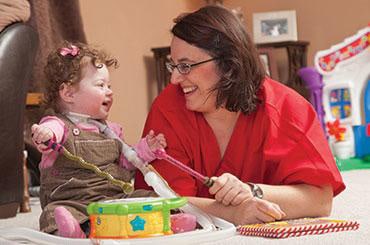 How to transition a ventilated adult or child from Intensive Care to a home care environment!
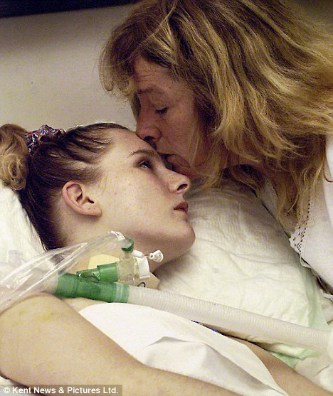 Discharging patients home from ICU poses no added risk!