Podcast: Play in new window | Download
What Questions to Ask When a Patient Leaves ICU with INTENSIVE CARE AT HOME on CPAP (Continuous Positive Airway Pressure) & 50% FiO2 (Fraction of Inspired Oxygen) & TPN (Total Parenteral Nutrition) via CVC (Central Venous Catheter)?

In my last Intensive Care at Home video, I asked, “Can a patient on CPAP (Continuous Positive Airway Pressure) in ICU go home with Intensive Care at Home on 50% FiO2 (fraction of inspired oxygen), pulmonary vasculitis and TPN (Total Parenteral Nutrition)?”
In today’s video, I want to focus on what needs to be prepared and what questions need to be asked before the actual discharge. This is a follow-on video from my last video.
My name is Patrik Hutzel from intensivecareathome.com.
So, here are the questions that need to be asked to the ICU team and to Intensive Care at Home, to us, of course, before actually going home.
The first question that needs to be asked obviously, “Is the patient or client medically stable enough to be managed in an intensive care home environment? And if the roster with 24/7 critical care nurses is actually in place?” Because nothing’s going to happen without a stable 24/7 critical care nursing roster at home. That is the only way you can bring the intensive care actually into someone’s home.
So, next question is, “What respiratory support is needed at home with the CPAP?” Obviously, it’s a CPAP, it’s oxygen concentrators, oxygen cylinders, it’s high flow nasal oxygen, like the Airvo. Also, a backup ventilator is needed, as much as a backup suction. So, two suction machines are needed, and a monitor is needed for heart rate and for pulse oximetry.
Next question is, “Can FiO2 requirements of 50% or more be safely managed at home?” Of course, like I said in my last video, the goal is to wean FiO2 off and down as quickly as possible, but you can’t rule out that FiO2 requirements may even go up depending on the clinical situation.
Now, a lot of it comes down to the goals of care. “Why is the patient wanting to go home?” Is it to wean oxygen off, which is the case in this situation, but sometimes it might also be the case to go home for palliative care for end of life care. So, in this situation, the patient wants to go home to remove and reduce oxygen as quickly as possible. If oxygen requirements go up, the question really is, “Is it still safe?” and that needs to be assessed on a case by case situation.
Another thing that is important to mention here, which I didn’t mention in my last video, in regards to this particular situation, home X-rays. So, in most metropolitan areas now in Australia, we can do home X-rays. Shout out to home imaging, they’re a great company, and they can do home X-rays. Shout out to Michael Montalto and his great team there, because they’re really helping build the infrastructure in the community that is needed to keep higher acuity clients safe at home.
Next, “What about equipment at home?” So, like I already alluded to, it needs two CPAP machines, one oxygen concentrator, oxygen cylinders as backup, two suction machines, monitors, they all need to be organized. Also, equipment such as hospital bed, hoist or lifting machine, or potentially a ceiling hoist depending on how long the situation is predicted to go on for, or if there’s a real chance the patient can get mobilized independently without needing a lifting machine or a hoist going forward.
Next, “How we’ll manage TPN lines and infusions at home?” Quite frankly, again, our critical care nurses can manage the central line or the PICC line or the Hickman’s line or the port, depending on what line is used for the home TPN.
Also, weekly dressing changes need to happen for the central line. Also, the flushes need to happen when TPN is finished, with normal saline, and then often the central line needs to be locked or the lumen for the TPN needs to be locked with Hep-Lock or TauroLock, or something similar.
Next, “Is the current TPN prescription expected to be stable or are there expected changes?” That all comes down to monitoring, obviously, blood results such as electrolytes, blood sugar levels, fluids, that all needs to be monitored. TPN might need to be adjusted according to the blood results and also, according to, “Is the patient losing weight, gaining weight? What’s their nutritional status?”
Also, “How are emergencies at home like increased work of breathing or worsening breathing, line infection managed at home?” Well, the best way to manage them is to prevent them, of course. But at the end of the day, it can also be unpredictable. And again, what it comes down to is similar to an ICU in a hospital, close observations, hourly ops.
If there’s worsening breathing once again, can we do a home chest X-ray? Line infection needs to be prevented by using sterile and aseptic techniques. But what is also important to understand here is, a home care environment is much cleaner than an ICU environment, i.e., one of the biggest risks in ICU is infection risk, and that clearly happens because doctors and nurses go from one bed space to another. Whenever they’re entering a new bed space, there’s bugs from other patients and there’s a high risk that these bugs are being transferred and transmitted to another patient, which is where a lot of the infections are coming from, that risk is so much lower in a home care setting.
Next, “Will there be an escalation plan or standing orders for home nurses if urgent changes are needed?” Yes, that is part of the medical governance, of course, that there is a clear escalation plan and also medication plan, what can be given in what situation.
Obviously, funding needs to be in place, whether it’s privately funded, whether it’s funded through hospitals, whether it’s funded through NDIS (National Disability Insurance Scheme), Medicare or private health funds, that needs to be clarified as well.
“Can the hospital help coordinate Intensive Care at Home with the discharge process?” Absolutely. Most patients that we have taken on from ICU directly, the hospital is always willing to work with us and give clear orders of what’s going to happen next from a medical point of view.
“Should there be a hospital discharge planning meeting with Intensive Care at Home, with the nursing staff, and with the family?” Absolutely, so that making sure that everyone is on the same page.
Also, “Should the ICU nurses in the hospital provide training to the Intensive Care at Home nursing team before discharge to ensure a smooth handover?” Yes, that would help. But bear in mind, we are also exclusively working with critical care nurses with a minimum of 2 years intensive care nursing experience. And bear in mind, the average nurse on our books has probably around 8 to 10 years ICU nursing experience. But look, the more training, the better. You can’t go wrong on training.
Another question that I need to point out here, whether family members should receive any training on how to troubleshoot ventilators, suctioning, when to recognize alarms, or TPN troubleshooting. The answer is no, and I’ll tell you why. Whilst they will observe things as they go along anyway, we, as AHPRA (Australian Health Practitioner Regulation Agency) registered nurses, cannot take responsibility for training the family members or support workers. That is not within our scope of practice.
So, other questions are, “Is palliative care involvement recommended in case of sudden deterioration?” Look, again, this is a case by case basis scenario, it needs to be decided if that situation arises.
“Are there goals for reducing oxygen or transitioning of TPN in the future?” Yes, absolutely. Like I pointed out, the goal is to reduce oxygen if possible, and the TPN should also be temporary. It is because of the CPAP dependency at the moment.
Next question, “Would an ICU physician or a hospital in the home physician oversee the patient’s care?” Yes, that would be ideal if it came from hospital in the home or from ICU directly, but we also have our own intensive care consultant that can oversee progress or the program.
To sum it up, we are not suggesting here to abandon medical care. We’re simply advocating and asking to continue the care for the patients safely in a home care environment with Intensive Care at Home with fully critical care, medical and nursing support. We’ve been doing that since 2012. So, we are simply acting in what the patient and the family wants. Also, ICUs need their critical care beds. ICU beds are in very short supply. That’s a win-win situation all around.
So, with Intensive Care at Home, we are currently sending our ICU and critical care nurses into the home, 24 hours a day. That means, we are providing a genuine alternative to long-term stay in intensive care for ventilation, tracheostomy, Home BIPAP (Bilevel Positive Airway Pressure), Home CPAP (Continuous Positive Airway Pressure), ventilation without tracheostomy, tracheostomy without ventilation, Home TPN (Total Parenteral Nutrition), home IV potassium and home IV magnesium infusions, IV fluids, and IV antibiotics. We’re also providing ventilation weaning at home. We’re also providing central line management, PICC (Peripherally Inserted Central Catheter) line management, Hickman’s line management, as well as port management at home. We’re also providing nasogastric tube and PEG (Percutaneous Endoscopic Gastrostomy) tube management at home as well as palliative care services at home. We also use cough assist machines for our clients for airway clearance.
We are also sending our critical care nurses into the home for emergency department bypass services. We have done so successfully as part of the Western Sydney Local Area Health District, their in-touch program, saving approximately $2,000 per patient that we keep at home, instead of them going to the emergency department.
That also means we’re in a position to cut the cost of an intensive care bed by around 50%. An intensive care bed costs between $5,000 to $6,000 per bed day. Our services cost between $2,500 to $3,000 per day and we’re freeing up the most sought-after bed in the hospital, which is the ICU bed. But most importantly, we’re improving the quality of life for patients and their families, which is a win-win situation for all stakeholders. Of course, quality of life at home is much improved surrounded by families.
With Intensive Care at Home, we are currently operating all around Australia in all major capital cities as well as in all regional and rural areas. We’re an NDIS (National Disability Insurance Scheme) approved service provider all around Australia, TAC (Transport Accident Commission) and WorkSafe in Victoria, iCare in New South Wales, NIISQ (National Injury Insurance Scheme in Queensland), as well as the Department of Veteran Affairs (DVA) all around Australia. Our clients and we, as a provider, have also received funding through public hospitals, private health funds, as well as departments of health.
We are currently the only service provider in Australia that has achieved third-party accreditation for Intensive Care at Home nursing in 2025. We have been achieving this level of accreditation since 2012. No other service provider has achieved this high level of accreditation in the community and has created more intellectual property for Intensive Care at Home nursing than we have. This puts us in a position to employ hundreds of years of critical care nursing experience combined in the community. No other service provider in 2025 employs a higher skill level in the community than we do, which enables us to look after the highest acuity adults and children in the community in Australia safely.
If you’re at home already and you’re watching this, or if you’re stuck in an ICU, or if you’re going to hospital and ED (emergency department) all the time, and you realize that you don’t have the right level of support, I’ll give you another tangible and real-world example today, very similar to the one I gave you a minute ago.
One of our first clients when we first got started over 10 years ago, was a client who was at home initially on a ventilator with a tracheostomy with a support worker model 24/7. Of course, support workers are dangerous and negligent. Having support workers looking after a client at home on a ventilator with a tracheostomy is like flying the airplane with the cabin crew instead of the pilot because anyone on a ventilator with a tracheostomy is at very high risk of medical emergencies 24/7 or even at high risk of dying if they don’t have a team of critical care nurses looking after them 24/7. This is actually evidence-based and it’s documented in our Mechanical Home Ventilation Guidelines that you can find on our website at intensivecareathome.com.
Think about it, in an intensive care unit in a hospital, you wouldn’t have support workers looking after a critical care patient on a ventilator with a tracheostomy. So, why would anyone in their right mind would do that in a home care environment in the community?
So, this client found out about us eventually and the ICU that he went back to all the time also knew about us and eventually reached out to us. We were proving our concept with this client very fast. When we worked with the client, we sent him intensive care nurses, 24 hours a day. He never, ever went back into ICU ever again and we were proving our concept there very fast.
We can do the same for you if you’re not safe at home which includes the advocacy for funding that goes along with it. We have always successfully advocated for our clients. Otherwise, we would not be in business. The same is applicable for those stuck in an ICU, similar to our case study today, or going back to ED all the time, so what you’re looking for? Reach out to us, we’ll make it happen for you as well. We can take you through the right steps including NDIS or other funding bodies, and the advocacy that needs to go along with it.
Which is also why we are providing Level 2 and Level 3 NDIS Support Coordination. We have a team of NDIS Support Coordinators, and they have a wealth of knowledge. I’ve done an interview with Amanda Riches, one of our NDIS Support Coordinators, and I’ll put a link to an interview with Amanda in the written version of this blog. We’re also providing TAC case management and WorkSafe case management in Victoria with Lucy McCotter.
If you’re an NDIS Support Coordinator or a case manager from another organization watching this, and you’re looking for nursing care for your participants, please reach out to us as well. If you’re looking for funding for nursing care for your participants, and you don’t know how to go about it and what evidence to provide, I encourage you to reach out to us as well. We will help you with the right level of funding and with the right level of advocacy. We’re also providing NDIS specialist nursing assessments done by critical care nurses with a legal nurse consulting background.
If you are a critical care nurse and you’re looking for a career change, and you want to join a very progressive, dynamic, high-performing team of critical care nurses in the community, we are employing hundreds of years of critical care nursing experience combined. If you are looking for a career change, we’re currently hiring for jobs for critical care nurses in Melbourne, Sydney, Brisbane, in Albury, Wodonga, in Bendigo, in Geelong, and in Warragul in Victoria. If you have worked in critical care nursing for a minimum of 2 years pediatric ICU, ED, and you have already completed a postgraduate critical care nursing qualification, we will be delighted hearing from you.
I have a disclaimer, because we are offering a tailor-made solution for our clients, which includes regular staff, our clients also do want the same staff coming over and over again because they are very vulnerable and very special, and that’s why we need regular staff. So, if you’re looking for agency work where you can come and go, this will not be the right fit for you. We are looking for consistency and our clients are looking for consistency. So please, only apply with us if you can give us regular and consistent availabilities for shifts and if you’re really keen on building relationships with us and with our clients.
If you are an intensive care specialist or an ED specialist, we also want to hear from you. We’re currently expanding our medical team as well. We can also help you eliminate your bed blocks in your ICU and in your ED for your long-term patients, or for your regularly readmitting patients with our critical care nursing team at home. We’re here to help you take the pressure off your ICU and ED beds. In most cases, you won’t even pay for it. Even if you do pay for it, it is much more cost-effective than what you’re paying for in ICU and ED, and you get the same level of care.
If you’re a hospital executive watching this and you have bed blocks in your ICU, ED, and respiratory wards, home TPN, please reach out to us as well. We can help you eliminate your bed blocks very fast.
If you’re in the U.S. or in the U.K. and you’re watching this and you need help, we want to hear from you as well. We can help you there privately with one-on-one consulting and with hiring nurses privately.
Once again, our website is intensivecareathome.com. Call us on one of the numbers on the top of our website or simply send us an email to [email protected].
If you like my videos, subscribe to my YouTube channel for regular updates for families with Intensive Care at Home and intensive care, click the like button, click the notification bell, share the video with your friends and families, and comment below what you think about this video or what you want to see next.
Thank you so much for watching.
This is Patrik Hutzel from intensivecareathome.com and I will talk to you in a few days.
Take care.
RELATED LINKS:
 Breaking the vicious cycle of long-term ventilation in Intensive Care by creating a virtuous cycle
What are normal visiting hours in Intensive Care?
VENTILATION AND TRACHEOSTOMY – HOW LONG IS THE INTENSIVE CARE STAY?
Is it ethical to leave long-term ventilated adults& children with tracheostomies in Intensive Care?
Breaking the vicious cycle of long-term ventilation in Intensive Care by creating a virtuous cycle
What are normal visiting hours in Intensive Care?
VENTILATION AND TRACHEOSTOMY – HOW LONG IS THE INTENSIVE CARE STAY?
Is it ethical to leave long-term ventilated adults& children with tracheostomies in Intensive Care?
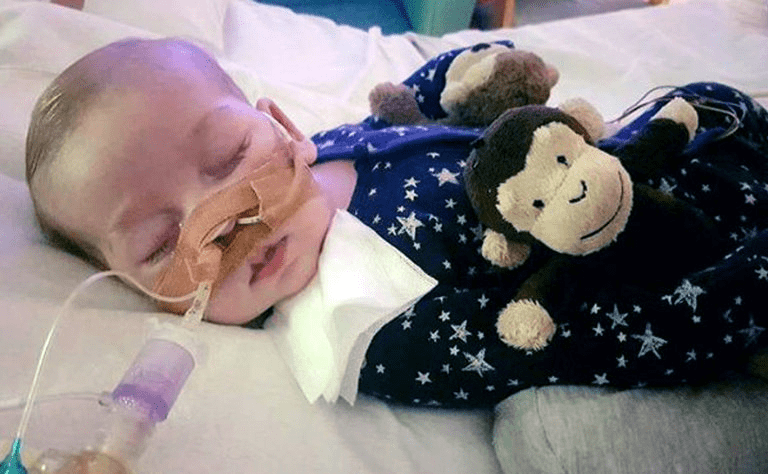 Charlie Gard, the little baby who wasn’t allowed to die at home!