Podcast: Play in new window | Download
My name is Patrik Hutzel from Intensive Care at Home at intensivecareathome.com, where we provide tailor-made solutions at home for long-term ventilated adults and children with tracheostomies, where we provide tailor-made solutions with 24-hour critical care nurses at home for long-term ventilated adults and children on BiPAP (Bilevel Positive Airway Pressure) and CPAP (Continuous Positive Airway Pressure) ventilation, where we provide tailor-made solutions for tracheostomy adults and children without ventilation at home with 24-hour critical care registered nurses. We provide ventilation and tracheostomy weaning at home whenever medically appropriate, home cough assist management, home TPN (Total Parenteral Nutrition), home IV fluids, IV antibiotics, IV potassium, magnesium and other electrolyte infusions at home — all of that goes hand in hand with home central line, home PICC (Peripherally Inserted Central Catheter) line, home Hickman’s line, and port management at home. We are also providing IDC (Indwelling Catheter), SPC (Suprapubic Catheter), PEG (Percutaneous Endoscopic Gastrostomy) and PEJ (Percutaneous Endoscopic Jejunostomy) tube, nasogastric tube and nasojejunostomy tube management at home, as well as palliative care management at home. We are also providing Level 2 and Level 3 NDIS (National Disability Insurance Scheme) support coordination as well as TAC (Transport Accident Commission) and WorkSafe case management.
Almost every week a family calls or emails me with a version of the same question: why is my mom, my dad, my husband, my spouse, my wife, my child still sitting in a hospital or ICU bed months after doctors said they were medically ready to go home — when all they actually need is proper nursing care at home?
Last week that question became a national headline. New figures reported across the Australian media show that more than 3,600 Australians are now stranded in hospital beds waiting for an aged care or NDIS placement that simply is not coming — which is up from around 2,700 just about a year ago. In Queensland alone, health authorities have described having up to 1,400 medically fit patients trapped in hospital, with one person reportedly stuck for almost three years. Nationally, close to 100,000 people are waiting for a support at home package that would let them go home with support.
As a CCRN (Critical Care Registered Nurse) with over 25 years of critical care nursing experience in three different countries — Germany, the UK, and Australia — and as the founder of Intensive Care at Home, I want to break down what is clinically going on for these patients, why the current aged care funding model is a big part of the problem, and what a genuine alternative can look like to solve this problem for many Australians stuck in hospital and ICU beds.
The Clinical Picture: Who Is Actually Stuck and Why?
“Medically fit for discharge” is a hospital administration term. It does not mean a patient is safe to go home without support. In my experience, the patients stuck longest in this bed block crisis in the Australian healthcare system are usually the ones with the most complex ongoing care needs — tracheostomies, non-invasive or invasive ventilation, complex wound care, TPN, IV therapies, nasogastric tubes, nasojejunostomy tubes, PEG and PEJ tubes, IDCs, SPCs, central lines, Hickman’s lines, PICC lines, and port management. It could also be things such as palliative care needs at home, cough assist management, and so on.
These are not patients who simply need a bed in a nursing home. They need skilled, ongoing clinical nursing — the kind that in an ICU is provided by CCRNs. When a hospital cannot find a residential aged care facility willing or able to take on that level of clinical complexity, and when there is no funded pathway for CCRN-level nursing at home, the patient simply stays in an expensive acute hospital bed — sometimes for months, sometimes for years — and the hospital is unable to use that bed for someone who needs it for an acute care episode.
This is not a criticism of any individual doctor, nurse, hospital, or aged care worker. Frontline staff in hospitals and aged care workers are doing their best inside a system that is structurally simply not set up to move complex care patients home safely.
The Real Cause: An Aged Care Funding Model That Does Not Fund Choice and Control
Here is my honest professional opinion after watching this play out for years. Australia’s aged care funding model needs to move towards something much closer to the NDIS individualized funding model. Under the NDIS, an eligible participant with high care needs can be funded for the actual level and type of support their disability requires — including, in the right circumstances, 24/7 critical care registered nursing support at home. Aged care funding by contrast is largely block-funded, capped, and built around a limited menu of home care package levels or residential aged care beds. It was never designed around complex clinical nursing needs like ventilation, tracheostomy management, or TPN.
The result is a two-tier system based on age rather than need. A younger person with a spinal cord injury and a tracheostomy may be able to access NDIS funding for home-based CCRN care. An older person with an almost identical clinical presentation — simply because they are over 65 and therefore assessed under the aged care system rather than the NDIS — often cannot access an equivalent home nursing pathway at all. Their choices narrow down to: stay in hospital indefinitely, go into a residential aged care facility that is not clinically equipped for their needs, or — in the worst case — family and clinicians starting discussions about palliative care pathways sooner than they otherwise would. Not because that is what the patient wants or is in their best interest, but because no one can see a funded pathway to get them home safely.
With almost 100,000 Australians on the support at home waitlist and state governments now openly saying the current system is far beyond sustainable, I believe it is time for the aged care system to genuinely adopt an NDIS-style individualized funding model — one that funds the actual clinical need of the person, not just their age bracket or a generic package level.
The Alternative That Already Exists: Accredited Intensive Care at Home
This is exactly the gap that Intensive Care at Home was built to close.
At Intensive Care at Home, we are Australia’s only third-party accredited Intensive Care at Home nursing service — ISO 9001:2015 — specialist provider of intensive care at home nursing, and we are also NDIS registered for the same. You can verify that on our website on our accreditation and quality page at intensivecareathome.com/accreditation-quality.
Our Intensive Care at Home model is built on the same evidence base used internationally for home mechanical ventilation, set out in detail in the Mechanical Home Ventilation Guidelines page on our website at intensivecareathome.com — which covers invasive tracheostomy ventilation, non-invasive ventilation without tracheostomy, and tracheostomy without ventilation. That includes staffing qualifications, equipment standards, and safe hospital-to-home transition.
We employ hundreds of years of critical care nursing experience combined, all around Australia in all states and territories. We provide 24-hour intensive care nursing-level care for invasive ventilation with tracheostomy, non-invasive ventilation on BiPAP and CPAP, tracheostomy care without ventilation, complex nursing needs including TPN, IV therapy, central line, PICC lines, Hickman’s line, port management, and the list goes on. We manage seizures at home. We manage IDCs, SPCs, nasogastric and nasojejunostomy tubes. We also manage PEG and PEJ tubes at home as well as palliative care situations.
We are a registered NDIS, TAC, WorkSafe, DVA (Department of Veterans’ Affairs), and community nursing provider. Our model has consistently shown since 2012 that it can reduce the cost of care compared with a prolonged ICU or acute hospital bed by roughly 50%. That is a funding argument as much as a clinical one, and it is exactly the kind of model an NDIS-style aged care funding system should scale to help unblock hospital beds nationally.
What Families Can Do Right Now: Protect Your Rights and Your Records
If you have a loved one stuck in this situation, here is what I would strongly encourage you to do while the policy debate plays out.
Number one: Request a copy of your loved one’s full medical records and discharge planning notes in writing. You are entitled to this and it creates a clear record of what has and has not been offered.
Number two: Ask the right questions of the treating team in writing — exactly what clinical criteria are preventing discharge and what level of nursing support would need to be in place for a safe discharge home.
Number three: Do not accept “there is no other option” at face value. Ask specifically whether a specialist accredited home nursing provider has been considered as an alternative to residential aged care. Keep in mind that in a residential aged care facility they are often running on one RN (Registered Nurse) per shift and everybody else is a nursing aide — so the care an aged care recipient might be receiving is not that great compared to home care.
Number four: Get an independent second opinion on the clinical care plan if you are being steered towards a facility or pathway that does not feel right for your family member’s wishes.
Number five: Keep a written log of every conversation — date and name. This matters if you later need to escalate a complaint or an appeal.
How Me and My Team Can Help You Directly
If you are navigating this right now and you want direct guidance from someone with 25-plus years of critical care nursing experience and almost the same number of years of home intensive care nursing experience — which includes home ventilation, tracheostomy, nasogastric and nasojejunostomy tubes, PEG and PEJ tubes, IDC, SPC, seizure management at home, and more — please reach out to us directly at intensivecareathome.com.
Call us on one of the numbers on the top of our website at intensivecareathome.com, or call me directly on my mobile on 0410 942 230 — that is again 0410 942 230. You can also book a call with me directly by clicking on the Schedule Appointment button. Or you can send me an email to [email protected].
The reality is that some or most families watching or reading this need ongoing third-party accredited Intensive Care at Home nursing service ICU-level nursing at home — whether they are funded through NDIS, TAC, WorkSafe, DVA, departments of health, or privately. Intensive Care at Home is one of the only providers in the country set up to deliver ICU-equivalent nursing outside of a hospital — safely and sustainably — for as long as it is needed. As a matter of fact, we were the first one in Australia and we are still the only intensive care at home nursing provider that is third-party accredited. That means we have built the skills, the accreditation, and the intellectual property from scratch. We have done the hard yards to get to this point where we can look after the highest acuity clients safely in Australia.
The Bottom Line
More than 3,600 Australians stuck in hospital is not just a bed management problem. It is a funding model problem. As long as aged care funding is capped at roughly $100,000 a year and generic rather than individualized around actual clinical need, complex care patients will keep being stranded in hospital, pushed into facilities that cannot safely care for them, or steered towards end-of-life pathways sooner than necessary, simply because no one funded the alternative.
An NDIS-style, needs-based funding model for aged care, paired with accredited, evidence-based home nursing providers like Intensive Care at Home, is one real, workable solution to this significant crisis.
And if we continue going down this path, we are also discriminating against our elderly population — and that should be an absolute no-go zone in a first-world country like Australia. We need to look after all segments of the population and their healthcare needs, no matter their age.
With all of that said, with Intensive Care at Home, we are currently sending our critical care nurses into the home 24 hours a day. Therefore, we are providing a genuine alternative to long-term stay in intensive care for:
- Ventilation
- Tracheostomy
- Home BiPAP (Bilevel Positive Airway Pressure) and CPAP (Continuous Positive Airway Pressure)
- Tracheostomy care without ventilation
- home TPN (Total Parenteral Nutrition)
- Home IV potassium
- Home IV magnesium
- Home IV antibiotics
- Home IV fluids
We’re providing:
- Cough assist management at home
- Ventilation weaning management at home
- central line, PICC (Peripherally Inserted Central Catheter) line, Hickman’s line as well as port management at home
- nasogastric tube, nasojejunostomy tube, PEG (Percutaneous Endoscopic Gastrostomy), PEJ (Percutaneous Endoscopic Jejunostomy) tube management at home
- IDC (Indwelling Catheter) and SPC (Suprapubic Catheter) management at home
- Palliative care services at home
We’re also sending our critical care nurses into the home for emergency department bypass services. We have done so successfully as part of the Western Sydney Local Health District’s In Touch program, saving approximately $2,000 per patient that we keep at home instead of them going into an emergency department.
That also means we’re in a position to cut the cost of an ICU bed by around 50%. An intensive care bed costs between $5,000 to $10,000 per bed day depending on location. Intensive Care at Home costs approximately 50% of that, and we’re freeing up the most sought-after bed in the hospital, which is the ICU bed. Most importantly, we’re improving the quality of life for patients and their families, which is a win-win situation for all stakeholders.
Our Coverage and Accreditation
With Intensive Care at Home, we’re currently operating all around Australia, in all major capital cities, as well as in all regional and rural areas. We are an NDIS approved service provider all around Australia, TAC (Transport Accident Commission) and WorkSafe in Victoria as well as the Department of Veterans Affairs all around Australia.
We’re also ISO 9001:2015 accredited. Our clients and we as a service provider have also received funding through public hospitals, private health funds as well as departments of health.
We are the only service provider in Australia that has achieved third-party accreditation for Intensive Care at Home nursing in 2025. We have been achieving this high level of accreditation since 2012. No other provider in Australia has achieved the Intensive Care at Home level of accreditation in the community and has created more intellectual property when it comes to Intensive Care at Home nursing than we have.
This puts us in a position to employ hundreds of years of critical care nursing experience combined in the community. No other service provider in 2025 employs a higher skill level in the community than we do. And that enables us to look after the highest acuity adults and children in the community in Australia safely.
If You Need Help
If you’re at home already and you’re watching this or you’re stuck in an ICU and you realize that you don’t have the right level of support, I can give you many examples where we helped clients with funding, how we advocate for funding. We had to advocate successfully for funding from our first case study to many other case studies where we had to advocate successfully for funding with the right evidence of course because it is crystal clear that disability support workers for example or registered nurses without ICU experience cannot look after ventilated clients at home whether adults or children with or without a tracheostomy and it’s simply dangerous and negligent.
There are plenty of examples where clients with support worker models or even RN (registered nurse) models without ICU experience have died at home and I have evidence to back up everything that I’m saying here because it’s a bit like flying the airplane with a cabin crew instead of the pilot and it could simply be deadly.
This can be avoided by having simply 24-hour critical care nurses at home because our clients are at high risk of medical emergencies or worse without critical care nurses 24 hours. This is actually also evidence-based in the community and is documented in our evidence-based Mechanical Home Ventilation Guidelines on our website at intensivecareathome.com.
Think about it: in an intensive care unit in a hospital, you wouldn’t have support workers or general registered nurses looking after a critical care patient on a ventilator with a tracheostomy. So why would anyone in their right mind do that in a home care environment where there are fewer resources?
Clients that have found us have been at home long-term predictably and permanently with critical care nurses. Their alternative would have been to either die or stay in ICU long-term, and our clients don’t go back to ICU. They stay at home permanently and predictably and the insurance bodies save half of the cost of an ICU. But it’s a win-win situation all around.
We can do the same for you if you’re stuck in ICU or if you’re not safe at home, which includes the advocacy for funding and the network that goes along with it. We have always successfully advocated for our clients or we have the network to successfully advocate for you and for your family member, otherwise we wouldn’t be in business. The same again is applicable for those stuck in an ICU which is similar to many of our, if not most of our cases.
Our Support Coordination Services
This is also why we are providing Level 2 and Level 3 NDIS support coordination. We have a team of experienced NDIS support coordinators, and they have a wealth of knowledge. We’re also providing TAC case management and WorkSafe case management in Victoria with Lucy McCotter.
If you’re an NDIS support coordinator or a case manager or a social worker from another organization or a hospital watching this and you’re looking for nursing care for your participants, please reach out to us as well. If you’re looking for funding for nursing care for your participants and you don’t know how to go about it and how to advocate for it, what evidence to provide, I encourage you to reach out to us as well. We have the network to make that happen. We will help you with the right level of funding and with the right level of advocacy.
We’re also providing NDIS specialist nursing assessments done by critical care nurses with a legal nurse consulting background.
Join Our Team
If you are a critical care nurse and you’re looking for a career change and you want to join a very progressive, dynamic, successful, and high-performing team of critical care nurses in the community, we are employing hundreds of years of critical care nursing experience combined.
If you’re looking for a career change, we’re currently hiring for jobs for critical care nurses in Melbourne, Sydney, Brisbane, Albury-Wodonga, Bendigo, Geelong, Warragul, and also in Wyelangta in Victoria.
If you have worked in critical care nursing for a minimum of two years, adult ICU, pediatric ICU, ED and you have already completed a postgraduate critical care nursing qualification, we will be absolutely delighted hearing from you.
I have a disclaimer though: Because we are offering tailor-made solutions for our clients which includes regular staff, our clients do also want the same staff coming over and over again because they are so vulnerable and so special. That’s why we need regular, reliable staff.
If you’re looking for agency work where you can come and go, this will not be the right fit for you. We’re looking for consistency and our clients are looking for consistency. So please only apply with us if you can give us regular and consistent availabilities for shifts and you’re really keen on building relationships with us and with our clients. Reliability is also a must.
For Medical Professionals and Healthcare Executives
If you’re an intensive care specialist or an ED specialist, we also want to hear from you. We’re currently expanding our medical team as well.
We can also help you eliminate your bed blocks in your ICU and in your ED for your long-term patients or for your regularly readmitting patients with our critical care nursing team at home. We’re here to help to take the pressure off your ICU and ED beds. In most cases, you won’t even pay for it. Even if you do pay for it, it is so much more cost-effective than what you’re paying for in ICU and ED settings, and you get the same level of care and simply more patient and family satisfaction because you also want to partner with your consumers.
If you are a hospital executive watching this, we can help you free up your ICU and ED beds.
International Support
If you’re in the U.S. or in the UK and you’re watching this and you need help, we want to hear from you as well. We can help you there privately with one-on-one consulting and with hiring nurses privately.
Once again, our website is intensivecareathome.com. Call us on one of the numbers on the top of our website or simply send us an email to [email protected].
If you like my videos, click the like button, subscribe to my YouTube channel for regular updates for families with Intensive Care at Home and intensive care. Click the like button, click the notification bell, and share this video with anyone who has a family member in intensive care long-term or needs to see this.
Thank you so much for watching.
This is Patrik Hutzel from intensivecareathome.com and I’ll talk to you in a few days.
Take care for now.
RELATED LINKS:
 Why specialized services for Long-term ventilated adults and children with Tracheostomy outside of Intensive Care in the community are becoming a vital necessity!
INTENSIVE CARE AT HOME is it evidence based?
ARE INTENSIVE CARE UNITS OPERATING IN A VACUUM WHEN IT COMES TO END OF LIFE SITUATIONS?
Is looking after long-term ventilated Patients with tracheostomies in Intensive Care “best practice”?
Why specialized services for Long-term ventilated adults and children with Tracheostomy outside of Intensive Care in the community are becoming a vital necessity!
INTENSIVE CARE AT HOME is it evidence based?
ARE INTENSIVE CARE UNITS OPERATING IN A VACUUM WHEN IT COMES TO END OF LIFE SITUATIONS?
Is looking after long-term ventilated Patients with tracheostomies in Intensive Care “best practice”?
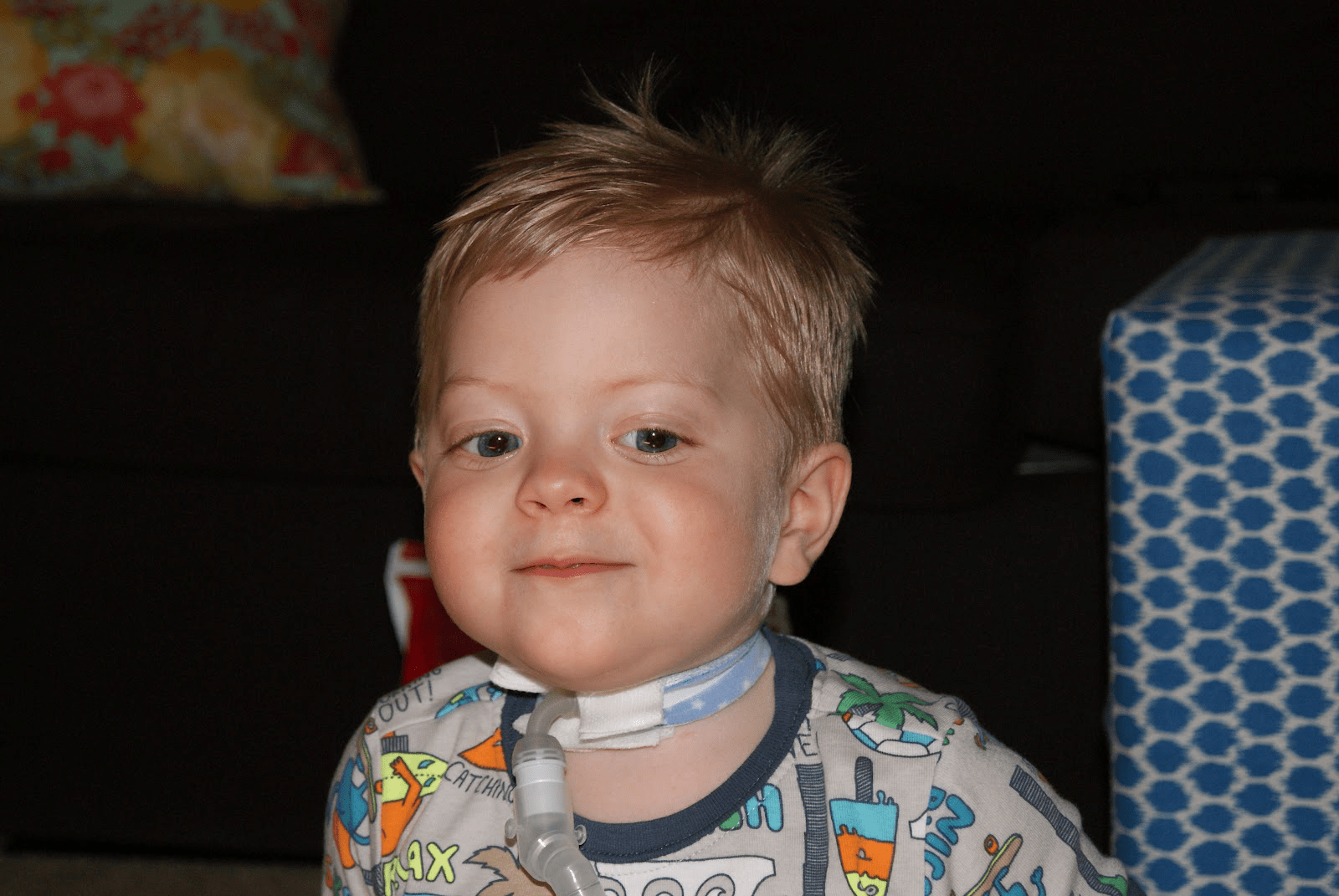 Freeing up hospital beds—how children can leave hospital sooner!