My name is Patrik Hutzel from intensivecareathome.com, where we provide tailor-made solutions for long-term ventilated adults and children with tracheostomies, long-term ventilated adults and children on BiPAP (Bilevel Positive Airway Pressure) and CPAP (Continuous Positive Airway Pressure) without tracheostomy, tracheostomy care without ventilation. Home ventilation weaning, home cough assist management, home TPN (Total Parenteral Nutrition), home intravenous (IV) potassium, home IV magnesium, home IV antibiotics, home IV fluid management, central line, PICC (Peripherally Inserted Central Catheter) line, Hickman’s line, port management at home. Indwelling catheter (IDC), suprapubic catheter (SPC), PEG (Percutaneous Endoscopic Gastrostomy) tube, PEJ (Percutaneous Endoscopic Jejunostomy) tube, nasogastric tube, nasojejunostomy tube, and palliative care management at home.
Today I have a question from Robert who says:
Hi Patrik,
My mother had open heart surgery over clogged stents. She was put on life support, 55 days in ICU. Had a tracheostomy put in but is no longer on the ventilator. She was transferred to a long-term rehab center with a chance of coming off the tracheostomy but has failed thus far. She’s far away from family and we want her home with Intensive Care at Home.
From Robert.
Robert, thank you so much for reaching out and for sharing your mom’s situation.
First of all, I want to say what your family has been through over the last 55 days in ICU is enormous. Open heart surgery, life support, a tracheostomy. That is a long and incredibly difficult journey for your mom and for all of you. And the fact that your mom is no longer on the ventilator is actually a really significant step forward. I want you to understand that.
Let me address your situation directly because this is exactly what we do at intensivecareathome.com.
So what is happening with your mom’s tracheostomy? Your mom had open heart surgery to address clogged stents. After the surgery, complications led to her needing life support, mechanical ventilation for 55 days in ICU.
At some point during that stay, the ICU team decided a tracheostomy was the right next step. This is very common when a patient needs prolonged ventilation, as it makes breathing support more comfortable, reduces the need for sedation and opiates, and makes weaning off the ventilator more achievable.
So the great news, Robert, is that your mom is no longer on that ventilator. That means she’s breathing on her own. The tracheostomy is still in place because the medical team, now at the long-term rehabilitation, has not yet felt comfortable decannulating her, which means removing the tracheostomy tube.
She has failed the decannulation attempts thus far, which could be due to a number of reasons such as secretion management, airway swelling or airway weakness, aspiration risk, or simply needing more time and more specialized nursing care.
Here is the important thing: a patient with a tracheostomy who is no longer on the ventilator is absolutely a candidate for Intensive Care at Home. And here is why a long-term rehabilitation center may not be the right place for your mom. I hear this story all the time, and it genuinely saddens me. Patients are sent to long-term rehabilitation facilities, sometimes hundreds of kilometers away from their families, and the family is left waiting, hoping and wondering why their loved one isn’t getting better or coming home.
Here’s the reality: long-term rehab facilities and long-term acute care (LTAC) facilities often lack the specialized skills and expertise to manage tracheostomies safely and effectively. Managing a tracheostomy, including weaning the patient towards decannulation, requires intensive care trained nurses and doctors, period. When patients are in a facility without that level of expertise, they can bounce back into hospital repeatedly, suffer complications, and feel isolated and miserable. And the family suffers too, especially when your mom is far away from home and far away from the people she loves.
You’re asking, can your mom come home with Intensive Care at Home? Robert, the short answer is yes, this is absolutely something we can help you with at intensivecareathome.com.
We are the first fully accredited Australian provider of Intensive Home Care nursing services for adults and children with tracheostomies. Everything we do is evidence-based and follows our Mechanical Home Ventilation Guidelines that are evidence-based, they’re the gold standard for safe and effective tracheostomy and home ventilation care in the community.
According to those evidence-based guidelines, patients with a tracheostomy, whether on ventilation or not, require critical care registered nurses with a minimum of 2 years of ICU experience, 24 hours a day, 7 days a week. It is non-negotiable. It is not a general registered nurse without ICU experience, it is definitely not a disability support worker. It is an ICU-trained critical care nurse. This is what keeps your mom safe at home.
And here’s what that looks like in practice for a patient like your mom. We send ICU-trained critical care nurses into your home 24 hours a day, 7 days a week. Those nurses are trained in advanced airway management, tracheostomy care and tube changes, secretion management and suctioning, cough assist if needed, PEG tube or nasogastric tube management if applicable, and any other complex care needs your mom has.
We set up a mini ICU in your home with all the right equipment, with all the right staff that you can know, like and trust. For a patient like your mom who has a tracheostomy but is not ventilated, that means suction machines, spare tracheostomy tubes, resuscitation equipment, monitoring, everything that is needed to keep your mom safe and to give her the best possible chance of having her tracheostomy removed, decannulation, over time.
We work towards decannulation with your mom. Our team follows best care and gold standard evidence-based decannulation protocols from our evidence-based mechanical ventilation guidelines that you can find on our website at intensivecareathome.com. And we work closely with the treating medical team to give your mom the best possible chance of getting that tracheostomy removed, so she can speak normally, eat and drink more freely, and have the best quality of life.
So now you’re probably asking what are the criteria for decannulation, that is, the removal of the tracheostomy tube. Our evidence-based Mechanical Home Ventilation Guidelines that you can find on our website at intensivecareathome.com, are very clear on what is needed before a tracheostomy can be safely removed.
Your mom needs to:
- Be able to tolerate cuff deflation for 24 hours, or have an uncuffed tracheostomy to begin with.
- Tolerate a speaking valve like a Passy Muir speaking valve for 12 hours or more during the day.
- Be able to manage her own secretions with an effective cough.
- Be cardiovascularly and hemodynamically stable.
- Have no new lung infiltrates on chest X-ray.
If your mom has been failing decannulation attempts at the rehab so far, it may simply be because she needs more time, more specialized nursing care, and the right environment to achieve these goals.
Being at home, surrounded by family in a familiar environment with dedicated ICU nurses can make a profound difference. I have seen it happen many times. Patients who have failed in rehab or LTAC go home with our service and thrive. The home environment, the family environment, and the 24/7 specialized nursing care make all the difference.
Why keeping your mom far away from family is not the answer: Robert, you said it yourself, your mom is far away from family, and you want her at home. And I want to tell you that instinct is absolutely right. Quality of life for a tracheostomy patient is not just about clinical numbers and measurements. It’s about human connection. It’s about being in a place that feels like home. It’s about seeing the people you love every day. It’s about dignity and comfort and meaning.
Long-term stays in rehab facilities away from family are not just hard on patients emotionally, they can actually slow recovery. Research consistently shows that patients do better when they are supported by their family and in a familiar environment.
At intensivecareathome.com, we have helped hundreds of families do exactly what you are asking, Robert, get their loved one home safely with the right level of clinical support so that the whole family can be together. That is what we are here for.
So what happens next? Here is how we can help you.
Robert, here’s what I want you to do: contact us at intensivecareathome.com or call us on one of the numbers on the top of our website. We will set up a free consultation and talk you through the entire process step by step.
Here is what we will help you with.
Number 1, discharge planning: we will work with the rehab team to coordinate a safe discharge home for your mom. We handle the clinical handover, the care planning, and the transition so nothing gets missed.
Number 2, we organize all of the equipment your mom needs at home, including suction machines, spare tracheostomy tubes, monitoring equipment, and anything else required.
Staffing: we build a dedicated team of ICU-trained critical care nurses for your mom’s home care, rostered 24 hours a day, 7 days a week.
Funding: we help you navigate the funding options available to you. Whether that is the National Disability Insurance Scheme (NDIS), Transport Accident Commission (TAC), Department of Veterans’ Affairs (DVA), private health insurance, Department of Health, or any other funding streams. This is a huge area of confusion for many families and we help you every step of the way.
Next, ongoing care and decannulation: once your mom is home, our nurses follow evidence-based protocols to work towards decannulation and give your mom the best possible chance of getting the tracheostomy out.
And finally, a note on safety because it’s non-negotiable. I want to be very clear, Robert, because I see families sometimes consider cheaper or less specialized options, and I worry for their loved ones deeply.
A patient with a tracheostomy cannot be safely cared for at home by a support worker or a general registered nurse who does not have ICU experience. This is not an opinion, it is documented in our evidence-based mechanical ventilation guidelines, which are the gold standard for home care when it comes to tracheostomy and ventilation, and it is backed by decades of evidence of Intensive Care at Home nursing.
It’s also backed by me reporting on my blog posts here about patients’ deaths in the community for tracheostomy or ventilated clients, where providers or funding bodies wanted to take shortcuts and provide services with support workers or general registered nurses, and people who have died. Every one of those blog posts or videos that I’ve made about that, I have all the evidence to back up what I’m saying here publicly.
Patients have died at home because they did not have critical care nurses available 24/7 when something went wrong with a tracheostomy. A tracheostomy can dislodge, secretions can block the airway, a medical emergency can happen at the drop of a hat in seconds, and without a trained ICU nurse who knows exactly what to do, the consequences can be fatal.
This is why we are so empathetic and emphatic about the standards of care we provide. We are not just any nursing agency, we are an ICU coming to your home, and that is the only safe option for someone like your mom.
And to summarize, Robert, here’s what I want you to take away from this.
Your mom had a massive open-heart surgery, spent 55 days on life support in ICU, has a tracheostomy, but is breathing on her own, and she’s stuck in a long-term rehab facility far away from her family. That is a situation that can absolutely be changed.
With Intensive Care at Home, your mom can finally come home. We can provide the 24/7 ICU-level nursing care she needs to be safe. We can work towards getting her tracheostomy removed. And your family can be together, which is exactly where your mom should be.
This is exactly what we do, Robert, this is what we have been doing since 2012. We have helped hundreds of families in exactly these situations across Australia and around the world, and we can help yours too.
Call us on one of the numbers on the top of our website at intensivecareathome.com or send us an email to [email protected].
With all of that said, with Intensive Care at Home, we are currently sending our critical care nurses into the home 24 hours a day. Therefore, we are providing a genuine alternative to long-term stay in intensive care for:
- Ventilation
- Tracheostomy
- Home BiPAP (Bilevel Positive Airway Pressure) and CPAP (Continuous Positive Airway Pressure)
- Tracheostomy care without ventilation
- Home TPN (Total Parenteral Nutrition)
- Home IV potassium
- Home IV magnesium
- Home IV antibiotics
- Home IV fluids
We’re providing:
- Cough assist management at home
- Ventilation weaning management at home
- central line, PICC (Peripherally Inserted Central Catheter) line, Hickman’s line as well as port management at home
- nasogastric tube, nasojejunostomy tube, PEG (Percutaneous Endoscopic Gastrostomy), PEJ (Percutaneous Endoscopic Jejunostomy) tube management at home
- IDC (Indwelling Catheter) and SPC (Suprapubic Catheter) management at home
- Palliative care services at home
We’re also sending our critical care nurses into the home for emergency department bypass services. We have done so successfully as part of the Western Sydney Local Health District’s In Touch program, saving approximately $2,000 per patient that we keep at home instead of them going into an emergency department.
That also means we’re in a position to cut the cost of an ICU bed by around 50%. An intensive care bed costs between $5,000 to $10,000 per bed day depending on location. Intensive Care at Home costs approximately 50% of that, and we’re freeing up the most sought-after bed in the hospital, which is the ICU bed. Most importantly, we’re improving the quality of life for patients and their families, which is a win-win situation for all stakeholders.
Our Coverage and Accreditation
With Intensive Care at Home, we’re currently operating all around Australia, in all major capital cities, as well as in all regional and rural areas. We are an NDIS approved service provider all around Australia, TAC (Transport Accident Commission) and WorkSafe in Victoria as well as the Department of Veterans Affairs all around Australia.
We’re also ISO 9001:2015 accredited. Our clients and we as a service provider have also received funding through public hospitals, private health funds as well as departments of health.
We are the only service provider in Australia that has achieved third-party accreditation for Intensive Care at Home nursing in 2025. We have been achieving this high level of accreditation since 2012. No other provider in Australia has achieved the Intensive Care at Home level of accreditation in the community and has created more intellectual property when it comes to Intensive Care at Home nursing than we have.
This puts us in a position to employ hundreds of years of critical care nursing experience combined in the community. No other service provider in 2025 employs a higher skill level in the community than we do. And that enables us to look after the highest acuity adults and children in the community in Australia safely.
If You Need Help
If you’re at home already and you’re watching this or you’re stuck in an ICU and you realize that you don’t have the right level of support, I can give you many examples where we helped clients with funding, how we advocate for funding. We had to advocate successfully for funding from our first case study to many other case studies where we had to advocate successfully for funding with the right evidence of course because it is crystal clear that disability support workers for example or registered nurses without ICU experience cannot look after ventilated clients at home whether adults or children with or without a tracheostomy and it’s simply dangerous and negligent.
There are plenty of examples where clients with support worker models or even RN (registered nurse) models without ICU experience have died at home and I have evidence to back up everything that I’m saying here because it’s a bit like flying the airplane with a cabin crew instead of the pilot and it could simply be deadly.
This can be avoided by having simply 24-hour critical care nurses at home because our clients are at high risk of medical emergencies or worse without critical care nurses 24 hours. This is actually also evidence-based in the community and is documented in our evidence-based Mechanical Home Ventilation Guidelines on our website at intensivecareathome.com.
Think about it: in an intensive care unit in a hospital, you wouldn’t have support workers or general registered nurses looking after a critical care patient on a ventilator with a tracheostomy. So why would anyone in their right mind do that in a home care environment where there are fewer resources?
Clients that have found us have been at home long-term predictably and permanently with critical care nurses. Their alternative would have been to either die or stay in ICU long-term, and our clients don’t go back to ICU. They stay at home permanently and predictably and the insurance bodies save half of the cost of an ICU. But it’s a win-win situation all around.
We can do the same for you if you’re stuck in ICU or if you’re not safe at home, which includes the advocacy for funding and the network that goes along with it. We have always successfully advocated for our clients or we have the network to successfully advocate for you and for your family member, otherwise we wouldn’t be in business. The same again is applicable for those stuck in an ICU which is similar to many of our, if not most of our cases.
Our Support Coordination Services
This is also why we are providing Level 2 and Level 3 NDIS support coordination. We have a team of experienced NDIS support coordinators, and they have a wealth of knowledge. We’re also providing TAC case management and WorkSafe case management in Victoria with Lucy McCotter.
If you’re an NDIS support coordinator or a case manager or a social worker from another organization or a hospital watching this and you’re looking for nursing care for your participants, please reach out to us as well. If you’re looking for funding for nursing care for your participants and you don’t know how to go about it and how to advocate for it, what evidence to provide, I encourage you to reach out to us as well. We have the network to make that happen. We will help you with the right level of funding and with the right level of advocacy.
We’re also providing NDIS specialist nursing assessments done by critical care nurses with a legal nurse consulting background.
Join Our Team
If you are a critical care nurse and you’re looking for a career change and you want to join a very progressive, dynamic, successful, and high-performing team of critical care nurses in the community, we are employing hundreds of years of critical care nursing experience combined.
If you’re looking for a career change, we’re currently hiring for jobs for critical care nurses in Melbourne, Sydney, Brisbane, Albury-Wodonga, Bendigo, Geelong, Warragul, and also in Wyelangta in Victoria.
If you have worked in critical care nursing for a minimum of two years, adult ICU, pediatric ICU, ED and you have already completed a postgraduate critical care nursing qualification, we will be absolutely delighted hearing from you.
I have a disclaimer though: Because we are offering tailor-made solutions for our clients which includes regular staff, our clients do also want the same staff coming over and over again because they are so vulnerable and so special. That’s why we need regular, reliable staff.
If you’re looking for agency work where you can come and go, this will not be the right fit for you. We’re looking for consistency and our clients are looking for consistency. So please only apply with us if you can give us regular and consistent availabilities for shifts and you’re really keen on building relationships with us and with our clients. Reliability is also a must.
For Medical Professionals and Healthcare Executives
If you’re an intensive care specialist or an ED specialist, we also want to hear from you. We’re currently expanding our medical team as well.
We can also help you eliminate your bed blocks in your ICU and in your ED for your long-term patients or for your regularly readmitting patients with our critical care nursing team at home. We’re here to help to take the pressure off your ICU and ED beds. In most cases, you won’t even pay for it. Even if you do pay for it, it is so much more cost-effective than what you’re paying for in ICU and ED settings, and you get the same level of care and simply more patient and family satisfaction because you also want to partner with your consumers.
If you are a hospital executive watching this, we can help you free up your ICU and ED beds.
International Support
If you’re in the U.S. or in the UK and you’re watching this and you need help, we want to hear from you as well. We can help you there privately with one-on-one consulting and with hiring nurses privately.
Once again, our website is intensivecareathome.com. Call us on one of the numbers on the top of our website or simply send us an email to [email protected].
If you like my videos, click the like button, subscribe to my YouTube channel for regular updates for families with Intensive Care at Home and intensive care. Click the like button, click the notification bell, and share this video with anyone who has a family member in intensive care long-term or needs to see this.
Thank you so much for watching.
This is Patrik Hutzel from intensivecareathome.com and I’ll talk to you in a few days.
Take care for now.
RELATED LINKS:
 Breaking the vicious cycle of long-term ventilation in Intensive Care by creating a virtuous cycle
What are normal visiting hours in Intensive Care?
VENTILATION AND TRACHEOSTOMY – HOW LONG IS THE INTENSIVE CARE STAY?
Is it ethical to leave long-term ventilated adults& children with tracheostomies in Intensive Care?
Breaking the vicious cycle of long-term ventilation in Intensive Care by creating a virtuous cycle
What are normal visiting hours in Intensive Care?
VENTILATION AND TRACHEOSTOMY – HOW LONG IS THE INTENSIVE CARE STAY?
Is it ethical to leave long-term ventilated adults& children with tracheostomies in Intensive Care?
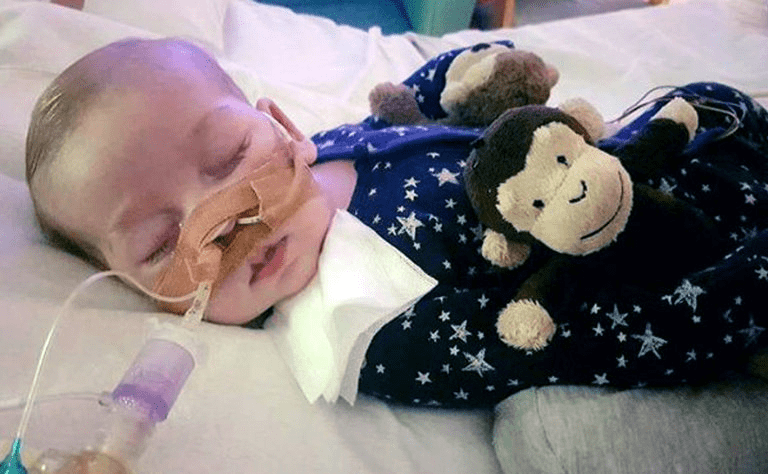 Charlie Gard, the little baby who wasn’t allowed to die at home!