TPN (Total Parenteral Nutrition) & Central Line Care at Home: ICU to Home Transition Guide for Families | Live Q&A
TPN (Total Parenteral Nutrition) and central line care at home: ICU to Home Transition Guide for Families. This is another live question and answer. So welcome to another Intensive Care at Home and intensivecarehotline.com livestream where I answer your questions and where I present topics that you are telling me you are interested in that our clients are telling us they’re interested in. With the questions they’re coming to us, with the questions we’re getting from ICU or from some clients that are in the community already.
And if you like my videos, subscribe to my YouTube channel, click the like button, click the notification bell and share this video with anyone that can benefit or will benefit from this video. So welcome to intensivecarehotline.com and intensivecareathome.com. I’m so glad you’re here today for today’s critical topic, TPN and central line care at home. Everything families need to know about transitioning from ICU or from hospitals to home care with TPN, total parenteral nutrition, also known as IV or intravenous nutrition.
Today, we’re covering how TPN and central line care works in ICU and hospital settings. The essential steps for safe transition to home, how our clients with TPN live full active lives with community access, evidence-based protocols for ventilated patients on TPN as well, and real success stories for families thriving at home. And there’s also some stories where TPN has helped patients with palliative care as well and end of life care.
So, I’m the host of your show, my name is Patrik Hutzel. I am a critical care nurse by background having worked in critical care nursing for over 25 years in three different countries, where I worked as a nurse manager for over five years in intensive care and where I’ve been starting Intensive Care at Home in Australia in 2012. And we’ve been operating ever since then. I then started to consult and advocate for families in Intensive care also since 2013 with intensivecarehotline.com.
And I can very confidently say we have saved many lives for our clients in intensive care and Intensive Care at Home. And you can verify that on our intensivecarehotline.com and intensivecareathome.com testimonial sections and also at our intensivecarehotline.com podcast section where we have done interviews with some of our clients.
I also want to welcome our viewers on replay. And if you have any questions right now, drop a comment in the chat pad and tell me what your current situation is. Are you currently in hospital in ICU planning discharge, or are you supporting someone at home already and you know it’s not working and you’re looking for a higher level of care to solve your problems? Hit the like button also, more families can find this critical information and subscribe to my YouTube channel for more updates for families in Intensive care and Intensive Care at Home.
So with Intensive Care at Home, we’ve helped hundreds of families successfully transition complex ICU patients home, including those on long-term or short-term TPN, ventilation, tracheostomy, tracheostomy without ventilation, ventilation like as BIPAP (Bilevel Positive Airway Pressure), CPAP (Continuous Positive Airway Pressure), CPAP without tracheostomy, and go to Intensive Care at Home to see how we provide 24-hour intensive care nursing at home as a genuine, permanent, and predictable alternative to a long-term stay in intensive care.
So, we’ll spend the first 30 minutes discussing hospital-based TPN and central line care. Then the second half focusing on home transition. Stick around until the end for live Q&A as well, and a special offer for both Intensive Care Hotline and intensivecareathome.com. Let’s dive right in. So, let’s start with understanding TPN. Again, total parenteral nutrition, also known as intravenous nutrition and central lines in hospitals or in ICU. It’s really establishing the foundation if your loved one or you is in ICU or hospital and long-term TPN, you need to understand exactly what’s happening and why.
What is TPN? Again, TPN stands for total parental nutrition. Its complete nutrition delivered directly into the bloodstream when the digestive system can’t absorb nutrients properly. This might be due to short bowel syndrome, severe gastrointestinal disorders or failure, post-surgical complications, chronic intestinal failure, critical illness requiring bowel risk. In ICU, TPN is a lifeline, but here, here’s what most families don’t realize. TPN doesn’t mean you’re stuck in hospital forever if you need TPN long-term.
Let’s also talk about the different types of central line use for TPN. So first, there’s a central line, can be a subclavian, central line, or central line can also be a femoral central line. Subclavian here, jugular here, femoral is in the groin. And those central lines, generally speaking, need to be changed every 7 to 10 days. So, they’re more appropriate for hospital settings.
Other central lines that can be used for TPN can be PICC lines, peripherally inserted central catheter, inserted through arm veins, often used for medium or long-term TPN weeks to months, easier to place and remove. Common starting point in hospital and really, they don’t have to be changed every 7 to 10 days, they can be in for up to 12 months.
Next, Hickman’s lines, surgically tunneled under the skin, exit point on chest wall, better for long-term use, months to years, multiple lumens available can be seen as the gold standard for home TPN. We have clients in the community with Hickman’s and PICC line. And then last but not least, port-a-cath, completely under the skin access with a special needle. Excellent for intermittent, but also long-term TPN, lower infection risk, great for community access.
The type of line matters enormously for home discharge planning because ICU level monitoring and care management in ICU for TPN involves 24/7 monitoring of vital signs, regular blood glucose checks, daily electrolyte monitoring, strict aseptic technique for line care, careful fluid balance management, coordination with pharmacy for TPN formulation.
And if you’re watching this and you have a family member in ICU or at home with TPN, what type of central line does your loved one have? PICC line, Hickman, port, or even a central line. Now, I also want to look at special considerations for ventilated patients, because as you know, predominantly we’re looking after ventilated tracheostomy clients at home, adults and children BIPAP, CPAP ventilation without tracheostomy, tracheostomy without ventilation, cough assist management, ventilation, weaning management, home TPN, like with our topic today, but also home IV potassium, home IV magnesium, home IV antibiotic infusions as well with the lines that I just mentioned. We also provide PEG, PEJ tube management at home, nasogastric tube, nasojejunostomy tube management at home.
So, let’s look at special consideration for ventilated patients because here’s where it might get more complex and where our expertise matters even more. Some of our clients require both TPN and ventilation support. This might include invasive ventilation via tracheostomy, non-invasive ventilation via BIPAP, CPAP. Might need a tracheostomy without ventilation or it might require high flow oxygen therapy. It might require some cough assist management.
According to evidence-based Mechanical Home Ventilation Guidelines that you can find on our website at intensivecareathome.com, patients with combined nutritional and respiratory support can absolutely thrive at home with proper planning. The key is coordinated care addressing respiratory status and nutritional needs simultaneously, preventing aspiration in ventilated patients, managing increased metabolic demands, ensuring adequate caloric support for respiratory muscle function.
Plenty of research is out there that early feeding in ICU is critical to recovery. So don’t feed in ICU and patients have a much higher risk of dying or not thriving. So early feeding and appropriate feeding is absolutely critical in ICU for recovery.
Now, write this down. The hospital team will say it’s too complex for home and it’s a value bomb that I’m dropping here really, but we’ve successfully transitioned dozens of ventilated patients home with or without TPN. The difference is having ICU trained nurses at home 24/7 who understand both respiratory and nutritional management.
Write this down. Common hospital challenges and family concerns. Let’s talk about what families are really experiencing in hospital and in ICU right now. If your loved one has been in ICU or hospital for weeks or months on TPN, you’re likely experiencing the physical toll, muscle deconditioning from bedrest, ICU or hospital acquired weakness, loss of independence, loss of dignity, loss of privacy. Sleep deprivation from hospital environment, increased infection risk from prolonged hospitalization. And let’s not forget the emotional impact, family separation and stress, financial burden of parking, meals, lost work time, facing an uncertain future, feeling powerlessness and overwhelmed. Also, there are some medical concerns, risk of hospital acquired infections, pressure injuries from immobility, delirium, and cognitive decline, social isolation.
So comment below. How many weeks or months has your loved one been in ICU or in hospital? Let’s support each other here and let’s look for solutions. Let’s also look now what hospitals or ICUs often don’t tell you. Here’s the uncomfortable truth. Hospitals are excellent at acute crisis management, but they’re not designed for long-term living if you want to call that even. Most hospital teams will default to saying complex patients need to stay or can’t go home simply because they’re unfamiliar with home intensive care capabilities. They don’t know about specialized providers like us because we are very niche. They’re risk averse and following standard protocols and put patients in a one size fits all box and they lack discharge planning resources, including the discharge planning resources that are needed in the community, which is where we come in and our expertise.
And here’s what we know from evidence. Research consistently shows that patients with complex needs, including TPN and ventilation have a much better quality of life at home, goes without saying. Lower infection rates in the home care environment, improved mental health and family bonding, maintaining or improved medical stability, and significant cost savings. If you want expert guidance navigating these hospital conversations, intensivecarehotline.com provides one-on-one consulting to help families in intensive care advocate effectively.
And again, we have, I don’t know, hundreds of testimonials on our website at intensivecarehotline.com and we’ve done client interviews at intensivecarehotline.com to share with the world how effective our consulting for families in intensive care is, because we show you how to manage intensive care teams, something you probably didn’t even know was possible so that they don’t manage you.
Let’s now look at the transition planning gap. The biggest problem we see, lack of proper transition planning. Families are told, “We’ll start planning discharge soon,” but weeks pass by. You need to find home care with no guidance. Learn to do line care with minimal training with disasters waiting to happen. Line infection, sepsis, and often leading to ICU admissions and potentially death. Good luck. That’s what they’re essentially saying.
This is where specialized Intensive Care at Home support becomes essential. If you’re feeling stuck in hospital or an ICU right now, don’t wait. Visit Intensive Care Hotline and intensivecareathome.com today. Our ICU team, nursing team will review your situation within 24 to 48 hours, including on weekends and create a clear action plan for getting home safely.
Next, let’s look at the home transition and making things happen. All right. Now for the exciting part, let’s talk about how families successfully transition home with TPN, central line, Hickman’s line, PICC line, port line, and that’s where your life and your loved one’s life will change dramatically.
We have a client at the moment that we’ve providing home TPN services to since 2021. Before this client found out about our service, the client was in hospital for nearly 12 months. Can you imagine? And the only thing that kept him there was the TPN. The minute the client found out about us and we managed to organize funding, he was home in no time.
But what does home really mean for TPN patients? When I say home, I don’t mean a hospital bed in your living room where you’re still trapped. I mean real life. Our TPN clients can go out shopping, go to cafes, restaurants with friends or families, attend family celebrations and weddings, take holidays and travel, maintain employment or education, participate in community activities. Most of all, they live with dignity, independence, and joy.
Compare that to hospital and ICU environment. Very few patients or families would say that ICU environments are places of dignity, independence, and joy. And ICUs have their time and their place. I worked in ICUs for 20 years and there’s a lot of good things happening in ICU’s life are being saved. But once that’s established, especially for long-term patients, whether it’s ventilation, tracheostomy, TPN, that’s when we need to start looking at what’s best for the hospital, what’s best for the patient and family, which is home care.
And we can also provide services to clients on 24/7 ventilation and TPN who regularly go out for dinner, visit beaches, attend concerts. The only difference between them and hospital-bound patients, they have Intensive Care at Home, providing expert intensive care nursing support at home. It’s not a dream. It’s our everyday reality. Check out our success stories at intensivecareathome.com.
So, what are essential requirements for safe home TPN? Let’s be practical. What does it actually take to manage TPN at home safely? Number one, appropriate central access. Like I said, central line, less frequently used in the community, if at all, more frequently used in the community are Hickman’s line, PICC Line, and port-a-cath. It’s important that they’re properly functioning with no complications, and it’s important that the nursing staff that access the PICC, the Hickman’s, the port, or the central line are properly trained, which is where it comes back to having intensive care trained nursing staff at home. Because usually, not all the time, but usually managing TPN at home is an ICU nursing skill. There are some nurses on a hospital ward that also have the skill to manage TPN, but it’s more so central lines, PICC line. Hickman’s and port is more so an ICU level nursing skill.
Now, let’s also look at the TPN supply chain because I know that this has also been an issue for some clients. So how can you actually get access to TPN in the community? Well, first of all, you need a valid script from a doctor who’s actually authorized to prescribe TPN. And the good news is our clients have TPN prescriptions from the relevant specialists. The bad news here is the type of doctor and the number of doctors that can actually prescribe TPN is actually limited to gastroenterologists, ICU specialists or intensive care consultants. And also, some oncologists can prescribe TPN, some ED physicians might.
And my understanding now is, and please, someone can correct me if I’m wrong here, my understanding is that in Australia now, ICU nurse practitioners can also prescribe TPN. But someone please correct me here if we haven’t had that yet, but I am talking to some critical care nurse practitioners and they’re telling me they can. It’s within their scope of practice that they can prescribe TPN in the community.
So, what does the supply chain look like once there is a valid order? The supply chain looks like that we usually organize it through Baxter or Fresenius. Unfortunately, they’re the only two delivering. Sometimes the pharmacy can help. Pharmacy can compound and deliver TPN, but so can Fresenius and Baxter. The reason I’m mentioning these too is I have no affiliation with them, but the reality also is they’re the only two big providers we found in Australia. There’s nobody else that we found, so kudos to Baxter and Fresenius for doing that. Kudos to any small OPD pharmacy that’s also helping with TPN in the community.
You also need proper refrigeration for TPN storage, backup power for refrigeration, and sterile supplies for administration such as sterile dressing, packs, chlorhexidine, steroid gloves, and so forth. Again, these are all things we supply. You need monitoring systems like for blood glucose monitoring capability, regular lab work coordination, especially electrolyte checks and electrolyte monitoring, particularly potassium, magnesium, phosphate, calcium, and so forth all needs to be monitored.
Fluid balance, very important that it’s monitored. What’s going in, what’s going out. And like I said, in the beginning, there needs to be medical oversight from specialist physicians. Like I said, my understanding right now in 2025 in Australia is that gastroenterologists, intensive care consultants, or ICU specialists, some palliative care physicians, and some critical care nurse practitioners can prescribe TPN in the community. That’s my understanding, and those other people that generally speaking prescribe the TPN where we are a service provider.
Next, let’s look at skilled nursing care because this really is the game changer. 24/7 ICU trained nurses who understand TPN central lines, PICC line, Hickman’s lines, port access and ventilation tracheostomy if needed. Not just home care nurses, we are actually the specialist provider here that can make TPN and central line management at home happen, including engaging with ICU consultants, gastroenterologists, critical care nurse practitioners, and so forth.
Now, type info in the comments if you want detailed information about setting up home TPN care and how we can help, and then we can continue the conversation. Now, let’s also look about another complex scenario. Let’s look at the combination of evidence-based care at home for ventilated TPN patients at home.
So, for those with combined respiratory and nutritional needs with TPN, the evidence is crystal clear. According to our evidence-based Mechanical Home Ventilation Guidelines that you can find on our website at intensivecareathome.com, it is important that you consider what does successful home ventilation require. Well, appropriate ventilator selection and settings, whether that’s ventilation with a tracheostomy or non-invasive ventilation with a BIPAP or CPAP mask. You need ICU nurses that can do skilled respiratory assessments and management, emergency protocols and backup equipment. You need suction machines, monitors. You need backup ventilators, nebulizer machines, hospital type bed, hoists, or lifting machines to keep a patient as mobile as possible. You need, most of all, 24-hour intensive care nursing at home to make that transition home safely.
Now, add TPN to this equation. That means nurses, our ICU nurses must manage both systems simultaneously. That means we must manage the home TPN and the ventilation side of things and/or the tracheostomy side of things. That could include that timing of TPN administration might be around activities. It might be that TPN can run 24 hours a day. It really depends on the quantity of TPN that is needed and for what length of time.
What it also includes is for risk managing, monitoring for complications affecting both systems. That means ventilation, invasive or non-invasive ventilation, the tracheostomy, high flow nasal, prongs, cannula, trache shield, whatever needs to be monitored at 24 hours a day. And that needs to be monitored simultaneously with a PICC line, with a central line, with a Hickman sign or with a port for the TPN. So, it’s very complex, but that’s what we are specialized on because we have developed specialized protocols combining obviously respiratory care standards, infection prevention for central line, PICC lines, Hickman lines, port management, nutritional monitoring, of course, quality of life optimization. It’s not theoretical we’re doing this successfully with multiple clients every day right now.
Now, let’s really look at the Intensive Care at Home difference. Now, let me be very direct here. Not all home care is created equal. Standard home care providers cannot manage complex TPN and ventilation patients. They can’t do either or. We can do both, and we can do both separately, of course.
Here’s why Intensive Care at Home is different. Our ICU level nursing model at home. What sets us apart is, number one, our nursing experience. Every nurse’s ICU trained has a minimum of two years ICU nursing experience. Most of our team members have a critical care, a postgraduate critical care nursing qualification. That means two things.
Number one, we’re employing hundreds of years of Intensive Care nursing experience combined. There’s no other service provider in Australia in 2025 that brings in a higher skill level into the community. And similar to ICU accreditation standards where you need to have a minimum of 50% nursing staff that has a postgraduate qualification, it’s the same with us. We have more than 50% of our staff critical care trained, which makes us the equivalent of an intensive care unit in the home. We also have an ICU consultant that’s working with us directly.
Now, what also sets us apart is that we have experience with TPN, central line, PICC lines, Hickman’s lines, port management, ventilation, tracheostomy care, something that most people think is only possible in ICU or not in a home care environment. We offer continuous professional development for our staff, and of course, specialized protocols and procedures for complex care. We are also the only provider in Australia in 2025 that is actually third-party accredited for Intensive Care at Home. We’ve built the framework, the policies, the procedures, the intellectual property for Intensive Care at Home. Cannot be matched by any other provider. We’ve been operating since 2012 now, and I’ve had experience with Intensive Care at Home in Germany in 2001, and I was part of a startup service there where we were the first ones pioneering this service in Germany, and I was part of setting it up in Australia, so I have a large amount of experience in this space.
What also sets us apart is 24/7 intensive care nursing support. Not hourly visits, continuous presence. One-to-one nurse-patient ratios, immediate response to any changes, family respite and support, where parents can be parents, not caregivers. Where spouses can be spouses, not caregivers. Where siblings can be siblings, not caregivers.
We also offer, like I said, medical coordination. We either directly liaise with our ICU consultant, ICU specialist, or we sometimes liaise with hospitals directly, depending on the circumstances. We organize lab work, pathology, and monitoring, medication management, hospital admission prevention, because our clients want to be at home. Quality of life focus, community access planning, social inclusion, dignity and independence, family-centered care only.
And let me share some examples. We’ve transitioned many clients’ home, sometimes after weeks, months in ICU, sometimes after years. And whether it’s with ventilation, tracheostomy, with TPN, whether it’s a combination of both, whether it’s with complex medical management, patients can be severely weakened from their ICU stay. The hospitals often say it’s impossible to take patients home. Well, we are always saying it’s possible, of course, because after some time at home, getting into a routine, creating the right team around them, patients all of a sudden can build up their strength, not only their physical strength, they also build up their mental strength, their emotional strength, because they’re now finally in an environment where they feel at home.
And our clients go to family dinners, go to restaurants, go to shopping centers, going to the movies. They might go to the beach in summer and regaining strength through physiotherapy, and also, they’re now all of a sudden sleeping properly for the first time in months. Spouses get their spouses back, children got there, father back, their mother, parents got their children back, whatever the case may be. This is the power of proper home ICU care. See more stories at intensivecareathome.com.
Now, let’s also talk about the cost, because hospitals often use this as a barrier. ICU beds, $5,000 to $6,000 per bed day, the most sought-after bed in a hospital, the most expensive bed in a hospital. Let’s also look at long-term hospital ward, $1,500, $2,500 per bed day. So why is this important in this context? So, some TPN clients might actually be on a hospital ward, not actually in ICU. If they’re not ventilated, they are often sitting on a hospital ward. And the reality is that standard home care is often inadequate for complex needs. That’s where, again, intensivecareathome.com comes in because we are providing comprehensive intensive care level care at the fraction of hospital costs with the same quality standards.
Plus, consider the hidden hospital costs, loss employment for family caregivers, travel and parking, meals and accommodation for visitors. On top of that, the emotional and mental health toll. Home care is not expensive, it’s cost-effective and improves outcomes. So, if you are worried about who’s going to pay for it, I can tell you do not worry about it because we work with insurances, NDIS, private payment options, whatever the case may be. We wouldn’t exist if we didn’t know how to help you advocate for the funding. And the advocacy is actually not that difficult because it’s 50% more cost-effective than an ICU bed.
But if it comes to TPN, okay, how does TPN look for some clients? I can tell you how TPN looks for some clients. So, for some clients, we go into their homes, hook up the TPN, sterile procedure, and then we leave. And then we disconnect the TPN when it’s run out. But there have also been some clients where we needed to be present for the whole TPN because they couldn’t troubleshoot. It really depends on the circumstances. This is for TPN clients that are not ventilated. If someone is ventilated and TPN, they need 24-hour nursing care, but not all TPN clients actually need 24-hour nursing care, but it depends. Some is fine with hook-on, hook-off. And then if there’s an issue, let’s just say there’s an air alarm, there’s a leakage, we will send someone out at short notice.
So, I hope that makes the differences clear. Also, some TPN runs overnight. Some TPN runs through the day. Some TPN runs 24 hours. Again, it all depends on what a client needs. So, here’s how to start the conversation. If you’re ready to pursue home discharge, here’s your plan of action. If you’re in ICU, go to intensivecarehotline.com first, get expert consulting on your specific situation, understand your options and requirements, develop advocacy strategies for hospital discussions. Next, arrange an Intensive Care at Home assessment. We’ll review medical records, assess home environment, create detailed care plans, provide costing, and timelines.
Next, we coordinate with the hospital team and with you, of course. We liaise directly with medical and nursing staff if you want us to do that address their concerns professionally, give them insights about home care they don’t have, demonstrate our capabilities, facilitate smooth discharge and smooth transfers. And then step number four, execute discharge, equipment and supply setups, potentially staff training and orientation, family education, 24/7 support from day one, if needed.
Comment in the comment section ready if you want to start the process. And just as a site tip, we actually had an inquiry this week, which was about a client who needs a 24/7 Flolan infusion, epoprostenol infusion for a lung condition. And that’s also running through a central line or a PICC line. Again, it’s right up our alley just for you to consider if you or your family member is stuck on a Flolan or epoprostenol infusion, often for pulmonary hypertension.
Now, let’s also look at practical TPN and central line care at home. Let’s get it even more practical today with daily TPN and central line care at home. Here’s what happens each day. TPN preparation delivered by specialty pharmacy by or by any other TPN supplier, stored in dedicated refrigerator, removed 30 to 60 minutes before administration to warm, bags checked for clarity, expiration, correct patient name.
Administration process, strict aseptic technique for line access, usually administered overnight or during the day. Really depends on what the client wants, or can also be 24 hours. Infusion pump for a precise delivery. Blood glucose monitoring, electrolyte monitoring, continuous nursing observation. And if it’s not 24-hour care for TPN clients and are not ventilated, nursing observations will be done on visit.
What’s happening during the infusion? Well, patient can either sleep comfortably if it’s overnight. If we are there, we can monitor for complications. We will monitor for air in line because you can’t have air in the TPN line, right? That could be dangerous. We’re just as needed, we document and report everything so that things are running smoothly.
If TPN is running during the day, you should also be able to at least go out with a backpack. Sometimes we’ve had clients on TPN that can go out with a backpack. Not ideal. It’s better if it is running overnight, but then again, some TPN clients might need a TPN 24 hours a day, depending on their nutritional needs. If TPN is running overnight and not needed during the day, TPN is disconnected in the morning, central lines, PICC lines, Hickman or port is flushed and dressed. Patient is free for activities and community access with nursing support if appropriate and if needed. That is really only if a TPN line is also ventilated or has a tracheostomy.
Now, let’s also look at central line care and infection prevention. Infection prevention is absolutely critical. Our Intensive Care at Home protocols include daily central line care, aseptic dressing changes. Frequency is based on the line type. It’s usually once a week only, but it can be more frequently. For example, the dressing comes off during a shower or whatever the case may be.
Daily site inspections, obviously, monitoring for any infection or complications. The flushing of the line can either happen with normal saline or heparinized saline or medications such as Taurolock, which is not this similar to heparinized saline, to keep the line patent. Also, making sure the central line or the Hickman line or the PICC line is secured safely.
Also, another question that might come up here for some of you that are already more familiar is, for example, a PICC line, should it be a one lumen PICC line or a double lumen PICC line or a double lumen Hickman’s, single lumen Hickman? Well, I’m glad you’ve asked. Double lumen PICC line gives you two lumens to access. It gives you two opportunity, let’s just say one lumen blocks, which can happen, then you’ve got another lumen to go. The same with the Hickman’s line.
The risk is there’s a big infection risk because you have to access lumens, which makes it a higher infection risk. But again, if the central line or the Hickman’s line is looked after properly, aseptic technique, sterile technique, there shouldn’t be an infection, but just the problem is with a single lumen PICC or a single lumen Hickman’s, if it blocks, it blocks. There’s no other access. A double lumen can buy you time until the PICC line or the Hickman’s line gets replaced.
Now, let’s also look at infection prevention because that is really important. Hand hygiene protocols, sterile technique, always, dedicated clean workspace, immediate attention to any concerns. But one of the biggest infection prevention mechanisms here is also that patients are at home. They’re in a clean environment. Hospital environments are considered dirty because there’s bugs from other patients everywhere. At home, it’s a clean environment, much cleaner environment. And most of our clients have pets and it’s still a cleaner environment than a hospital.
Now, what do we monitor? For red flags, temperature elevation, line site redness or drainage, patient feeling unwell, blood culture results with proper protocols. Home infection rates are typically lower than hospital. Emergency protocols, every family asks, “What if something goes wrong?” Our emergency protocols include 24/7 nursing presence to identify issues early, direct communication with medical teams, hospital liaison for admissions if needed, backup equipment and supplies, clear escalation pathways. Most emergencies are prevented through excellent routine care.
And by thinking ahead, one of the questions that I always ask when we interview staff is, how do you make sure that our clients are at home and never go to hospital? And I listen to what staff have to say whether they’ve got any insights. And if they don’t have insights, we offer them the insights that we need to give them and the support we need to give them, making sure our clients are not going to hospitals.
So, we’ve covered a lot today. Before we finish, let’s go into a Q & A, drop your questions in the comments right now. And thank you so much for joining today. And also, if you’re watching this on replay, please also drop in your comments so I will make another video about it. I mean, all of my videos are really done by what you are requesting, what questions we’re getting.
Also, go to intensivecarehotline.com. You can book a free consultation with me there. And I also offer paid consulting and advocacy with Intensive Care at Home. We help you there right from the start. We’re also providing level 2 and level 3 NDIS support coordination. We’re also providing TAC and WorkSafe case management.
And really here is what you want to remember. Long-term hospitalization is not your only option. TPN at home is not only possible, it’s much better for medical outcomes and definitely better for quality of life. You can go home safely, live in your community, maintain dignity, independence, and privacy, thrive, not just survive.
Visit intensivecareathome.com and intensivecarehotline.com to start your journey. Again, Intensive Care at Home is where we provide home care and Intensive Care Hotline for immediate consulting support if you’re stuck in ICU or in hospitals. Now, before you leave, subscribe to my YouTube channel, click the like button, click the notification bell and share this video with anyone who will benefit from this information today and comment below with your takeaways or your questions. Thank you for trusting me with your time today. I will see you in the next video live and in one of my quick tip videos. Take care.
Now, with Intensive Care at Home, we are currently sending our ICU and critical care nurses into the home, 24-hours a day. We are providing the following:
- Home care services for ventilated adults & children with tracheostomies, with critical care nurses 24-hours a day
- Genuine alternative to a long-term stay in intensive care or at long-term acute care
- Tracheostomy care for clients without ventilation
- Home care services for patients on non-invasive ventilation such as Home BIPAP (Bilevel Positive Airway Pressure), Home CPAP (Continuous Positive Airway Pressure)
- Home TPN (Total Parenteral Nutrition), which is also known as IV nutrition
- Home IV potassium and home IV magnesium infusions, IV fluids, and IV antibiotics
- Providing central line management, PICC (Peripherally Inserted Central Catheter) line management, Hickman’s line management, as well as port management at home.
- Providing nasogastric tube and PEG (Percutaneous Endoscopic Gastrostomy) tube management at home
- Use cough assist machines for our clients for airway clearance at home
- Palliative care services at home
- Ventilator weaning at home
We’re also sending our critical care nurses into the home for emergency department bypass services. We have done so successfully as part of the Western Sydney Local Area Health District, their in-touch program, saving approximately $2,000 per patient that we keep at home, instead of them going to an emergency department.
That also means, we’re also in a position to cut the cost of an intensive care bed by around 50%. An intensive care bed costs between $5,000 to $6,000 per bed day. Our services costs between $2,500 to $3,000 per bed day, and we’re freeing up the most sought-after bed in the hospital, which is the ICU bed. Most importantly, we’re improving the quality of life for patients and their families, which is a win-win situation for all stakeholders. Of course, quality of life is much improved surrounded by families and by a team of dedicated intensive care nurses in the home care setting instead of in an intensive care unit.
With Intensive Care at Home, we are currently operating all around Australia in all major capital cities as well as in all regional and rural areas. We work with NDIS (National Disability Insurance Scheme) clients all around Australia, TAC (Transport Accident Commission) and WorkSafe in Victoria, Department of Veteran Affairs (DVA) all around Australia. Our clients and we, as a service provider, have also received funding through public hospitals, private health funds, as well as Departments of Health.
We are having policies and procedures for Intensive Care at Home nursing and we’ve built all the intellectual property for Intensive Care at Home since 2012. No other provider in Australia has created more intellectual property when it comes to Intensive Care at Home nursing than we have. This puts us in a position to employ hundreds of years of critical care nursing experience combined in the community. No other service provider in 2025 employs a higher skill level in the community than we do, which enables us to look after the highest acuity adults and children in the community in Australia safely.
If you’re at home already and you’re watching this, or you’re stuck in an ICU long-term, or if you’re going to the hospital and ED all the time, and you realize that you don’t have the right level of support at home, or if you are stuck in an ICU, I’ll give you a real-world example today, how we can help you.
One of our first clients when we first got started in 2012, was a client who was at home initially on a ventilator with a tracheostomy with a support worker model 24/7. Of course, support workers are not equipped to look after a client at home on a ventilator with a tracheostomy. That is dangerous and it’s simply negligent. Having support workers looking after a client at home on a ventilator with a tracheostomy is like flying the airplane with a cabin crew instead of the pilot. Because anyone on a ventilator with a tracheostomy is at very high risk of medical emergencies 24/7, or even at high risk of dying if they don’t have a team of dedicated critical care nurses looking after them 24/7 at home. This is actually evidence-based and is documented in our Mechanical Home Ventilation Guidelines that you can find on our website at intensivecareathome.com.
Think about it, in an intensive care unit in a hospital, you wouldn’t have support workers looking after your critically ill loved one or after any critically ill patient on a ventilator with a tracheostomy. So, why would anyone in their right mind do that in the home care environment in the community?
So, this client at the time found out about us eventually, and the ICU that he was basically living in also knew about us and eventually reached out to us. We were proving our concept with this client very fast. When we worked with this particular client, we sent him critical care nurses, 24-hours a day. He never ever went back into ICU ever again, as long as we were working with this client.
We can do the same for you if you’re not safe at home and help you with keeping you at home predictably. Otherwise, we would not be in business. Again, the same is applicable for those stuck in an ICU, similar to this case study that I’ve just given you, or if you’re going back to ED all the time, please reach out to us. We can help you with taking you through the right steps, including how to get funding with different funding bodies.
This is also why we are providing NDIS Support Coordination. We have a team of NDIS Support Coordinators, and they have a wealth of knowledge. I’ve done an interview with Amanda Riches, one of our NDIS support coordinators, and I’ll put a link to an interview with Amanda in the written version of this blog. We’re also providing TAC case management and WorkSafe case management in Victoria with Lucy McCotter.
If you’re an NDIS support coordinator or a case manager from another organization watching this, and you’re looking for nursing care for your participants, please reach out to us as well. If you need more evidence for nursing care, we are also writing NDIS nursing assessments with legal nurse critical care consulting nurses.
If you are a critical care nurse and you’re looking for a career change and you want to join a very progressive, dynamic, and high performing team of critical care nurses in the community, we’re employing hundreds of years of critical care nursing experience combined. You can join this high performing team if you are a critical care nurse.
If you are looking for a career change as a critical care nurse, we’re currently hiring for jobs for critical care nurses in Melbourne, Sydney, Brisbane, in Albury, Wodonga, in Bendigo, in Geelong, in Warragul in Victoria. If you have worked in critical care nursing for a minimum of 2 years pediatric ICU, ED, and you have already completed a postgraduate critical care nursing qualification, we will be delighted hearing from you.
I do have a disclaimer though, because we are offering a tailor-made solution for our clients, which includes regular staff, our clients also do want the same staff coming over and over again because they are so vulnerable and so special. That’s why we need regular staff. So, if you’re looking for agency work, where you can come and go, this will not be the right fit for you. We are looking for consistency and our clients are looking for consistency. So please, only apply with us if you can give us regular and consistent availabilities for shifts, and you’re really keen on building solid relationships with us and with our clients.
If you’re an intensive care specialist or an ED specialist, we also want to hear from you. We’re currently expanding our medical team as well. We can also help you eliminate your bed blocks in your ICU and in your ED for your long-term patients, or for your regularly readmitting patients with our critical care nursing team at home. We’re here to help you take the pressure off your ICU and ED beds. In most cases, you won’t even pay for it. Even if you do pay for it, it is so much more cost-effective than what you’re paying for in ICU and ED, and you get the same level of care.
If you’re a hospital executive watching this and you have bed blocks in your ICU, ED, and respiratory wards, or for home TPN, please reach out to us as well. We can help you eliminate your bed blocks very fast.
If you’re in the U.S. and in the U.K. and you’re watching this, and you need help, we want to hear from you as well. We can help you there privately with one-on-one consulting and with hiring nurses privately.
Once again, our website is intensivecareathome.com. Call us on one of the numbers on the top of our website, or simply send us an email to [email protected].
If you like my videos, subscribe to my YouTube channel for regular updates for families with Intensive Care at Home and intensive care. Click the like button, click the notification bell, share this video with your friends and families, and comment below what you want to see next or what questions and insights you have from this video.
Thank you so much for watching.
This is Patrik Hutzel from intensivecareathome.com and I will talk to you in a few days.
RELATED LINKS:
 Why specialized services for Long-term ventilated adults and children with Tracheostomy outside of Intensive Care in the community are becoming a vital necessity!
INTENSIVE CARE AT HOME is it evidence based?
ARE INTENSIVE CARE UNITS OPERATING IN A VACUUM WHEN IT COMES TO END OF LIFE SITUATIONS?
Is looking after long-term ventilated Patients with tracheostomies in Intensive Care “best practice”?
Why specialized services for Long-term ventilated adults and children with Tracheostomy outside of Intensive Care in the community are becoming a vital necessity!
INTENSIVE CARE AT HOME is it evidence based?
ARE INTENSIVE CARE UNITS OPERATING IN A VACUUM WHEN IT COMES TO END OF LIFE SITUATIONS?
Is looking after long-term ventilated Patients with tracheostomies in Intensive Care “best practice”?
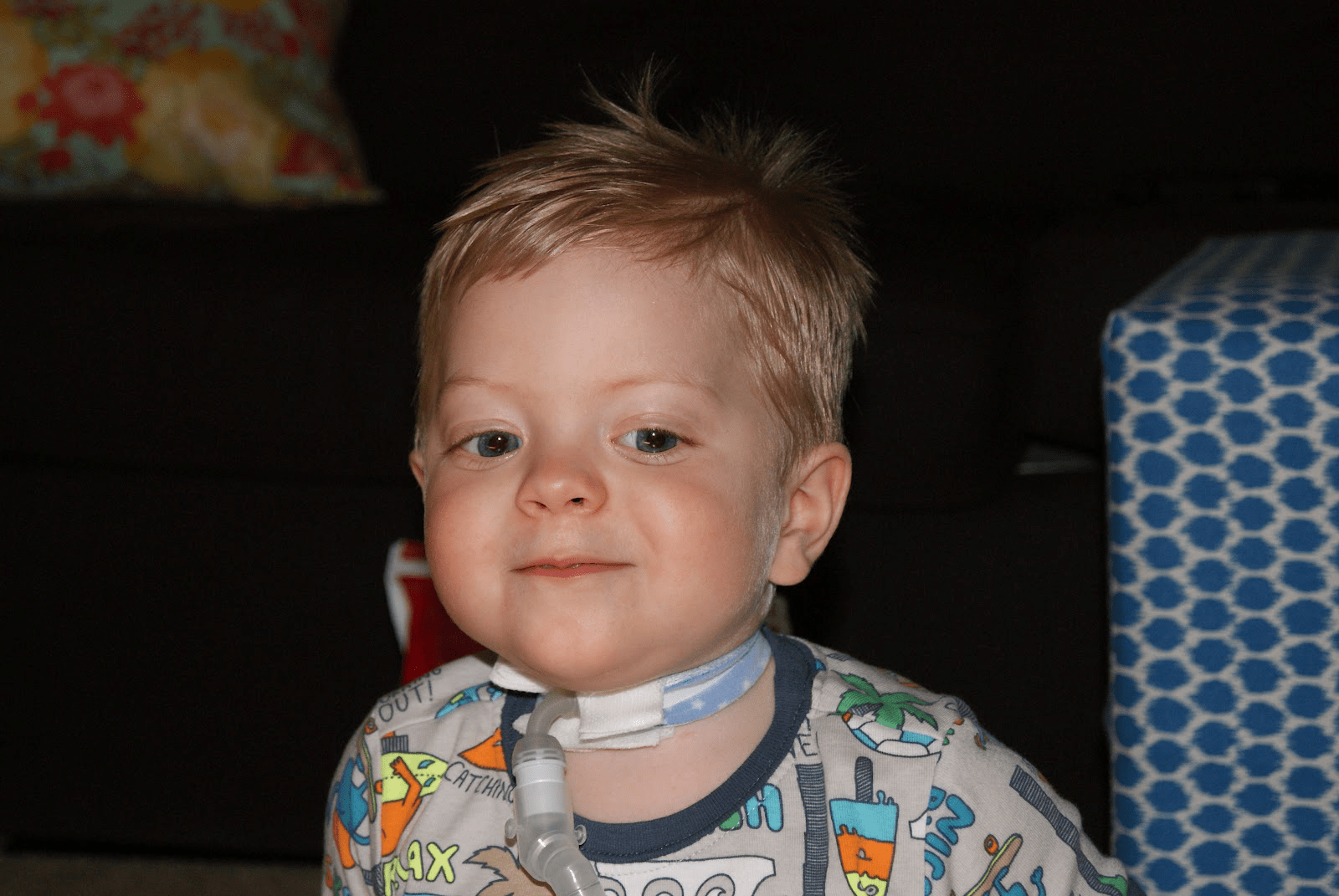 Freeing up hospital beds—how children can leave hospital sooner!