Welcome to another Intensive Care at Home livestream.
Today we’re talking about the real cost of keeping your loved one in ICU versus taking them home. What hospitals don’t tell you. Is keeping your loved one in ICU the only option? In this live session I’m going to break down for you the real financial, emotional, and clinical costs of long-term ICU care and I reveal how evidence-based, fully accredited Intensive Care at Home is a safe, funded alternative for ventilated patients across Australia, but also in other countries. Learn about funding pathways, including NDIS, our evidence-based Mechanical Home Ventilation Guidelines and why Intensive Care at Home is Australia’s only third-party accredited Intensive Care at Home nursing service in 2026, and has been the only accredited Intensive Care at Home nursing service since 2012.
Again, welcome to Intensive Care at Home on YouTube, Rumble, LinkedIn, wherever you find us on your platform of your choice. My name is Patrik Hutzel, and I’m the host of the show today. I’m a critical care registered nurse by background, having worked in critical care nursing for over 25 years in three different countries where I worked as a nurse unit manager for over five years. I was involved in setting up Intensive Care at Home successfully in Germany in the early 2000s, and I have been bringing the concept of Intensive Care at Home very successfully to Australia since 2012 with Intensive Care at Home. I’m the founder and managing director of Intensive Care at Home. I’m also the founder and managing director of Intensive Care Hotline, with Intensive Care Hotline, we’re providing consulting and advocacy for families in intensive care all around the world. I can very confidently say that we have saved many lives with our Intensive Care at Home service, of course, but also with our intensivecarehotline.com service just by simply advocating for families in intensive care. You can verify that on our testimonial sections or our respective testimonial sections at our intensivecareathome.com website and intensivecarehotline.com website.
If this is your first time joining us, welcome and I’m really glad you found us and you’re here. If you’re a regular, thank you for being here again and thank you for your continued support. I also want to welcome any viewers that watch this show on replay, because I know we’re always getting quite a few views on replays.
Today we’re talking about one of the most important topics that families dealing with a critically loved one need to hear and that is the real cost of keeping your loved one in ICU versus taking them home with Intensive Care at Home. And what hospitals and ICUs are not telling you. And this is going to be a powerful show today. We’re going to cover the financial cost, the emotional cost, the clinical facts. I’m going to show you that for most ventilated patients going home, it’s not only possible, it is safe, it is evidence-based, and in most cases, it is fully funded.
Before we dive in further, if you’re new to my channel, subscribe to my YouTube channel, Rumble channel. Please hit the subscribe button right now or hit the notification bell and share the video with anyone that will benefit from this video. We produce content every single week, specifically for ICU families and also for families with Intensive Care at Home, and it is completely free.
Before we get into the financial and emotional breakdown, let me tell you who we are and why you should listen to what I have to say today. Intensive Care at Home has been operating since 2012 all around Australia. We are Australia’s first, and in 2026, still the only third party accredited Intensive Care at Home nursing service in Australia. We have built the intellectual property, and more importantly, we have the policies, the procedures, the know-how. More importantly, we have a fantastic team that helps us implement these policies and procedures that help us work with our clients and make our clients feel understood.
We employ hundreds of years of intensive care nursing experience combined. No other service provider brings as much experience in the community than we do. We have a high skill level and high expertise level that we bring into the community. What does that all mean? It means our clinical standards, our quality systems, our nursing protocols, our clinical governance, they have all been independently assessed and certified against ISO 9001:2015. And by NDIS accreditation standards, we passed our most recent BSI NDIS certification audit in December 2025 and also passed our ISO 9001:2015 audit recently, and we have been doing so for many years.
We are fully certified with no non-conformances. You can check our accreditation yourself, just go to intensivecareathome.com accreditation/quality, and you will see our certificate of registration there. It’s valid until 2028. But why does that matter for you as a family? Because when you’re making a decision to bring your ventilated or tracheostomy or otherwise medically complex loved one home, a decision that can feel terrifying, you need to know that the nursing service caring for your family members operating at the absolute highest standards.
Once again, we are the only ones in Australia who can prove that with independent third-party accreditation and certification. We operate across Melbourne, Sydney, Brisbane, Adelaide, Perth, and in all other regional and remote areas. We have many clients in regional and remote Australia that we can find staff for. So, location is not an issue for us. We are approved under NDIS (National Disability Insurance Scheme), TAC (Transport Accident Commission), DVA (Department of Veteran Affairs), departments of health, private health insurance. We can work with all of those funding bodies.
We also provide Level 2 and Level 3 specialist NDIS support coordination. We also provide TAC case management. Our team is made up entirely of critical care registered nurses with a minimum of two years’ ICU experience, the same nurses who work in ICUs because that is the level of skill your ventilated or tracheostomy loved one needs at home.
What is it that we do exactly at home? We provide tailor-made solutions for long-term ventilated adults and children with tracheostomies. We provide tailor-made solutions for long-term ventilated adults and children on BiPAP (Bilevel Positive Airway Pressure) and CPAP (Continuous Positive Airway Pressure), non-invasive ventilation without tracheostomy. We provide tailor-made solutions for tracheostomy patients at home without ventilation, and all of that includes adults and children. We have case studies for both. I’ve done some videos recently about children at home with tracheostomies, so go and check them out.
We also provide ventilation weaning at home, cough assist management at home, home TPN (Total Parenteral Nutrition), home IV fluids, home IV antibiotics, home IV potassium, home IV magnesium infusions, central line, PICC (Peripherally Inserted Central Catheter) line, Hickman’s line, port management at home, suprapubic catheter (SPC), indwelling catheter (IDC) management at home, PEG (Percutaneous Endoscopic Gastrostomy) tube management at home, nasogastric tube, nasojejunal tube management at home, as well as palliative care services at home.
So, we are covering the whole spectrum of skills that is required to make a transition from intensive care to a home care environment possible. We’ve also provided an ED bypass service a couple of years ago as part of a very successful tender for the Sydney Southwestern Area Health District, where we provided an emergency department bypass service, keeping patients out of the emergency department by sending our critical care nurses into people’s homes or into residential aged care facilities, saving the healthcare system over $2,000 per ED at home visit instead of letting patients go into ED; a hugely successful project.
So, let’s now start with the real financial cost of long-term ICU. Let’s get into it. Let’s talk about the real cost of keeping your loved one in ICU long-term because this is something hospitals almost never discuss with families openly and this is also a section that I believe is of interest for any hospital watching this or any hospital executives for any ICU professionals, for any bed managers, directors of nursing, discharge planners, social workers, and the list goes on.
In Australia in 2026, an ICU bed costs conservatively between $5,000 to $10,000 per bed day to run depends on location, it depends on the patient’s condition. In some ICUs and in some states, that figure is even higher. If your loved one has been in ICU for four weeks, eight weeks, six months, and even longer, you can start doing math and it becomes very confronting. Now, as a family, you may not be paying that directly because the public hospital system or private hospital system in Australia absorbs most of that cost, but here’s what you are paying and what nobody is telling you. Well, you already know you’re paying for travel to and from the hospital every single day, sometimes multiple times a day, sometimes multiple family members, fuel, parking, tolls, that adds up to hundreds of dollars per week.
Time off work. One of both parents or partners reducing hours or stopping work entirely to manage hospital visits, to be present at ward rounds to advocate for their loved one. That includes often day and night. Maybe some family members take turns to be there 24 hours a day because you feel like your loved one needs every support.
Accommodation costs if you’re traveling interstate or long distances to access a specialist ICU. Childcare costs for other children while you’re spending hours at the hospital, or it might impact on other family members who might take care of your children. The cost of grief counseling, psychological support for yourself, for siblings, for spouses, for other family members, because watching someone you love in ICU is very traumatic.
Legal and financial planning costs when long-term outcomes are uncertain, enduring power of attorney, advanced care directives, wills, et cetera. The loss of income from the patient themselves if they were working-age adult and then there’s the opportunity cost, the months or years that families spend in limbo, unable to plan, unable to make decisions, unable to move forward because the hospital system has not given them a clear pathway out of ICU or out of the hospital.
I want to be very clear. I’m not criticizing ICU teams. I’ve been part of ICU teams for the better part of 20 years. ICU doctors and nurses do extraordinary life-saving work, but long-term ICU is not designed for long-term living. It was never designed for that. And when a patient reaches a stable, chronic state, ventilator-dependent, tracheostomy in place, medically stable, or if they have a ventilator in place without tracheostomy, or if they have a tracheostomy in place without ventilator, those patients, adults and children do not need to be in ICU, they need to be at home. And the evidence, and I should say the overwhelming evidence, which I will get to clearly supports that.
So, type into the chat, how long has your loved one been in ICU? Type it in the comments right now even if you’re watching this on replay.
Next, let’s look at the emotional and physical cost on families. Let’s break down the emotional cost because in my experience, this is often the cost that breaks families first before the financial pressure even really sets in. When your loved one is in ICU long-term, you are living in a state of chronic crisis. Every single day, you wake up not knowing what that phone call is going to say. You go to sleep with your phone next to you because you are terrified you might miss a call from the hospital at 2:00 A.M. You’re running on adrenaline, you’re not sleeping properly, you’re not eating properly, and you’re putting everyone else’s needs ahead of your own for weeks, for months, sometimes years.
I have spoken with hundreds of families in this situation through my intensivecarehotline.com work, but also through my intensivecareathome.com work, but also through my decades of working in ICU. Families who are absolutely exhausted, who are grieving, even though their loved one is still alive, who feel completely powerless in the face of a complex medical system that they don’t fully understand.
And then there’s the guilt. Families who wonder, are we doing enough? Should we push for more treatment, or should we be thinking about something different? Should we start looking at taking my loved one home? And then they feel guilty for even thinking about that because it feels like it might mean giving up. And I want to say something very clearly to anyone watching this who is in that situation right now, considering home care for your ventilated loved one is not giving up at all. It is not lowering the standards of care. In many cases, it is actually upgrading the quality of care. Because your loved one goes from being one of many patients in a busy ICU to receiving one-on-one dedicated critical care nursing in the comfort of their own home, surrounded by the people they love.
That shift, that very shift in quality of life, I have seen it transform people. Patients who were withdrawn, depressed, institutionalized in ICU, come alive at home. Families who were falling apart reconnect. Children who haven’t properly seen their parents in months get their parents back. This is what we do, this is what Intensive Care at Home does, and it is evidence-based which brings me to the clinical side of this. But before we go to the clinical side, with our work, with getting people home from ICU, we have saved families from breakdown. We have prevented parents divorcing. We have prevented families going into poverty. We have prevented family members from losing their jobs, which is why I keep saying over and over again, we are looking at those situations from a holistic point of view, clinical first and foremost. But once the clinical is taken care of safely at home, that’s when everything else is falling into place.
Let’s now look at the clinical and evidence-based case for Intensive Care at Home. All right, let’s talk about the clinical evidence because this is not just a nice idea.
When you go to our website at intensivecareathome.com, you can find a section there, the Mechanical Home Ventilation Guidelines, their evidence-based medicine and nursing with decades of international and national support behind it. At intensivecareathome.com, we publish our Mechanical Home Ventilation Guidelines on our website. You can find them at intensivecareathome.com, mechanical-home-ventilation-guidelines, and I want to walk you through some of the key points from those guidelines today. So let’s look at the evidence. Mechanical home ventilation as best practice for chronic respiratory failure has been employed for many decades now, mainly in countries like Germany, Austria, and Australia. Germany in particular is decades ahead of Australia in this space. Home-based intensive care is a standard pathway there, not an exception.
My whole experience with Intensive Care at Home started in Germany when I was part of setting it up with Heimbeatmungsservice Brambring Jaschke in the early 2000s. And we were pioneers then, and it became a very successful concept. And when I first started working in the UK and in Australia, I could very quickly see that none of it existed. Like in Germany when I worked in the UK, I could see patients in ICU in the UK that we would’ve looked after at home in Germany. When I first came to Australia in 2005, I could very quickly see that there were patients in ICU that would’ve been safely looked after at home in Germany and people wouldn’t believe me. And that’s when I eventually, in 2012, started Intensive Care at Home knowing full well that there’s a need for Intensive Care at Home and that there would also be a funding pathway because we’re cutting the cost of an intensive care bed by 50%. It’s needless to say that some funding bodies, most funding bodies as a matter of fact, will have an interest in cutting the cost of an ICU bed by 50%.
What has driven Intensive Care at Home to become so successful in Germany and in Australia? Well, several things.
First, improved survival following acute respiratory failure because ICU medicine has become so good. Patients who would not have survived 20, 30 years ago are surviving, but they’re surviving with ongoing ventilation and often tracheostomy needs. And on top of that, ICU beds are expensive and in high demand, ICU beds are very scarce. And compact reliable home ventilators now make community-based ventilation clinically safe, especially or only when there’s 24-hour critical care nursing at home.
So, then you might be asking, what conditions can be managed at home? Well, the evidence-based Mechanical Home Ventilation Guidelines cover a wide range of conditions that result in chronic respiratory failure and ongoing ventilation dependence. These include spinal cord injuries, including high level cervical injuries. Anything C1, C2, C3, C4, but also lower. Definitely C1, C2 will require invasive tracheostomy ventilation. Anything lower often requires BiPAP or CPAP ventilation.
Next, neuromuscular diseases, MND, motor neuron disease, ALS (amyotrophic lateral sclerosis), muscular dystrophy, Guillain-Barré syndrome, but also for example, spinal muscular atrophy, right, Duchenne syndrome are part of this as well. COPD and other chronic pulmonary diseases, cystic fibrosis and bronchiectasis, central alveolar hypoventilation. We’ve just taken a patient home from ICU last week with central alveolar hyperventilation. This gentleman was in ICU for nearly 12 months.
Next, post-lung transplant ventilator dependency, kyphoscoliosis and chest wall diseases, Rett syndrome, for example, as well. These are not simple, straightforward conditions. These are genuinely complex high acuity patients, and our team has the critical care skills to manage them safely at home. Let’s now break down the two methods of home ventilation we manage. Our Mechanical Home Ventilation Guidelines cover both major methods of mechanical lung ventilation.
- Invasive tracheostomy ventilation known as tracheostomy positive pressure ventilation. This is for patients who cannot protect their own airway, who need full ventilation support and easy airway access for suctioning.
- Non-invasive ventilation such as NIV for mask ventilation, including BiPAP, CPAP, VPAP, and high flow oxygen therapy. These patients may only need ventilation for part of the day or during sleep.
Now, here is something critical that I want families to understand. Our guidelines make very clear that any service delivering home ventilation care without critical care trained nurses 24/7 is operating outside of evidence-based guidelines.
The minimum qualification required to safely look after a ventilated patient at home is 24/7 critical care nursing skills only, and that is exactly what our team brings to the table. ICU trained nurses 24/7 in your home. There is a reason why we are the only third-party accredited service in this space in Australia. The clinical bar is extraordinarily high and rightly so, and we are the only ones meeting it, and we have independent certification to prove it.
Our evidence-based guidelines also reference ISO standards for home ventilators, key points families should know if your loved one requires ventilation at home, invasive or non-invasive ventilation. An additional identical ventilator must be available as a backup. Our team manages all of this, the equipment, the consumables, the clinical protocols if you want us to. Some families manage the equipment side of things by themselves which is fine too, but we can certainly do it for you. I just want to say one more thing that if whenever evidence-based guidelines are not followed, people die.
I’ve made videos about this extensively, given enough evidence here that I can back up with incident reports to the NDIS mainly so that if NDIS ignores the evidence that people have died, I hope that Jennifer McAllister and other people responsible at the NDIA, including the CEO, the NDIS planners sleep well at night because by them ignoring evidence people have died, I do believe that’s a criminal act because the evidence has all been there and people have died, including many young people, including children.
So how is home intensive care funded in Australia? Now, let’s talk about the question I get asked more than almost any other. How do you pay for this? And here’s what hospitals often do not tell families clearly enough. Home-based intensive care is funded. We have been funded since 2012. Home-based intensive care is funded, and let me walk you through the main pathways.
1. The NDIS pathway to National Disability Insurance Scheme for eligible participants, the NDIS is funding nursing support needed to safely care for a ventilated patient at home. We are an approved NDIS provider. We also provide level two and level three NDIS specialist support coordination, which means we can help families navigate the NDIS system itself, understand their plan, and get the funding working for them in the real world. Level 3, specialist support coordination is particularly important for medically complex participants, the kind of patients we work with. It is designed for situations where the NDIS plan is complex and where there are multiple service providers and where clinical oversight is needed. To make an NDIS plan work, we do all of that.
If your loved one has a disability as a result of their condition, whether that is MND, spinal cord injury, acquired brain injury, stroke, or anything else, they may be eligible for an NDIS plan, and that plan may fund a significant portion of their home care. That’s also a condition I forgot to mention. Stroke is also a condition we’ve looked after many times at home, including acquired brain injury.
2. TAC in Victoria and WorkSafe in Victoria, Transport Accident Commission and WorkSafe in Victoria. If your loved one’s condition is the result of a transport accident, a car accident, a motorcycle accident, TAC funding may be available to cover home-based intensive care. We are a TAC-approved provider. DVA, Department of Veteran Affairs for eligible veterans, DVA funding can cover home nursing support. We are a DVA approved service provider as well.
Private health insurance and self-funding. Some families access private health insurance for elements of home care and some family self-fund either partially or entirely. In those situations, it is worth running a proper cost comparison. When you do, you will often find that home care is not as expensive as families initially assume, particularly when you factor in all the hidden costs of prolonged ICU stays that are outlined earlier. Also, hospitals might pay, and we had hospital funding as well over the years, because once again, an ICU bed costs $5,000 to $10,000 per bed day, home care is half the cost of that. So, hospitals might pay for it. Departments of Health might pay for it. We’ve had, or our clients I should say, had Department of Health funding. What I always say to families is this, do not assume it is not affordable without speaking to us first.
We have helped families access funding pathways they didn’t know existed. Please contact us at intensivecareathome.com. I also want to point out that if you are waiting or if you are eligible to a payout, you can maybe have funds in court or speak to your legal team if you’re eligible for a negligence claim, if you’re eligible for a legal case.
We will have real conversations with you about your specific situation.
Now, let’s now look at what hospitals don’t tell you. I want to spend a few minutes on this because it is in the title of today’s session and it is something I feel very strongly about, and I want to be very, very clear. I’m not here to criticize hospitals or ICU teams, like I said, been part of the hospital system myself for decades. I was a nurse manager in ICU for over five years. I’ve managed two ICUs. I’ve been in enough hospital meetings to know how hospitals operate and how they take. Hospitals do extraordinary work and ICU save lives every day all around the world, but the hospital system has a structural problem when it comes to long-term ICU patients, and that’s why they come to us and the structural problem is this. Hospitals are not designed to help patients leave. They are designed to treat acute illness. Discharge planning, particularly for medically complex patients, is often underfunded, understaffed, and underemphasized so families can find themselves stuck in a system that is not actively working to transition their loved one out of it. Here are some of the things hospitals own, often don’t proactively tell families:
- That home ventilation with Intensive Care at Home is clinically safe and evidence-based for stable ventilator-dependent patients with or without a tracheostomy. That home tracheostomy care is clinically safe and evidence-based for stable patients as well. They’re not even telling you that a service like Intensive Care at Home exists, that it’s fully accredited and can replicate ICU level nursing in the community. They’re not telling you that NDIS, TAC, DVA, private health funds, Department of Health Funding, or even hospital funding may be available to pay for Intensive Care at Home.
- They’re also not telling you that prolonged ICU stays have their own risks, including hospital acquired infections. ICU acquired weaknesses, delirium, and psychological institutionalization. They’re not telling you that quality of life for both the patient and the family is dramatically better at home for most stable ventilated patients. Because let me add that on. All of our clients have community access. Let me repeat that. All of our clients have community access.
Now, compare that to a long-term stay in ICU where patients are stuck in an ICU bed or in an ICU cubicle. We’ve had so many families come to me after their loved ones, been in ICU for six months, 12 months, and even longer, and the first thing they say is, “Why didn’t anyone tell us this was even possible?” And I don’t have a perfect answer to that question. What I can do is make sure that families who find this channel, find our website, intensivecareathome.com, or call our number or email us, get that information.
That’s what I can control, and I’m trying to do my best to control it because that is why we do what we do. That is why I produce the content every week, almost every day, because knowledge is power, and families of critically ill patients in intensive care deserve to have the full picture.
So I’ve had some questions come in before the show that I want to answer now.
Question that came in from a viewer was, “My dad is on a ventilator and ICU after a stroke. Can he come home?”
Now, my answer is that every case is different, and we would need to speak with you in detail about your dad’s specific clinical situation. But what I can tell you is that ventilator-dependent patients with a stroke after stroke have successfully transitioned to home with our service, like I said to you earlier. Just last week, we’ve taken a patient home in Sydney after nearly 12 months in ICU.
The clinical is that they’re clinically stable and that they don’t need to be improving, but it doesn’t need to be in a stable, predictable clinical state. Please contact us and let’s have a proper conversation. Again, go to intensivecareathome.com. You can call us on our main number 1300-921536 or you can call me on my mobile which is 041-0942230. That’s again, 041-0942230.
Next question from Stacy who says, “We are in Queensland. Do you operate there?”
Yes, absolutely. We operate across Melbourne, Sydney, Brisbane, Adelaide, Perth. We’re a national service, including remote and regional. Wherever you are in Australia, we want to hear from you. We have staff and clients in Brisbane. I’ve been to Brisbane many times in the last 12 months, visiting clients, visiting staff, and making sure that everything’s running smoothly.
Also, we have clients in areas like in the Warragul, Leongatha area in Victoria, which is South Gippsland. We have clients in Bendigo. We have clients out in Colac and Warrnambool in Victoria. We have clients in Albury, Wodonga. We have gone as far as Wagga Wagga. We have clients in Canberra. Really, location is not a limiting factor for us whatsoever.
Now, another question from Peter is, “Is Intensive Care at Home safe? I’m worried about emergency.”
That is the most important question, Peter, and I’m glad you asked it. Our nurses are critical care registered nurses the same level of clinical training as the nurses in an ICU. They’re trained to manage emergency, but more importantly, they’re trained to prevent emergencies, right? That includes airway emergencies in ventilated patients with a tracheostomy. We have clinical governance structures, escalation protocols, our guidelines, which you can once again read at our evidence-based mechanical ventilation guidelines on our website, and they’re based on national and international best practice. And remember, we are the only third-party accredited service in this space, Intensive Care at Home in Australia. That accreditation is one of your assurances of safety. But let me repeat once again that we employ, and I’m not exaggerating what I’m saying now, we employ hundreds of years of intensive care nursing experience combined.
So, what that means is we employ, at the moment, roughly 150, 160 critical care nurses around the country. Some of these nurses have 25 years ICU experience. Some of them have two years ICU experience. But the bottom line is combined that equals to hundreds of years of intensive care nursing experience and no other service provider in the community can match that because at the end of the day, we are running a community-based ICU.
We’re coming closer to the end of this session. So let me wrap up with the most important things I want you to take away from today. In the meantime, keep your questions coming if you have them. And let me wrap up with the most important things that I want you to take away from today.
- If your loved one is ventilator-dependent in ICU, whether they have been there for a week, for a month or a year, please reach out to us. Go to intensivecareathome.com. Have a conversation with us. It costs you nothing to find out whether home care is possible for your situation.
- Go and check our evidence-based Mechanical Home Ventilation Guidelines on our website at intensivecareathome.com. Read them, educate yourself. The more you understand, the better you can advocate for your loved one.
- Check our accreditation at intensivecareathome.com. Look at our accreditation and quality page. Once again, we are the only third party accredited Intensive Care at Home nursing service in Australia in 2026. That matters, that matters greatly. That is your assurance of clinical safety, clinical standards, and quality.
- If you need to talk to someone right now, call us on 1300-921536 in Australia or call me directly on 041-0942230. That’s again, 041-0942230. Or if you have a family member in intensive care and you need consulting and advocacy in intensive care, go to intensivecarehotline.com for consulting calls and medical record reviews. I forgot to mention, we are also providing NDIS independent nursing assessments.
If you find value in today’s sessions, like the video, subscribe to the channel, and share this with any family you know and who has a loved one in ICU. You might just change their life.
Lastly, I know we are getting views from the United States, from the UK, from Canada. If you’re in the United States, in Canada, in the UK, contact us, we can help you in those countries privately.
Thank you so much for joining me today. I will see you again next week on another YouTube live.
I will continue answering your questions during the week.
I make daily videos. There’s so many questions coming. Keep the questions coming so that I can create the content that you want.
Thank you so much, and have a wonderful week, and look after yourselves.
Take care.
With all of that said, with Intensive Care at Home, we are currently sending our critical care nurses into the home 24 hours a day. Therefore, we are providing a genuine alternative to long-term stay in intensive care for:
- Ventilation
- Tracheostomy
- Home BiPAP (Bilevel Positive Airway Pressure) and CPAP (Continuous Positive Airway Pressure)
- Tracheostomy care without ventilation
- Home TPN (Total Parenteral Nutrition)
- Home IV potassium
- Home IV magnesium
- Home IV antibiotics
- Home IV fluids
We’re providing:
- Cough assist management at home
- Ventilation weaning management at home
- central line, PICC (Peripherally Inserted Central Catheter) line, Hickman’s line as well as port management at home
- nasogastric tube, nasojejunostomy tube, PEG (Percutaneous Endoscopic Gastrostomy), PEJ (Percutaneous Endoscopic Jejunostomy) tube management at home
- IDC (Indwelling Catheter) and SPC (Suprapubic Catheter) management at home
- Palliative care services at home
We’re also sending our critical care nurses into the home for emergency department bypass services. We have done so successfully as part of the Western Sydney Local Health District’s In Touch program, saving approximately $2,000 per patient that we keep at home instead of them going into an emergency department.
That also means we’re in a position to cut the cost of an ICU bed by around 50%. An intensive care bed costs between $5,000 to $10,000 per bed day depending on location. Intensive Care at Home costs approximately 50% of that, and we’re freeing up the most sought-after bed in the hospital, which is the ICU bed. Most importantly, we’re improving the quality of life for patients and their families, which is a win-win situation for all stakeholders.
Our Coverage and Accreditation
With Intensive Care at Home, we’re currently operating all around Australia, in all major capital cities, as well as in all regional and rural areas. We are an NDIS approved service provider all around Australia, TAC (Transport Accident Commission) and WorkSafe in Victoria as well as the Department of Veterans Affairs all around Australia.
We’re also ISO 9001:2015 accredited. Our clients and we as a service provider have also received funding through public hospitals, private health funds as well as departments of health.
We are the only service provider in Australia that has achieved third-party accreditation for Intensive Care at Home nursing in 2025. We have been achieving this high level of accreditation since 2012. No other provider in Australia has achieved the Intensive Care at Home level of accreditation in the community and has created more intellectual property when it comes to Intensive Care at Home nursing than we have.
This puts us in a position to employ hundreds of years of critical care nursing experience combined in the community. No other service provider in 2025 employs a higher skill level in the community than we do. And that enables us to look after the highest acuity adults and children in the community in Australia safely.
If You Need Help
If you’re at home already and you’re watching this or you’re stuck in an ICU and you realize that you don’t have the right level of support, I can give you many examples where we helped clients with funding, how we advocate for funding. We had to advocate successfully for funding from our first case study to many other case studies where we had to advocate successfully for funding with the right evidence of course because it is crystal clear that disability support workers for example or registered nurses without ICU experience cannot look after ventilated clients at home whether adults or children with or without a tracheostomy and it’s simply dangerous and negligent.
There are plenty of examples where clients with support worker models or even RN (registered nurse) models without ICU experience have died at home and I have evidence to back up everything that I’m saying here because it’s a bit like flying the airplane with a cabin crew instead of the pilot and it could simply be deadly.
This can be avoided by having simply 24-hour critical care nurses at home because our clients are at high risk of medical emergencies or worse without critical care nurses 24 hours. This is actually also evidence-based in the community and is documented in our evidence-based Mechanical Home Ventilation Guidelines on our website at intensivecareathome.com.
Think about it: in an intensive care unit in a hospital, you wouldn’t have support workers or general registered nurses looking after a critical care patient on a ventilator with a tracheostomy. So why would anyone in their right mind do that in a home care environment where there are fewer resources?
Clients that have found us have been at home long-term predictably and permanently with critical care nurses. Their alternative would have been to either die or stay in ICU long-term, and our clients don’t go back to ICU. They stay at home permanently and predictably and the insurance bodies save half of the cost of an ICU. But it’s a win-win situation all around.
We can do the same for you if you’re stuck in ICU or if you’re not safe at home, which includes the advocacy for funding and the network that goes along with it. We have always successfully advocated for our clients or we have the network to successfully advocate for you and for your family member, otherwise we wouldn’t be in business. The same again is applicable for those stuck in an ICU which is similar to many of our, if not most of our cases.
Our Support Coordination Services
This is also why we are providing Level 2 and Level 3 NDIS support coordination. We have a team of experienced NDIS support coordinators, and they have a wealth of knowledge. We’re also providing TAC case management and WorkSafe case management in Victoria with Lucy McCotter.
If you’re an NDIS support coordinator or a case manager or a social worker from another organization or a hospital watching this and you’re looking for nursing care for your participants, please reach out to us as well. If you’re looking for funding for nursing care for your participants and you don’t know how to go about it and how to advocate for it, what evidence to provide, I encourage you to reach out to us as well. We have the network to make that happen. We will help you with the right level of funding and with the right level of advocacy.
We’re also providing NDIS specialist nursing assessments done by critical care nurses with a legal nurse consulting background.
Join Our Team
If you are a critical care nurse and you’re looking for a career change and you want to join a very progressive, dynamic, successful, and high-performing team of critical care nurses in the community, we are employing hundreds of years of critical care nursing experience combined.
If you’re looking for a career change, we’re currently hiring for jobs for critical care nurses in Melbourne, Sydney, Brisbane, Albury-Wodonga, Bendigo, Geelong, Warragul, and also in Wyelangta in Victoria.
If you have worked in critical care nursing for a minimum of two years, adult ICU, pediatric ICU, ED and you have already completed a postgraduate critical care nursing qualification, we will be absolutely delighted hearing from you.
I have a disclaimer though: Because we are offering tailor-made solutions for our clients which includes regular staff, our clients do also want the same staff coming over and over again because they are so vulnerable and so special. That’s why we need regular, reliable staff.
If you’re looking for agency work where you can come and go, this will not be the right fit for you. We’re looking for consistency and our clients are looking for consistency. So please only apply with us if you can give us regular and consistent availabilities for shifts and you’re really keen on building relationships with us and with our clients. Reliability is also a must.
For Medical Professionals and Healthcare Executives
If you’re an intensive care specialist or an ED specialist, we also want to hear from you. We’re currently expanding our medical team as well.
We can also help you eliminate your bed blocks in your ICU and in your ED for your long-term patients or for your regularly readmitting patients with our critical care nursing team at home. We’re here to help to take the pressure off your ICU and ED beds. In most cases, you won’t even pay for it. Even if you do pay for it, it is so much more cost-effective than what you’re paying for in ICU and ED settings, and you get the same level of care and simply more patient and family satisfaction because you also want to partner with your consumers.
If you are a hospital executive watching this, we can help you free up your ICU and ED beds.
International Support
If you’re in the U.S. or in the UK and you’re watching this and you need help, we want to hear from you as well. We can help you there privately with one-on-one consulting and with hiring nurses privately.
Once again, our website is intensivecareathome.com. Call us on one of the numbers on the top of our website or simply send us an email to [email protected].
If you like my videos, click the like button, subscribe to my YouTube channel for regular updates for families with Intensive Care at Home and intensive care. Click the like button, click the notification bell, and share this video with anyone who has a family member in intensive care long-term or needs to see this.
Thank you so much for watching.
This is Patrik Hutzel from intensivecareathome.com and I’ll talk to you in a few days.
Take care for now.
RELATED LINKS:
 Introduction
Tracheostomy and weaning off the ventilator in Intensive Care, how long can it take?
From and with “HIGH TECH” medicine to “HIGH TOUCH” INTENSIVE HOME CARE services!
ABC reports, Home health care “cheaper and safer”!
Introduction
Tracheostomy and weaning off the ventilator in Intensive Care, how long can it take?
From and with “HIGH TECH” medicine to “HIGH TOUCH” INTENSIVE HOME CARE services!
ABC reports, Home health care “cheaper and safer”!
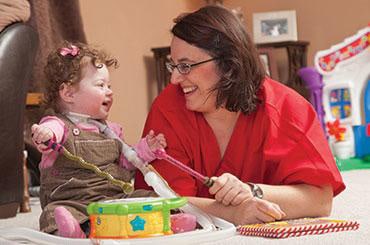 How to transition a ventilated adult or child from Intensive Care to a home care environment!