Hello and welcome to another intensivecareathome.com live stream. My name is Patrik Hutzel from intensivecareathome.com, and today’s topic is home ventilation for children with tracheostomies — what parents need to know.
Before we go into today’s topic, you might be wondering what we do at Intensive Care at Home. Here at Intensive Care at Home, we provide tailor-made solutions for long-term ventilated adults and children with tracheostomies at home. We provide tailor-made solutions for long-term ventilated adults and children on BiPAP (Bilevel Positive Airway Pressure), CPAP (Continuous Positive Airway Pressure) without tracheostomies. We provide tailor-made solutions for long-term tracheostomy adults and children at home without ventilation, home tracheostomy weaning, home ventilation weaning, home cough assist management, home total parenteral nutrition (TPN), home intravenous (IV) fluids, IV antibiotics, IV potassium, IV magnesium, and other electrolyte infusions at home. That includes central line, peripherally inserted central catheter (PICC) line, Hickman’s line, and port management at home. Also nasojejunostomy tube, nasogastric tube management at home, percutaneous endoscopic gastrostomy (PEG) tube and percutaneous endoscopic jejunostomy (PEJ) tube management at home, indwelling urinary catheter (IDC) and suprapubic catheter (SPC) management at home, as well as palliative care management at home. We are also providing palliative care services at home. We are also providing Level 2 and Level 3 National Disability Insurance Scheme (NDIS) support coordination as well as Transport Accident Commission (TAC) case management.
Today’s topic is home ventilation for children with tracheostomies — what parents need to know.
Before I break down today’s topic and talk about what parents need to know when they are faced with such difficult circumstances, you might be wondering what makes me qualified to talk about such a complex topic. I have worked in critical care nursing for over 25 years in three different countries. I worked as a nurse manager in intensive care units (ICUs) for over five years. I have worked in pediatric ICU and adult ICU. I was part of successfully setting up Intensive Care at Home services in Germany in the early 2000s, before I brought the concept to Australia in 2012, and we have been operating since 2012 here in Australia, looking after a large number of adults and children at home on ventilators with tracheostomies — sometimes adults and children with tracheostomies without ventilation, sometimes adults and children on BiPAP, CPAP ventilation without tracheostomy.
We work within a clear clinical governance framework, which means our services are evidence-based. You can have a look at our mechanical home ventilation guidelines that are evidence-based — we publish them on our website at intensivecareathome.com. Once the show notes are live, I will have a link to that.
We are also the only third-party accredited and NDIS registered provider for Intensive Care at Home nursing. That means there is no other provider in Australia in 2026 that has achieved third-party accreditation for Intensive Care at Home nursing and NDIS registration. We have built the intellectual property, the clinical governance, the policies and procedures, and the team from scratch from day one since 2012. That enables us to look after the highest acuity clients in the community safely, because we also employ hundreds of years of critical care nursing experience combined. That enables us to hire, train, and retain highly skilled staff.
We are currently operating with Intensive Care at Home all around Australia in all states and territories, in all metropolitan, regional, and rural areas. If you are watching this and you are in the US, in the UK, in Canada, in India, or anywhere around the world and you want to know more about Intensive Care at Home, please reach out to us. We have international phone numbers on our website as well, outside of Australia, and you can contact us there, or our email is [email protected]. If you are in Australia and you are interested in Intensive Care at Home, call me directly — my number is 0410 942 230. There is also a link on the website — schedule appointment — where you can schedule a call with me as well.
On top of that, we are also providing consulting and advocacy for families in intensive care. We have another sister service called intensivecarehotline.com, where we help families in intensive care with advocacy and consulting. With both of our organizations, I can very confidently say that we have saved many lives here, and you can verify that on our testimonial sections at intensivecareathome.com and at intensivecarehotline.com. We have also done client interviews on our intensivecarehotline.com podcast.
Why This Video Is So Important
Not only do we have inquiries from parents who have children on ventilation with tracheostomies, sometimes they have children on ventilation without tracheostomy, sometimes they have children with tracheostomy without ventilation. But let us start with the underlying foundation — why I think today’s video is so important and could also be a life-saving video today.
In December 2025, a case happened that I have referenced on this blog and channel before, and that I want every parent, every NDIS support coordinator, every NDIS planner, and every hospital discharge planner in Australia to sit with for a moment.
The case that I am referencing here is Noah Johnston. Noah died on the 8th of December 2025. It was a preventable death. Noah was ventilated with a tracheostomy tube, and the tracheostomy tube became disconnected at home from the ventilator, and there was no critical care registered nurse (CCRN) present to recognize it and manage it in real time. Noah died. And Noah’s death was entirely preventable.
I am not sharing Noah’s case to be sensational. I am sharing it because it is the clearest, most confronting illustration of a principle I have been advocating for since I started Intensive Care at Home in 2012 — bringing a successful concept from Germany into Australia.
A child at home with a tracheostomy who is on home ventilation, or who has a tracheostomy without ventilation, or who needs a ventilator without tracheostomy, needs 24-hour critical care registered nurses at home. Not general registered nurses. Not community registered nurses. And definitely not support workers. And not a family member left to cope alone overnight. It needs a 24-hour critical care registered nurse model — the same caliber of nursing you would expect in a hospital ICU — it just needs to be delivered safely at home with the right team and the right clinical governance structure. That is the bottom line of everything we stand for here at Intensive Care at Home.
For any of those children — ventilation with tracheostomy, ventilation without tracheostomy, tracheostomy without ventilation — they need 24-hour critical care registered nurses. It is evidence-based, it is best practice, it is not negotiable. Every time it is being negotiated, people have died. Noah Johnston being the prime example. I am going to explain in much more detail why this is needed, how to get funding, what you should be looking for when selecting a provider.
Breaking Down the Clinical Picture — What Home Ventilation for Children With a Tracheostomy Actually Involves
When I talk to parents one on one, I break this down into three categories because the risk profile and the nursing requirements are different for each.
Number 1 — Invasive mechanical ventilation with a tracheostomy. The child is fully or partially dependent on a ventilator delivered through the tracheostomy tube. This is the highest acuity group. A displaced or blocked tube is a life-threatening emergency measured in minutes — sometimes seconds.
Number 2 — Non-invasive ventilation via BiPAP, CPAP, APAP (Automatic Positive Airway Pressure), or VPAP (Variable Positive Airway Pressure). The child uses a mask or interface, sometimes still in conjunction with the tracheostomy for airway protection or secretion management, rather than being ventilated directly through the tracheostomy tube. This still requires 24/7 highly skilled critical care registered nurses monitoring mask fit, pressure settings, skin integrity, desaturation, airway patency, and unstable airway management. Those patients are still in the ICU on BiPAP and CPAP — they are usually not on a ward in a hospital.
Number 3 — Tracheostomy care without ventilation. The child breathes independently but has a tracheostomy for airway protection, secretion clearance, or upper airway obstruction. Families are often told this is lower risk. In my clinical experience with over 25 years of critical care nursing experience in three different countries, it is not low risk. Mucus plugging and accidental decannulation can happen just as fast as in a ventilated child. I have looked after children at home where the tracheostomy comes out because kids pull at it, and kids are not ventilated. From my own experience, you have less than three minutes to reinsert that tracheostomy — otherwise the child is at risk of dying.
With all three scenarios — ventilation with tracheostomy, ventilation without tracheostomy, tracheostomy without ventilation — children and adults have died because they did not have funding for 24-hour critical care registered nurses. So it is not negotiable, it is not nice to have, it is an absolute must. It is evidence-based, and I encourage you to check out our evidence-based mechanical home ventilation guidelines on our website at intensivecareathome.com.
That was what was implemented in Germany 25 years ago. It is best practice, and we carried it on here in Australia since 2012 very successfully.
In every single one of these three categories, the common threat is airway compromise — it can happen in seconds, and the response has to be immediate, clinically competent, and confident. That is what a critical care registered nurse is trained for. It is not what a general registered nurse, a community registered nurse, or a disability support worker — however well-meaning they are — is trained for.
Noah Johnston died because there was no critical care nurse on site when his ventilator became disconnected from the tracheostomy. He died tragically and it could have been prevented. His case was in the media. His mom, Kylie Johnston, went to the media because the NDIS was cutting funding from 24-hour critical care registered nurses to 12 hours a day of critical care registered nurses. Noah died when our nurses were not there — just as we predicted and documented with the National Disability Insurance Agency (NDIA) at the time that this would happen. The NDIA did not want to listen and Noah passed away. It could have been prevented.
I have put together an evidence-based resource that goes into the clinical guidelines behind safe 24/7 mechanical ventilation in far more depth. Once the show notes are published in a few days on our website, I will post the link to the mechanical home ventilation guidelines. I would encourage every parent, every NDIS planner, every NDIS support coordinator, every ICU nurse, every ICU doctor, and every hospital discharge coordinator to go through those guidelines line by line before signing off on a home care plan for a ventilated or tracheostomy child that could be deadly if 24/7 critical care registered nurses are not funded.
Why Do Children Need a Tracheostomy and Home Ventilation?
Parents ask me this constantly, so let me explain the common pathways I see across all of our clients. I have identified five of them that are most common.
Number 1 — Congenital airway abnormalities. Structural problems with the airway present from birth that make it unsafe or impossible to breathe normally without a tracheostomy.
Number 2 — Neuromuscular conditions. Diseases affecting the muscles used for breathing, where the child’s own respiratory effort is not enough to sustain adequate oxygen and carbon dioxide levels over time.
Number 3 — Chronic lung disease of prematurity. Babies born extremely premature can develop long-term damage that requires ongoing ventilation and support.
Number 4 — Acquired brain injury or spinal cord injury. Trauma or medical events that affect the brain’s ability to drive breathing, or the nerve pathways that control the respiratory muscles.
Number 5 — Upper airway obstruction. Conditions that physically block the airway above the level of the tracheostomy, where the tracheostomy is the only way to secure a safe airway.
Every one of these children can — in the right circumstances — be cared for safely and thrive at home instead of spending months or years in a hospital ICU bed. I have seen it happen hundreds of times since the early 2000s. But the right circumstances has one non-negotiable requirement, which is what I want to spend the next few minutes on.
What Safe Home Care Actually Requires — Treatment and Staffing
This is where I get very direct because this is where families and even well-intentioned funding bodies get it wrong.
A ventilated child with a tracheostomy, a child on BiPAP or CPAP with a tracheostomy, or a child with a tracheostomy alone needs a critical care registered nurse in the home 24 hours a day, seven days a week. Not eight hours a day with a support worker for the rest. Not mom and dad can manage overnight. 24/7 critical care registered nurse coverage. Support workers might be needed on top of that, but that is an add-on — not the base.
The evidence is there. Intensive Care at Home services have been around in Germany for over 25 years and have been around now in Australia since 2012. 24/7 critical care registered nurse coverage is the safest and also the most cost-effective option. It cuts the cost of an intensive care bed by around 50%. It frees up the ICU bed that is in very high demand. And children and their families can live their best life at home.
You can safely cut the cost of an intensive care bed by 50% in those situations. You cannot cut the cost of an intensive care bed by 70% — which would be the case for disability support workers. Too many adults and children have died under the support worker model, just like it happened with Noah Johnston.
Here is why the specific level of skill matters in practice — why 24-hour intensive care nurses or critical care registered nurses are needed.
Number 1 — recognizing early signs of tube displacement or blockage before they become a full airway emergency. Prevention is better than cure.
Number 2 — performing safe two-person suctioning technique and knowing when secretions signal a deteriorating respiratory picture.
Number 3 — doing safety checks before your shift so you know everything is there in case of an emergency.
Number 4 — planning for a shift to make sure emergencies do not happen in the first place.
Number 5 — being ready at any moment to change a tracheostomy tube if it becomes dislodged or blocked — a skill that takes ICU-level training and confidence under pressure, not a short online course as the NDIA wants to make everybody believe that disability support workers can be trained on an e-module. What takes intensive care nurses years to master in practice.
Number 6 — interpreting ventilator alarms and BiPAP, CPAP pressure and leak data correctly, and knowing which alarms mean adjust and monitor versus this is an emergency.
Number 7 — titrating oxygen, managing secretions, and recognizing the subtle early signs of deterioration in a child, which can look very different to an adult and can escalate far faster.
Other added-on skills include giving IV antibiotics at home, giving IV fluids at home, treating infections at home, doing home X-rays — all of these things are available to you in the home. No need to panic and go back to hospital or back to an ICU where your child is much more likely to catch another infection. We also have our own ICU consultant here who has both pediatric and adult ICU experience.
The skills that I just listed are exactly the gaps that existed in Noah Johnston’s case. A disconnected tracheostomy tube from the ventilator with no critical care registered nurse present to intervene immediately. I say this every time I discuss Noah’s case and I will keep saying it — this was a preventable death and tragedy. Preventing it comes down to funding and insisting on the right level of nursing skill in the home every single hour of every single day, 365 days of the year. That can only be done by presenting the necessary clinical evidence to the relevant funding body.
Medical Records Advocacy — What Parents Need to Ask For and Check
If your child is being discharged home, is on the brink of being discharged home, or is already at home on ventilation with or without a tracheostomy or on tracheostomy without ventilation, here is what I tell every family, every NDIS support coordinator, and every NDIS planner we work with.
Number 1 — request the full hospital discharge summary and care plan in writing — not a verbal handover.
Number 2 — ask specifically what nursing qualification is being funded for each shift. Is it a critical care registered nurse, a general registered nurse, or a disability support worker? A general registered nurse and a disability support worker equal a death sentence for a ventilated or tracheostomy child or adult. Disability support workers, general registered nurses, and critical care registered nurses are not interchangeable. The funding body or provider should be able to answer this in one sentence. If they are struggling to draw a distinction, you need to run a million miles.
Ask who is rostered overnight and what their competency is in tracheostomy emergency management and ventilator troubleshooting for children specifically — not general nursing experience. Do the same for the daytime roster.
Ask if they are working for a provider who is actually third-party and NDIS registered for Intensive Care at Home nursing. Has that provider developed the intellectual property? Do they have the clinical governance? Do they have the staff to make it happen?
Keep your own copy of every care plan, every incident report, and every staffing roster. If something goes wrong, these records are what protect your child and support any advocacy or complaint you may need to make.
If an NDIS support coordinator or any funding body proposes downgrading nursing hours to support worker hours to save money, push back and ask them in writing to justify how that meets your child’s clinical needs. Ask them if they have heard of the Noah Johnston case.
I have spent years advocating with NDIS support coordinators, NDIS planners, case managers, ICUs, hospitals, and families on exactly these points. Too often I ask NDIS support coordinators what makes them qualified to make life or death clinical decisions about a ventilated child with a tracheostomy — and I get silence, because it is not their area of clinical expertise. And it should not have to be. That is what we are here for at intensivecareathome.com.
Why Third-Party Accreditation Matters
Not every home care provider offering ventilator and tracheostomy care is equipped to deliver ICU-level nursing safely. Intensive Care at Home is the only third-party accredited and specialist Intensive Care at Home nursing provider in Australia in 2026. We are independently ISO 9001:2015 accredited and also NDIS registered, which means our quality systems, our clinical governance, and our nursing standards have been externally audited and verified — not just self-declared.
You can go to intensivecareathome.com/accreditation_quality to review our accreditation quality certificates. The link will also be in the show notes once the transcript is published on our website in a few days.
We provide 24/7 critical care registered nurses for exactly the three categories of care I described above — invasive mechanical ventilation with tracheostomy, non-invasive ventilation with BiPAP or CPAP, and tracheostomy care without ventilation — for both adults and children, all around Australia in all states and territories and all regional and rural areas.
We employ hundreds of years of critical care nursing experience combined all around Australia. That enables us to safely look after the highest acuity clients in the community in Australia. It takes time to find, onboard, train, and retain intensive care nurses in the community, and I am very proud that we have a large number of them. I am proud of the work that every one of our staff members does every single day of the week, around the clock. Thank you to our rostering team, our finance team, our HR team, our NDIS support coordination team — everybody here is doing a fantastic job.
Children and adults at home on invasive or non-invasive ventilation with or without tracheostomy, or tracheostomy without ventilation, need 24-hour critical care registered nurses at home. That is not a preference. It is not nice to have. It is the difference between life or death. It is the difference between a child who thrives at home and outcomes like Noah Johnston’s — which must never happen again.
If you are a parent navigating a tracheostomy at home or home ventilation discharge for your child, or you are an NDIS support coordinator, NDIS planner, TAC or WorkSafe case manager trying to get the right level of care approved and funded, call us on one of the numbers on the top of our website at intensivecareathome.com, or send us an email to [email protected]. You can also book a call with me on the schedule appointment button on our website.
Who Is Going to Pay for It?
The short answer is that in most cases in Australia it is the NDIS. But there are also children on the TAC scheme, iCare New South Wales, and other funding bodies. Just keep in mind that an ICU bed costs $5,000 to $10,000 per bed day. Intensive Care at Home costs approximately 50% of that. Besides the very strong human aspect, there is clearly a business case. Getting children out of the ICU and getting them to thrive at home is a win-win situation. With the right evidence — nursing reports, doctor’s reports, physiotherapy reports, speech therapy reports, OT reports — that is what will get the funding. And also what will get it over the line is the right NDIS support coordinators who know the NDIS language and who are happy to work with us as clinicians.
Also, hospitals generally speaking can be very reluctant to discharge adults and children without the right level of support, because patients might die, there is liability for the hospitals, and patients might bounce back into ICU if they are not having the right level of support. Always keep in mind that the right advocacy will help you and will get the right level of funding over the line.
How is a team created that comes to your home? That is also a very valid question. Besides us advertising and selecting staff, we have you involved in the staff selection. We want to create a team for you and your family that you know, like, and trust. That does not happen overnight, but it happens over time. We want to make sure you have the right people in your home that you feel comfortable with, that are the right fit for your child, that are the right fit for your family — making sure you can live your best possible quality of life.
Questions and Answers:
Can a child with a tracheostomy and home ventilation really be cared for safely at home instead of in ICU or in a hospital?
Of course. I have seen it dozens of times since I started Intensive Care at Home. I have seen it dozens of times in Germany. But it only works safely under the one non-negotiable condition — 24/7 critical care registered nurses. Not general registered nurses, not community registered nurses, definitely not disability support workers, not parents left to manage alone during the day or overnight. I can count at least five children here that died where 24/7 critical care registered nurses were not funded. It is very sad, but that is the reality. You cannot negotiate on that.
What is the difference between a critical care registered nurse and a disability support worker for this kind of care?
A critical care registered nurse has ICU-level training — recognizing early signs of tube displacement or blockage, performing safe suctioning, being ready to change a tracheostomy tube in an emergency, and correctly interpreting ventilator, BiPAP, or CPAP alarms. They have done three years of nurse training and then went to work in the ICU and completed a postgraduate critical care nursing qualification — so they come with at least five years of experience already, including basic nursing training.
A disability support worker, with all respect, might have worked in a supermarket last week stocking shelves and now is meant to look after an ICU patient. To label that as irony would be an understatement. A disability support worker, however caring they are as a person, simply is not trained or qualified to make those clinical judgment calls under pressure. Not even a general registered nurse or a community registered nurse is qualified to make those clinical judgment calls.
There was a client a few years ago who was ventilated with a tracheostomy where there was one registered nurse on the roster — not employed by us — who was not ICU trained, and the client passed away during that shift. The registered nurse without ICU experience could not manage a medical emergency and a child ultimately passed away.
Is tracheostomy care without ventilation lower risk than invasive ventilation?
Families are often told it is the lower risk category, but in my 25-plus years of critical care nursing experience, mucus plugging and accidental decannulation can happen just as fast in a child breathing independently with a tracheostomy as in a fully ventilated child. Unfortunately I can give another example where a child with a tracheostomy passed away on the parents’ watch because there was no funding for ICU nurses. Imagine your child dies in front of your very eyes because funding bodies did not fund a critical care nurse. So keep in mind — ICU nurses are highly skilled and highly trained. Disability support workers might have worked on a construction site last week. No disrespect to anybody working in construction — they need specialists in their own field. But do not bring them onto critically ill patients that need ICU nurses.
What actually happened in the Noah Johnston case?
In December 2025, on the 8th of December to be precise, Noah’s tracheostomy became disconnected from the ventilator at home with no critical care registered nurse present to recognize and manage it immediately. I refer back to this case because it is the clearest illustration of why 24-hour critical care registered nurse coverage is not optional — it is the difference between a preventable tragedy and a child who thrives at home. It is the difference between life or death.
Noah Johnston’s case was in the media in January 2026 because his mom Kylie Johnston decided to go public because the NDIA led to decisions that caused his death. Keep in mind — when an airway is at risk, whether it is tracheostomy with ventilation or without, you have less than three minutes to make life or death decisions. You have less than three minutes to sort out an unstable airway. That is not a disability support worker skill. It is not even a general registered nurse skill. It is an intensive care nursing skill.
How do I know if my child’s home care provider is actually qualified to deliver this level of care?
Ask number 1 — if they are accredited or NDIS registered for Intensive Care at Home. Ask whether they have clinical governance. Ask what nursing qualification is funded for every shift specifically. Ask who is rostered — are they critical care trained nurses, and what their competency is in ventilation and tracheostomy. Check whether the provider is independently accredited for Intensive Care at Home nursing. In 2026, we are the only third-party accredited Intensive Care at Home nursing provider in Australia. We are ISO 9001:2015 accredited as well as NDIS registered.
What should I do if my NDIS support coordinator suggests downgrading nursing hours to support worker hours?
You should probably change the NDIS support coordinator. Push back and ask them in writing to justify how that meets your child’s clinical needs. Ask the NDIS support coordinator what makes them qualified to make life or death decisions about your child. You will most likely get silence — because it genuinely is not an area of their expertise. But we have it here in spades at intensivecareathome.com.
Does Intensive Care at Home help with NDIS funding and support coordination, not just nursing?
Yes, we also provide Level 2 and Level 3 NDIS support coordination as well as TAC and WorkSafe case management. Families are not fighting the funding advocacy battle alone while also managing their child’s clinical needs.
Where can I find the clinical evidence behind safe home mechanical ventilation?
The full evidence-based resource is at intensivecareathome.com — mechanical ventilation guidelines. I would encourage every parent, support coordinator, NDIS planner, hospital discharge planner, ICU nurse, and ICU doctor to go through it before any home care plan is signed off.
Which states does Intensive Care at Home operate in?
We operate all around Australia in all states and territories in all major metropolitan as well as regional and rural areas. If you are in the US, in the UK, Canada, or India, please reach out to us as well — we can help you there as well.
How can I get in contact with Intensive Care at Home?
Please go to our website at intensivecareathome.com. Call us on one of the numbers on the top of our website. You can also call me directly on my mobile phone if you are in Australia — 0410 942 230. You can also book a call with me on the website through the schedule appointment button, or you can send me an email to [email protected].
Closing
Let me leave you with the bottom line — because I think this is the single most important thing to take away from today’s YouTube Live.
A child on invasive ventilation with a tracheostomy, non-invasive ventilation with BiPAP, CPAP, or with a tracheostomy without ventilation — needs 24-hour critical care registered nurses. That is not a preference, it is not nice to have, it is the difference between life or death.
Thank you for watching. Like, comment, subscribe, and share the video with anybody that needs to hear this message. Your comments drive the content that I will make here — keep the questions coming, keep the comments so that I know what you want to know so that I can help you. Take care for now.
With all of that said, with Intensive Care at Home, we are currently sending our critical care nurses into the home 24 hours a day. Therefore, we are providing a genuine alternative to long-term stay in intensive care for:
- Ventilation
- Tracheostomy
- Home BiPAP (Bilevel Positive Airway Pressure) and CPAP (Continuous Positive Airway Pressure)
- Tracheostomy care without ventilation
- home TPN (Total Parenteral Nutrition)
- Home IV potassium
- Home IV magnesium
- Home IV antibiotics
- Home IV fluids
We’re providing:
- Cough assist management at home
- Ventilation weaning management at home
- central line, PICC (Peripherally Inserted Central Catheter) line, Hickman’s line as well as port management at home
- nasogastric tube, nasojejunostomy tube, PEG (Percutaneous Endoscopic Gastrostomy), PEJ (Percutaneous Endoscopic Jejunostomy) tube management at home
- IDC (Indwelling Catheter) and SPC (Suprapubic Catheter) management at home
- Palliative care services at home
We’re also sending our critical care nurses into the home for emergency department bypass services. We have done so successfully as part of the Western Sydney Local Health District’s In Touch program, saving approximately $2,000 per patient that we keep at home instead of them going into an emergency department.
That also means we’re in a position to cut the cost of an ICU bed by around 50%. An intensive care bed costs between $5,000 to $10,000 per bed day depending on location. Intensive Care at Home costs approximately 50% of that, and we’re freeing up the most sought-after bed in the hospital, which is the ICU bed. Most importantly, we’re improving the quality of life for patients and their families, which is a win-win situation for all stakeholders.
Our Coverage and Accreditation
With Intensive Care at Home, we’re currently operating all around Australia, in all major capital cities, as well as in all regional and rural areas. We are an NDIS approved service provider all around Australia, TAC (Transport Accident Commission) and WorkSafe in Victoria as well as the Department of Veterans Affairs all around Australia.
We’re also ISO 9001:2015 accredited. Our clients and we as a service provider have also received funding through public hospitals, private health funds as well as departments of health.
We are the only service provider in Australia that has achieved third-party accreditation for Intensive Care at Home nursing in 2025. We have been achieving this high level of accreditation since 2012. No other provider in Australia has achieved the Intensive Care at Home level of accreditation in the community and has created more intellectual property when it comes to Intensive Care at Home nursing than we have.
This puts us in a position to employ hundreds of years of critical care nursing experience combined in the community. No other service provider in 2025 employs a higher skill level in the community than we do. And that enables us to look after the highest acuity adults and children in the community in Australia safely.
If You Need Help
If you’re at home already and you’re watching this or you’re stuck in an ICU and you realize that you don’t have the right level of support, I can give you many examples where we helped clients with funding, how we advocate for funding. We had to advocate successfully for funding from our first case study to many other case studies where we had to advocate successfully for funding with the right evidence of course because it is crystal clear that disability support workers for example or registered nurses without ICU experience cannot look after ventilated clients at home whether adults or children with or without a tracheostomy and it’s simply dangerous and negligent.
There are plenty of examples where clients with support worker models or even RN (registered nurse) models without ICU experience have died at home and I have evidence to back up everything that I’m saying here because it’s a bit like flying the airplane with a cabin crew instead of the pilot and it could simply be deadly.
This can be avoided by having simply 24-hour critical care nurses at home because our clients are at high risk of medical emergencies or worse without critical care nurses 24 hours. This is actually also evidence-based in the community and is documented in our evidence-based Mechanical Home Ventilation Guidelines on our website at intensivecareathome.com.
Think about it: in an intensive care unit in a hospital, you wouldn’t have support workers or general registered nurses looking after a critical care patient on a ventilator with a tracheostomy. So why would anyone in their right mind do that in a home care environment where there are fewer resources?
Clients that have found us have been at home long-term predictably and permanently with critical care nurses. Their alternative would have been to either die or stay in ICU long-term, and our clients don’t go back to ICU. They stay at home permanently and predictably and the insurance bodies save half of the cost of an ICU. But it’s a win-win situation all around.
We can do the same for you if you’re stuck in ICU or if you’re not safe at home, which includes the advocacy for funding and the network that goes along with it. We have always successfully advocated for our clients or we have the network to successfully advocate for you and for your family member, otherwise we wouldn’t be in business. The same again is applicable for those stuck in an ICU which is similar to many of our, if not most of our cases.
Our Support Coordination Services
This is also why we are providing Level 2 and Level 3 NDIS support coordination. We have a team of experienced NDIS support coordinators, and they have a wealth of knowledge. We’re also providing TAC case management and WorkSafe case management in Victoria with Lucy McCotter.
If you’re an NDIS support coordinator or a case manager or a social worker from another organization or a hospital watching this and you’re looking for nursing care for your participants, please reach out to us as well. If you’re looking for funding for nursing care for your participants and you don’t know how to go about it and how to advocate for it, what evidence to provide, I encourage you to reach out to us as well. We have the network to make that happen. We will help you with the right level of funding and with the right level of advocacy.
We’re also providing NDIS specialist nursing assessments done by critical care nurses with a legal nurse consulting background.
Join Our Team
If you are a critical care nurse and you’re looking for a career change and you want to join a very progressive, dynamic, successful, and high-performing team of critical care nurses in the community, we are employing hundreds of years of critical care nursing experience combined.
If you’re looking for a career change, we’re currently hiring for jobs for critical care nurses in Melbourne, Sydney, Brisbane, Albury-Wodonga, Bendigo, Geelong, Warragul, and also in Wyelangta in Victoria.
If you have worked in critical care nursing for a minimum of two years, adult ICU, pediatric ICU, ED and you have already completed a postgraduate critical care nursing qualification, we will be absolutely delighted hearing from you.
I have a disclaimer though: Because we are offering tailor-made solutions for our clients which includes regular staff, our clients do also want the same staff coming over and over again because they are so vulnerable and so special. That’s why we need regular, reliable staff.
If you’re looking for agency work where you can come and go, this will not be the right fit for you. We’re looking for consistency and our clients are looking for consistency. So please only apply with us if you can give us regular and consistent availabilities for shifts and you’re really keen on building relationships with us and with our clients. Reliability is also a must.
For Medical Professionals and Healthcare Executives
If you’re an intensive care specialist or an ED specialist, we also want to hear from you. We’re currently expanding our medical team as well.
We can also help you eliminate your bed blocks in your ICU and in your ED for your long-term patients or for your regularly readmitting patients with our critical care nursing team at home. We’re here to help to take the pressure off your ICU and ED beds. In most cases, you won’t even pay for it. Even if you do pay for it, it is so much more cost-effective than what you’re paying for in ICU and ED settings, and you get the same level of care and simply more patient and family satisfaction because you also want to partner with your consumers.
If you are a hospital executive watching this, we can help you free up your ICU and ED beds.
International Support
If you’re in the U.S. or in the UK and you’re watching this and you need help, we want to hear from you as well. We can help you there privately with one-on-one consulting and with hiring nurses privately.
Once again, our website is intensivecareathome.com. Call us on one of the numbers on the top of our website or simply send us an email to [email protected].
If you like my videos, click the like button, subscribe to my YouTube channel for regular updates for families with Intensive Care at Home and intensive care. Click the like button, click the notification bell, and share this video with anyone who has a family member in intensive care long-term or needs to see this.
Thank you so much for watching.
This is Patrik Hutzel from intensivecareathome.com , and I’ll talk to you in a few days.
Take care for now.
RELATED LINKS:
 Why specialized services for Long-term ventilated adults and children with Tracheostomy outside of Intensive Care in the community are becoming a vital necessity!
INTENSIVE CARE AT HOME is it evidence based?
ARE INTENSIVE CARE UNITS OPERATING IN A VACUUM WHEN IT COMES TO END OF LIFE SITUATIONS?
Is looking after long-term ventilated Patients with tracheostomies in Intensive Care “best practice”?
Why specialized services for Long-term ventilated adults and children with Tracheostomy outside of Intensive Care in the community are becoming a vital necessity!
INTENSIVE CARE AT HOME is it evidence based?
ARE INTENSIVE CARE UNITS OPERATING IN A VACUUM WHEN IT COMES TO END OF LIFE SITUATIONS?
Is looking after long-term ventilated Patients with tracheostomies in Intensive Care “best practice”?
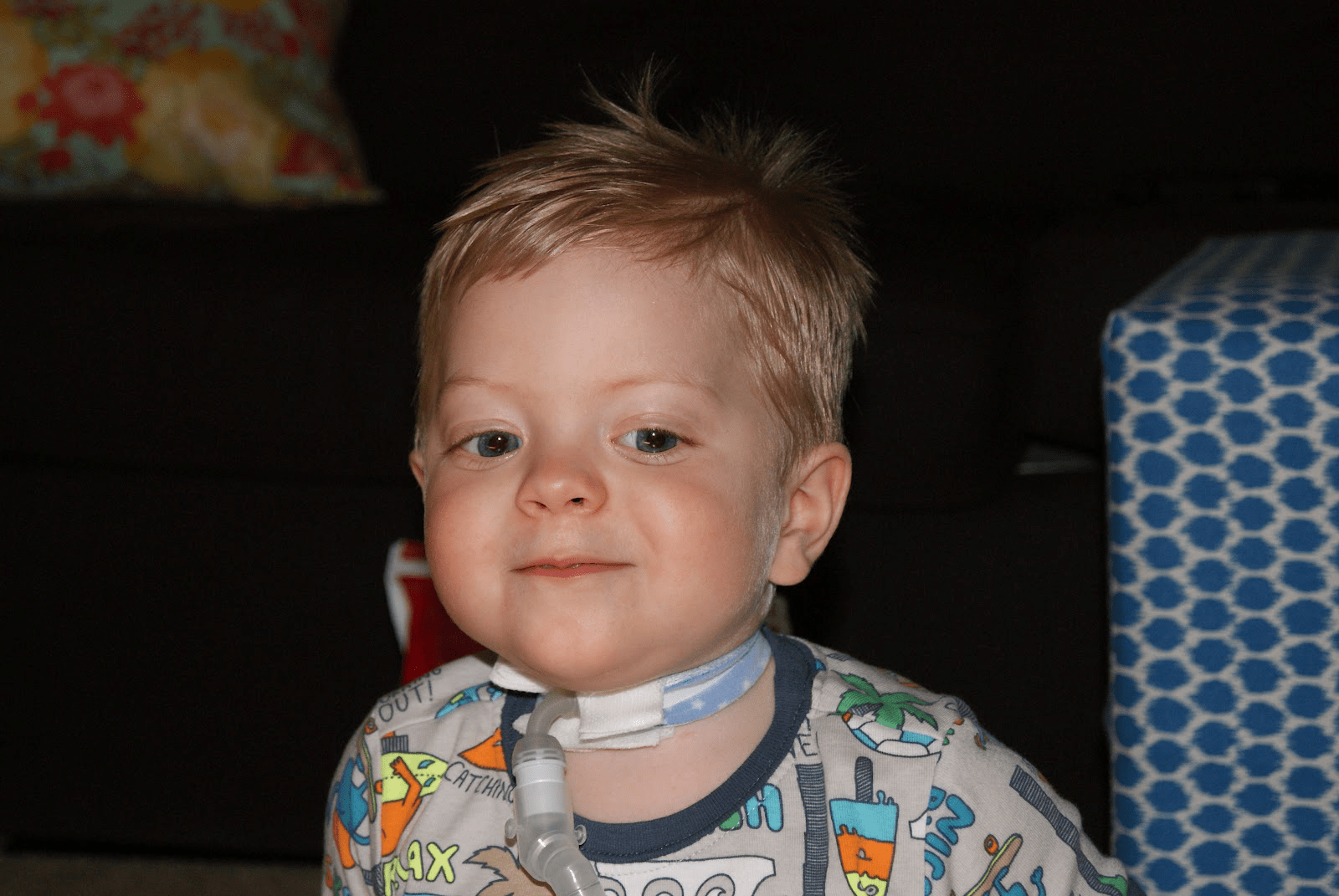 Freeing up hospital beds—how children can leave hospital sooner!