My name is Patrik Hutzel from intensivecareathome.com, where we provide tailor-made solutions for long-term ventilated adults and children with tracheostomies, where we provide tailor-made solutions for long-term ventilated adults and children on bilevel positive airway pressure (BiPAP), continuous positive airway pressure (CPAP) ventilation at home. Home tracheostomy care without ventilation for adults and children at home. Home ventilation weaning, home cough assist management, home total parenteral nutrition (TPN), home intravenous (IV) potassium, home IV magnesium, home IV fluid management, as well as other electrolyte management, which goes along with central line, PICC (Peripherally Inserted Central Catheter) line, Hickman’s line, as well as port management at home. We provide suprapubic catheter (SPC), indwelling catheter (IDC) management at home, nasogastric tube, nasojejunal tube management at home, percutaneous endoscopic gastrostomy (PEG) and percutaneous endoscopic jejunostomy (PEJ) management at home, palliative care management at home.
We also provide level 2 and level 3 National Disability Insurance Scheme (NDIS) support coordination, as well as Transport Accident Commission (TAC) and WorkSafe case management.
Today, I want to answer a comment that came in from Evelyn, responding to one of my articles in the last few weeks and videos on my YouTube channel about Dee’s 89-year-old father who is on a ventilator with a tracheostomy and needs dialysis. Evelyn’s comment is one I hear in different words almost every single week.
I think it deserves a full and clear answer. Evelyn said,
“Hi Patrik,
I cannot imagine what kind of quality of life he would have with all those things, tracheostomy, dialysis, etc., unless he has a 24-hour ICU RN ready to go at home or an endless amount of money. I cannot imagine how this can happen. Otherwise, he would be sent to a nursing home and most likely die a terrible death.”
From Evelyn.
I will also put a link to the video that she has actually responded to.
Evelyn, first of all, thank you for writing in and being so proactive.
You have actually put your finger on the exact two conditions that make Intensive Care at Home possible for a patient like Dee’s father, which is actually a 24/7 critical care registered nurse ready to go at home and the funding to pay for it. You are not wrong that those two things are essential.
Where I want to gently push back is on the idea that you need to personally have an endless amount of money to make it happen, and on the idea that a nursing home and a terrible death are the only alternative and are not preventable. That is simply not true, and I want to show you today how and why.
Let us first look at the clinical picture of why Evelyn’s concern is completely valid. Let us be clear about what we are talking about because Evelyn’s instinct here is clinically sound, not dramatic. A patient like Dee’s father is 89 years old, ventilator-dependent with a tracheostomy, mid-ventilator weaning trial, requiring dialysis, either peritoneal or home hemodialysis, and he is not mobile.
That is genuinely a high-acuity ICU patient. Evelyn is right that a support worker cannot safely manage this. Evelyn is right that a general registered nurse without ICU experience cannot safely manage this. Evelyn is right that a standard nursing home staffed the way nursing homes are usually staffed has no business whatsoever trying to manage a ventilated, tracheostomy, dialysis-dependent patient. It is all ICU-level nursing care that is required here. If that was on offer, I would share Evelyn’s fear about a terrible death completely.
But here is a third option that Evelyn has not factored in, and it is the option we build our entire company, Intensive Care at Home, around: 24-hour critical care registered nurses, nursing at home, funded through the right channels rather than out of the family’s own pocket, and also looking at sustainable business models and advocacy that make it happen.
Before I go further, you might be wondering what actually makes me qualified to answer questions like this for Evelyn. Again, my name is Patrik Hutzel, and I have worked in critical care nursing for over 25 years in three different countries, where I worked as a nurse manager in intensive care for over five years. I have been founding Intensive Care at Home in 2012 here in Australia. That is how long we have been going. I was also part of a startup Intensive Care at Home service in Germany, where we were the first provider in Germany, and then I brought the concept to Australia.
Why families wrongly assume it has to be endless money. Evelyn’s assumption is completely understandable, and I want to explain where it comes from because it is not entirely irrational. Hospitals rarely tell families that home ICU-level nursing exists as a funded option, so families only ever hear about self-funded private nursing, which genuinely is extremely expensive.
Aged care funding in Australia, particularly for people over 65, is not built for ventilator and tracheostomy-level nursing. Older patients are frequently excluded from NDIS on the basis of age rather than clinical need. I consider this age-based discrimination, and I say so publicly.
Families are rarely shown the evidence and documentation trail that funding bodies actually require to approve 24/7 critical care registered nurse care, so the application either is not made at all or it is made badly and gets knocked back. None of that means the funding does not exist. None of that means it is not possible.
It means the pathway to it is not handed to families on a plate, and most families understandably give up or never find out about this funding in the first place. This is the actual part I most want Evelyn and anyone reading or watching this in the same position to understand.
At intensivecareathome.com, we do not just provide the critical care registered nurses 24 hours a day.
We also do the advocacy work to get the care funded because that is what we have been doing from day one. Even to get this off the ground, a lot of advocacy was needed. What does it look like in practice?
Building the clinical case: ventilator settings, weaning progress, tracheostomy studies, renal function and dialysis needs, medical and nursing notes. That shows exactly why this patient needs 24/7 critical care registered nurse-led care rather than a support worker or a general registered nurse model, or staying in ICU forever, or providing end-of-life care that the family simply does not want or the patient does not want.
That means we are matching the clinical case to the right funding source if it is NDIS level 2 or 3 specialist support coordination, TAC, WorkSafe, Department of Veterans’ Affairs (DVA), public hospital funding, private health funds, or a combination of all of it. We are advocating directly with the funding body using the evidence, not opinion, to make the case that a support worker model or a non-ICU registered nurse model is not sustainable or simply a lower standard of care. It is unsafe and, in some cases, has cost lives.
We are coordinating with the hospital, with the ICU, the treating specialists, renal teams, and allied health, so the transition home is clinically safe from day one. We have successfully advocated for funding from our very first case study through to the case studies we published today. We would not still be in business 14 years later if we could not consistently make this case and win it. Here is how it works really for anybody that is not NDIS, not TAC, not DVA, or any other established funding stream.
An ICU bed costs $5,000 to $10,000 per bed day. Let me repeat that. An ICU bed costs $5,000 to $10,000 per bed day. Let us just say someone stays in ICU for three months. To keep the math simple, 30 days in a month, $5,000 times 30, that is roughly $150,000 a month. In 30 days times three, that is $450,000 in three months. That is a pretty significant figure. Intensive Care at Home would cost half of that. It is as simple as that. You already have a business case. You do not need to have sleepless nights about the business case because that business case simply exists.
But the human case is much more significant because ask any family who has been in a situation like this, you would always want to be at home. The human case and the business case make it a very strong foundation to advocate for Intensive Care at Home because someone, make no mistake, is paying for the $5,000 per bed day for the ICU bed. Someone might as well pay only half of it and get patients out of ICU, which is also a win-win situation because ICUs need the bed.
What does that mean for a patient like Dee’s father? For a patient or a client with his profile, ventilator with tracheostomy, weaning in progress, dialysis-dependent, not mobile, our model provides 24-hour nursing care with critical care registered nurses in the home, ventilation management, monitoring, circuit changes, and structured weaning support, full tracheostomy care, suctioning, tube changes, humidification, skin care.
Coordination with the renal team to support dialysis delivery at home. Medication management and infusion therapy where required. Comprehensive clinical documentation and governance, advocacy with funding bodies, with hospitals, NDIS, TAC, WorkSafe, DVA, hospitals, and private health funds.
Everything we do is governed by our evidence-based mechanical home ventilation guidelines, which cover invasive ventilation with tracheostomy, non-invasive ventilation with BiPAP, CPAP, tracheostomy care with and without ventilation support, weaning protocols, and 24/7 critical care registered nurse-led nursing standards.
This is not guesswork. It is a documented clinical framework. The same one that led to our third-party accreditation for International Organization for Standardization (ISO) 9001:2015 and for NDIS registration.
Here is something that directly answers Evelyn’s fear about quality. Right now in 2026, we are the only Intensive Care at Home nursing service in Australia that is third-party accredited for Intensive Care at Home nursing. You can read the full detail at intensivecareathome.com/accreditationquality.
We have helped this level of accreditation since 2012, and no other provider in Australia has built the same intellectual property or clinical governance around Intensive Care at Home nursing.
When you engage us, you are not getting a general nursing agency that also does tracheostomies. You are getting a team whose entire specialty is safely bringing intensive care patients home.Think of it like a pilot and a cabin crew. You would not want the cabin crew flying the airplane, no matter how caring and well-intentioned they are.
For a ventilated, tracheostomy, dialysis-dependent patient, you need the pilot, a critical care registered nurse who has done this thousands of times and can handle anything that happens at 3 a.m. or at 3:00 p.m., for that matter. That is why accreditation actually matters so much and is very reassuring.
If you are in Evelyn’s position watching a family member in a situation like this, or you are the family member yourself, the single most useful thing you can do right now is request full access and full copies of the medical records.
That includes all clinical notes from ICU and the treating team, doctors, nurses, physiotherapists, occupational therapists, allied health, any specialists, ventilator settings and weaning progress charts, vital sign charts, renal function results and dialysis assessment reports, lab results, medication chart, allied health assessments, physio, occupational therapy, speech pathology, any goals of care or advance care planning documentation.
Because you have a legal right to this information. It is the patient’s own record of care. It is also the evidence base we use to build the clinical and funding case that gets someone home safely instead of into a nursing home that is not equipped to look after them.
With Intensive Care at Home, we are currently operating all around Australia in all states and territories, in all major capital cities, as well as regional and rural areas. We employ hundreds of years of critical care nursing experience combined in the community. Like I said, we have a great team of highly experienced ICU nurses, and we are ISO 9001:2015 accredited and NDIS registered.
We have received funding through departments of health, public hospitals directly, private health funds, NDIS, DVA, TAC, and so forth. An application actually for an elderly gentleman who is not qualifying for NDIS should actually go through the Department of Health because they are the ones funding the ICU bed, paying a lot of money. Again, contact us for more information on how to go about it.
Generally speaking, our clients are at home predictably and permanently. They do not cycle back into ICU, with some rare exceptions, of course. We try to have the same critical care registered nursing team returning shift after shift because consistency and relationships matter enormously for our clients and medically complex vulnerable clients at home.
Once again, keep in mind Intensive Care at Home costs approximately 50% of an ICU bed, which runs between $5,000 to $10,000 per bed day in ICU. Intensive Care at Home is approximately 50% of that. It is therefore a genuine win for the client, for the family, the funding body, and the ICU and the hospital.
The bottom line is this, Evelyn, you were right that this only works with the 24/7 critical care registered nurse and the money to fund it. What I want to leave you with is some hope that funding does not have to come from an individual family’s own bank account, and it does not have to mean a nursing home and a terrible death is the only other option.
It means finding a provider who can build the clinical evidence, advocate for the right funding source, and deliver the 24/7 critical care registered nurse-led nursing safely once that funding is approved.
That is exactly what we do at Intensive Care at Home, and we have been doing it successfully since 2012. If you or someone you know is facing this exact situation, ventilator, tracheostomy, dialysis, and you have been told the only options are an expensive private arrangement or a nursing home, please reach out before you accept that as the final answer.
In our experience, most of what families are told cannot be done is a system or a funding barrier, not a genuine clinical one, and system barriers can be overcome.
With all of that said, with Intensive Care at Home, we are currently sending our critical care nurses into the home 24 hours a day. Therefore, we are providing a genuine alternative to long-term stay in intensive care for:
- Ventilation
- Tracheostomy
- Home BiPAP (Bilevel Positive Airway Pressure) and CPAP (Continuous Positive Airway Pressure)
- Tracheostomy care without ventilation
- home TPN (Total Parenteral Nutrition)
- Home IV potassium
- Home IV magnesium
- Home IV antibiotics
- Home IV fluids
We’re providing:
- Cough assist management at home
- Ventilation weaning management at home
- central line, PICC (Peripherally Inserted Central Catheter) line, Hickman’s line as well as port management at home
- nasogastric tube, nasojejunostomy tube, PEG (Percutaneous Endoscopic Gastrostomy), PEJ (Percutaneous Endoscopic Jejunostomy) tube management at home
- IDC (Indwelling Catheter) and SPC (Suprapubic Catheter) management at home
- Palliative care services at home
We’re also sending our critical care nurses into the home for emergency department bypass services. We have done so successfully as part of the Western Sydney Local Health District’s In Touch program, saving approximately $2,000 per patient that we keep at home instead of them going into an emergency department.
That also means we’re in a position to cut the cost of an ICU bed by around 50%. An intensive care bed costs between $5,000 to $10,000 per bed day depending on location. Intensive Care at Home costs approximately 50% of that, and we’re freeing up the most sought-after bed in the hospital, which is the ICU bed. Most importantly, we’re improving the quality of life for patients and their families, which is a win-win situation for all stakeholders.
Our Coverage and Accreditation
With Intensive Care at Home, we’re currently operating all around Australia, in all major capital cities, as well as in all regional and rural areas. We are an NDIS approved service provider all around Australia, TAC (Transport Accident Commission) and WorkSafe in Victoria as well as the Department of Veterans Affairs all around Australia.
We’re also ISO 9001:2015 accredited. Our clients and we as a service provider have also received funding through public hospitals, private health funds as well as departments of health.
We are the only service provider in Australia that has achieved third-party accreditation for Intensive Care at Home nursing in 2025. We have been achieving this high level of accreditation since 2012. No other provider in Australia has achieved the Intensive Care at Home level of accreditation in the community and has created more intellectual property when it comes to Intensive Care at Home nursing than we have.
This puts us in a position to employ hundreds of years of critical care nursing experience combined in the community. No other service provider in 2025 employs a higher skill level in the community than we do. And that enables us to look after the highest acuity adults and children in the community in Australia safely.
If You Need Help
If you’re at home already and you’re watching this or you’re stuck in an ICU and you realize that you don’t have the right level of support, I can give you many examples where we helped clients with funding, how we advocate for funding. We had to advocate successfully for funding from our first case study to many other case studies where we had to advocate successfully for funding with the right evidence of course because it is crystal clear that disability support workers for example or registered nurses without ICU experience cannot look after ventilated clients at home whether adults or children with or without a tracheostomy and it’s simply dangerous and negligent.
There are plenty of examples where clients with support worker models or even RN (registered nurse) models without ICU experience have died at home and I have evidence to back up everything that I’m saying here because it’s a bit like flying the airplane with a cabin crew instead of the pilot and it could simply be deadly.
This can be avoided by having simply 24-hour critical care nurses at home because our clients are at high risk of medical emergencies or worse without critical care nurses 24 hours. This is actually also evidence-based in the community and is documented in our evidence-based Mechanical Home Ventilation Guidelines on our website at intensivecareathome.com.
Think about it: in an intensive care unit in a hospital, you wouldn’t have support workers or general registered nurses looking after a critical care patient on a ventilator with a tracheostomy. So why would anyone in their right mind do that in a home care environment where there are fewer resources?
Clients that have found us have been at home long-term predictably and permanently with critical care nurses. Their alternative would have been to either die or stay in ICU long-term, and our clients don’t go back to ICU. They stay at home permanently and predictably and the insurance bodies save half of the cost of an ICU. But it’s a win-win situation all around.
We can do the same for you if you’re stuck in ICU or if you’re not safe at home, which includes the advocacy for funding and the network that goes along with it. We have always successfully advocated for our clients or we have the network to successfully advocate for you and for your family member, otherwise we wouldn’t be in business. The same again is applicable for those stuck in an ICU which is similar to many of our, if not most of our cases.
Our Support Coordination Services
This is also why we are providing Level 2 and Level 3 NDIS support coordination. We have a team of experienced NDIS support coordinators, and they have a wealth of knowledge. We’re also providing TAC case management and WorkSafe case management in Victoria with Lucy McCotter.
If you’re an NDIS support coordinator or a case manager or a social worker from another organization or a hospital watching this and you’re looking for nursing care for your participants, please reach out to us as well. If you’re looking for funding for nursing care for your participants and you don’t know how to go about it and how to advocate for it, what evidence to provide, I encourage you to reach out to us as well. We have the network to make that happen. We will help you with the right level of funding and with the right level of advocacy.
We’re also providing NDIS specialist nursing assessments done by critical care nurses with a legal nurse consulting background.
Join Our Team
If you are a critical care nurse and you’re looking for a career change and you want to join a very progressive, dynamic, successful, and high-performing team of critical care nurses in the community, we are employing hundreds of years of critical care nursing experience combined.
If you’re looking for a career change, we’re currently hiring for jobs for critical care nurses in Melbourne, Sydney, Brisbane, Albury-Wodonga, Bendigo, Geelong, Warragul, and also in Wyelangta in Victoria.
If you have worked in critical care nursing for a minimum of two years, adult ICU, pediatric ICU, ED and you have already completed a postgraduate critical care nursing qualification, we will be absolutely delighted hearing from you.
I have a disclaimer though: Because we are offering tailor-made solutions for our clients which includes regular staff, our clients do also want the same staff coming over and over again because they are so vulnerable and so special. That’s why we need regular, reliable staff.
If you’re looking for agency work where you can come and go, this will not be the right fit for you. We’re looking for consistency and our clients are looking for consistency. So please only apply with us if you can give us regular and consistent availabilities for shifts and you’re really keen on building relationships with us and with our clients. Reliability is also a must.
For Medical Professionals and Healthcare Executives
If you’re an intensive care specialist or an ED specialist, we also want to hear from you. We’re currently expanding our medical team as well.
We can also help you eliminate your bed blocks in your ICU and in your ED for your long-term patients or for your regularly readmitting patients with our critical care nursing team at home. We’re here to help to take the pressure off your ICU and ED beds. In most cases, you won’t even pay for it. Even if you do pay for it, it is so much more cost-effective than what you’re paying for in ICU and ED settings, and you get the same level of care and simply more patient and family satisfaction because you also want to partner with your consumers.
If you are a hospital executive watching this, we can help you free up your ICU and ED beds.
International Support
If you’re in the U.S. or in the UK and you’re watching this and you need help, we want to hear from you as well. We can help you there privately with one-on-one consulting and with hiring nurses privately.
Once again, our website is intensivecareathome.com. Call us on one of the numbers on the top of our website or simply send us an email to [email protected].
If you like my videos, click the like button, subscribe to my YouTube channel for regular updates for families with Intensive Care at Home and intensive care. Click the like button, click the notification bell, and share this video with anyone who has a family member in intensive care long-term or needs to see this.
Thank you so much for watching.
This is Patrik Hutzel from intensivecareathome.com and I’ll talk to you in a few days.
Take care for now.
RELATED LINKS:
 Breaking the vicious cycle of long-term ventilation in Intensive Care by creating a virtuous cycle
What are normal visiting hours in Intensive Care?
VENTILATION AND TRACHEOSTOMY – HOW LONG IS THE INTENSIVE CARE STAY?
Is it ethical to leave long-term ventilated adults& children with tracheostomies in Intensive Care?
Breaking the vicious cycle of long-term ventilation in Intensive Care by creating a virtuous cycle
What are normal visiting hours in Intensive Care?
VENTILATION AND TRACHEOSTOMY – HOW LONG IS THE INTENSIVE CARE STAY?
Is it ethical to leave long-term ventilated adults& children with tracheostomies in Intensive Care?
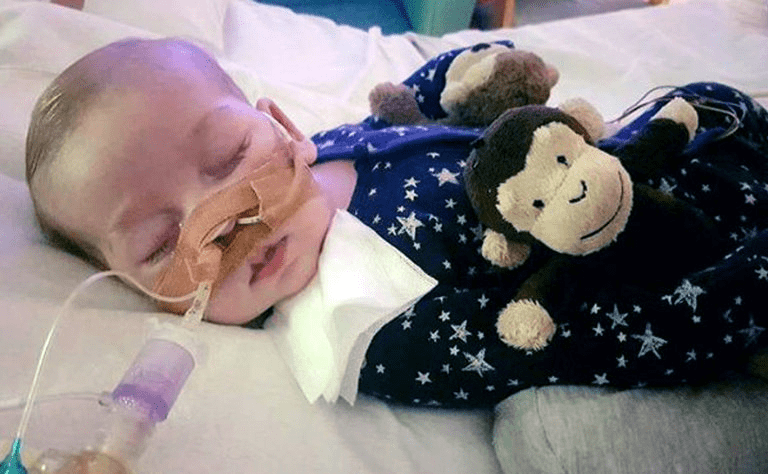 Charlie Gard, the little baby who wasn’t allowed to die at home!