Podcast: Play in new window | Download
Steps to Take My Mom Home from ICU on a Ventilator with a Tracheostomy
That’s what we’re looking at today.
My name is Patrik Hutzel from intensivecareathome.com, where we provide tailor-made solutions for long-term ventilated adults and children with tracheostomies, where we provide tailor-made solutions at home for ventilated adults and children with BIPAP (Bilevel Positive Airway Pressure), CPAP (Continuous Positive Airway Pressure), without a tracheostomy, where we provide tracheostomy care without ventilation, home cough assist management, home ventilation weaning, Home TPN (Total Parenteral Nutrition), home IV potassium, home IV magnesium, home IV fluids, and home IV antibiotic infusions. Central line, PICC (Peripherally Inserted Central Catheter) line, Hickman’s line, port management at home, IDC (indwelling catheter), SPC (suprapubic catheter) management at home, nasogastric tube , nasojejunostomy tube, PEJ (Percutaneous Endoscopic Jejunostomy) tube and, PEG (Percutaneous Endoscopic Gastrostomy) tube management at home, as well as palliative care management at home.
Today, I have an email from Amy, who says:
“Hi Patrik,
I’ve been very much enjoying and learning from your videos recently. My 91-year-old mom had an aortic dissection on December 8th, 2025 and had emergency CABG surgery, coronary artery bypass graft surgery. She has been in ICU with complications ever since. We were at a community hospital initially and my mom was declining, so we chose to have her transported to a university hospital, a level one trauma center and tertiary academic university hospital, which has provided a much higher quality of care.
From the very beginning, the community hospital tried influencing our family to just ‘let her go.’ It became so egregious that one of the nurse practitioners was angrily chastising us, saying that every doctor in that hospital believed our mom was dying and we shouldn’t put her through being ventilated because she would never be weaned from the ventilator and would live out her days in an institution. We still pushed back saying we wanted to have her receive a tracheostomy, but their ENT team wasn’t available until the following week, so she received an endotracheal tube instead.
The very next day, December 20th, we requested the move to the university hospital. She’s been on a ventilator since then and we requested a tracheostomy again, and this hospital began advising against it, saying it may give her more time but without any quality of life. We still pursued the tracheostomy and they said she would receive the surgery on January 2nd, but her surgery got preempted three times due to emergency surgeries and got postponed until the 4th of January. I’m hoping and praying it doesn’t get pushed back again.
Once she gets the tracheostomy as well as a PEG tube and possibly dialysis port, they tell us she will need to stay in ICU long-term for rehabilitation and possibly weaning from the tracheostomy. Hopefully the PEG and dialysis port are temporary as well. Prior to all of this, my mom was completely independent, still living at home, driving, going to church, having lots of meetings with people, book club, etc. She was a very healthy 91-year-old lady without any major health problems.
I still believe she can recover, even if not 100%, and have a good quality of life. She still has 8 of her 12 children living and involved in her life, me being the youngest daughter, as well as her healthcare power of attorney. Mom has private health insurance. Do you know if private health insurance would cover Intensive Care at Home? We want to take her home badly as she has no quality of life in hospital and we believe she will have quality of life at home, even if it means on a ventilator with a tracheostomy. Thank you so much for your time and expertise.
From, Amy.”
Amy, thank you so much for reaching out and for sharing your mom’s story. First of all, I want to commend you for being such a strong advocate for your 91-year-old mom. The fact that you pushed back against the community hospital’s pressure to let her go, and then transferred her to a level one trauma center and university hospital shows incredible strength and love. You’re absolutely right to believe your mom can recover.
Prior to the aortic dissection and emergency CABG or coronary artery bypass graft surgery on December 8th, 2025, she was completely independent, driving, going to church, attending meetings, book clubs, etc. That’s not someone who should be written off. The fact that she was so healthy and active before this medical crisis is actually a very positive indicator for potential recovery.
Now let me address your main question about taking your mom home from ICU on a ventilator, whether that’s invasive ventilation with a tracheostomy or potentially non-invasive ventilation BIPAP CPAP down the track, or potentially going home with a tracheostomy without ventilation. The answer to that is an absolute yes. This is exactly what we specialize in at Intensive Care at Home. Taking critically ill patients home from ICU on mechanical ventilation, whether it’s invasive ventilation with a tracheostomy, non-invasive ventilation without a tracheostomy, it’s not only possible, it’s often the best option for recovery and quality of life.
According to the evidence-based Mechanical Home Ventilation Guidelines that you can find on our website at intensivecareathome.com, home mechanical ventilation with intensive care nurses 24 hours a day is becoming increasingly common and successful for patients who require long-term ventilation support.
Let me walk you through the key steps to get your mom home from ICU permanently and predictably, whether she’d be on invasive ventilation with tracheostomy or non-invasive ventilation without a tracheostomy, or on a tracheostomy without ventilation. Maybe she can be weaned off the ventilator once she has the tracheostomy, but she may still need the tracheostomy.
Let’s look at understanding ventilation options. Your mom will likely be on invasive ventilation with a tracheostomy initially once she gets her tracheostomy on January 4th. However, as she recovers, there may be opportunities to transition to non-invasive ventilation, also known as NIV or BIPAP or CPAP, using a mask interface, or she may wean off the ventilation entirely over time at home. Once again, according to our evidence-based Mechanical Home Ventilation Guidelines on our website at intensivecareathome.com, both invasive and non-invasive ventilation can be successfully managed at home with proper preparation, 24-hour nursing care with intensive care trained nurses, and the right support.
Next, start discharge planning immediately. Don’t wait for the hospital to bring this up. Here’s what you need to do right now. Request a family meeting with the ICU team and specifically ask to include the ICU doctors, the respiratory physician, the discharge planner or case manager, social worker, physical and occupational therapy. In this meeting, you need to clearly state we want to explore taking mom home on the ventilator with 24-hour intensive care nurses with Intensive Care at Home.
You mentioned that your mom has private health insurance. Here’s what you need to do there. Private health insurance usually has an interest in cutting the cost of an ICU bed by 50% and making sure their members are well looked after. An ICU bed costs between $5,000 to $10,000 per bed day, depending on location, depending on condition. Home ventilation with Intensive Care at Home costs about 50% of that. Again, depends a little bit on location as well. The bottom line is that any health insurance will have the interest in cutting the cost of an ICU bed by 50%.
What we need is home ventilation equipment, 24-hour intensive care nurses. This is the key component, and it’s also evidence-based as per the Mechanical Home Ventilation Guidelines. It’s also as per our quality policies and procedures, medical supplies, doctor home visits, or telemedicine. You need to contact your mom’s insurance company, a health insurance company immediately and ask these specific questions: Does your policy cover home mechanical ventilation with Intensive Care at Home? Does it cover 24-hour intensive care nurses at home for a ventilator dependent patient? And what documentation do you need from the hospital or from us? It’s as simple as that.
The hospital may tell you insurance won’t cover it, but that’s often because they don’t want to do the work to arrange it. You need to verify coverage yourself directly with the insurance company and with us. They don’t want to do it because the quickest way for the hospital to eliminate the problem is by simply letting your mom die.
Let’s look at understanding what home mechanical ventilation with Intensive Care at Home looks like. According to the evidence-based Mechanical Home Ventilation Guidelines on our website at intensivecareathome.com, we will need to organize portable home ventilators, much smaller and quieter than ICU ventilators, backup ventilators, backup tracheostomies, oxygen concentrator or oxygen tanks, two suction machines, pulse oximeter, humidification system, backup power supply, battery or generator, emergency supplies. Staffing, 24-hour skilled intensive care nursing care, and the physician oversight which we can organize with our own ICU consultant, and that can be either in person or via telehealth.
Amy, I also want to address something really important here. The hospital is telling you that the tracheostomy may give her more time but without quality of life. This is their perception, not a medical fact and certainly not reality. Here’s what the evidence actually shows. Patients who go home on ventilators with or without tracheostomies or go home on tracheostomies without ventilator often have a much better quality of life than those who remain institutionalized. Why? Because they’re in a familiar environment surrounded by their family. They maintain their dignity and privacy. They can participate in family activities. They have one-on-one intensive care nurses at home instead of one nurse managing potentially two patients in ICU. This creates a much nicer and a much more peaceful, patient and family friendly environment.
Your mom was going to church, book clubs, meeting people at 91 years of age. She has 8 out of her 12 children still involved in her life. That’s not someone without quality of life. That’s someone with a rich, meaningful life that’s absolutely worth fighting for.
Now also let me give you a word of warning. Most home health agencies cannot manage ventilator dependent patients at home. Our point of difference is that number one, we are the first Intensive Care at Home nursing service in Australia since 2012 that is accredited for actually for Intensive Care at Home. We have built the knowledge, the know-how, the intellectual property, the accreditation to provide this level of service. We also have a team now coming close to 170 critical care nurses that have the skills, the expertise, the training, the know-how to make this happen.
No other provider employs more critical care nurses in the community than we do, which means we have all this expertise. We have an amazing team. We employ hundreds of years of critical care nursing experience combined. Again, no other service provider can match that level of expertise. No other service provider in 2026 can match the level of accreditation we have achieved.
Ask the hospital discharge planner to set up Mechanical Home Ventilation Guidelines, with you and with us, and we can get it done pretty quickly, start hiring staff, start organizing equipment, etc.
Also, according to the evidence-based Mechanical Home Ventilation Guidelines that once again you can find on our website at intensivecareathome.com, you need to access and potentially modify your home. The bedroom needs to be large enough for hospital bed and equipment, good ventilation and temperature control, backup power plan, ideally a generator or a UPS system, space for nursing staff and equipment, clear pathways for emergency access, smoke detectors and fire extinguisher, emergency exit plan. Contact local emergency services and fire department just to notify them. Obviously you need adequate electrical capacity, backup power sources, phone, internet for telemedicine and nurse communication, possible backup oxygen supply.
Here’s how typically the transition happens. Once a tracheostomy has been placed, she can go home then with either a PEG or a nasogastric tube, possible dialysis port, hopefully temporary. She needs to be medically stable. Then obviously funding needs to be approved, but let me repeat that one more time. We’re cutting 50% of the cost of an ICU bed, and we’re freeing up the most sought after bed in the hospital, the ICU bed. You want to be at home. It’s a win-win situation. Then we’ll start hiring a team and we’ll have you involved in hiring the team, of course.
At home we can also potentially look at potential weaning trials and potential transition to non-invasive ventilation if possible at all, but let’s aim for going home first and foremost. Let me drum this on one more time. Recovery and weaning often happens much better at home because patients and families are less stressed, sleep quality improves, nutrition can be optimized, rehabilitation can be more intensive and personalized, and there’s much less risk of hospital acquired infections.
Lastly, do not let the hospital push back against your wishes. Here’s how to handle this. Be clear and firm. We understand your concerns, but we want to pursue Intensive Care at Home with 24-hour intensive care nurses regardless. We need you to work with us on discharge planning for Home Mechanical Ventilation with Intensive Care at Home. You are the healthcare power of attorney. Know your rights. You have the right to make decisions for your mom. The hospital must provide appropriate discharge planning and support. You can refuse institutional placement. Keep notes of all conversations. Get written care plans. Document who says what and when. If necessary, involve patient advocacy, which we also provide at our sister site, intensivecarehotline.com.
You also mentioned that your mom is getting a PEG feeding tube and possibly a dialysis port. That doesn’t prevent home discharge with Intensive Care at Home at all. PEG tubes are routinely managed at home by our nursing staff. Many patients eventually recover to the point where they can start to eat and drink again, but we don’t know that, of course, at the moment with your mom. Then the PEG can be removed. Dialysis can also be managed at home, home hemodialysis or peritoneal dialysis, though this requires additional planning. However, you also mentioned this may be temporary, which would obviously be the best option. But the point is, don’t let the hospital use these additional medical needs as a reason to keep your mom in ICU and institutionalized. They’re all manageable at home with proper support.
In terms of team setup, number one, of course, 24-hour intensive care nurses with Intensive Care at Home. ICU doctor oversight, which we can help you with, occupational therapist, speech therapist, physiotherapist, dietitian, and a clinical case manager, but we can help with all of that. We have a network of people that we work with. You as a healthcare provider and primary family advocates and potentially your siblings are involved as well.
Let me just emphasize one more time something really important. The evidence-based Mechanical Home Ventilation Guidelines on our website show that home is most of the time the optimal setting for recovery, not just an alternative for institutionalized care. Again, research shows that patients at home experience lower rates of infection, better sleep quality, reduced delirium and confusion, improved mood and mental health, faster functional recovery, better quality of life, often better survival rates, maintained family connections and dignity.
Your mom was thriving at 90 years of age before this happened. She deserves the chance to recover in the place where she’s most comfortable, which is her home, surrounded by the people who love her the most.
Amy, I know you can do this. Don’t let the hospital’s pessimism discourage you. Let’s take matters in our own hands. We’re here to support you all the way along and get your mom home. Contact us at intensivecareathome.com. Call me on one of the numbers on the top of our website at intensivecareathome.com or send us an email to [email protected] to get the next steps organized to get your mom home.
So, with all of that said, with Intensive Care at Home, we are currently sending our critical care nurses into the home 24 hours a day. Therefore, we are providing a genuine alternative to a long-term stay in intensive care for ventilation, tracheostomy, home BIPAP (Bilevel Positive Airway Pressure), home CPAP (Continuous Positive Airway Pressure), ventilation without tracheostomy and tracheostomy care without ventilation, home TPN, home IV potassium, home IV magnesium, home IV antibiotic, and home IV fluids. We’re providing cough assist management at home, ventilation weaning management at home, central line, PICC line, Hickman’s line, as well as port management at home. We’re also providing nasogastric tube, nasojejunostomy tube, PEG, PEJ tube management at home, as well as IDC (indwelling urinary catheter) and SPC (suprapubic catheter) management at home as well as palliative care services at home.
We’re also sending our critical care nurses into the home for emergency department bypass services. We have done so successfully as part of the Western Sydney Local Area Health District, their in-touch program, saving approximately $2000 per patient that we keep at home instead of them going into an emergency department.
That also means we’re in a position to cut the cost of an ICU bed by around 50%. An intensive care bed costs between $5,000 to $10,000 per bed day depending on location.
Intensive Care at Home costs approximately 50% of that and we’re freeing up the most sought-after bed in the hospital, which is the ICU bed. Most importantly, we’re improving the quality of life for patients and their families, which is a win-win situation for all stakeholders.
With Intensive Care at Home, we’re currently operating all around Australia in all major capital cities as well as in all regional and rural areas. We are an NDIS approved service provider all around Australia, TAC (Transport Accident Commission) and WorkSafe in Victoria, as well as the Department of Veteran Affairs all around Australia, we’re also ISO 9001:2015 accredited.
Our clients and we as a service provider have also received funding through public hospitals, private health funds, as well as departments of health. We are the only service provider in Australia that has achieved third party accreditation for Intensive Care at Home nursing in 2025. We have been achieving this high level of accreditation since 2012. No other provider in Australia has achieved the Intensive Care at Home level of accreditation in the community and has created more intellectual property when it comes to Intensive Care at Home nursing than we have.
This puts us in a position to employ hundreds of years of critical care nursing experience combined in the community. No other service provider in 2025 employs a higher skill level in the community than we do, and that enables us to look after the highest acuity adults and children in the community in Australia safely.
If you’re at home already and you’re watching this or you’re stuck in an ICU and you realize that you don’t have the right level of support, I can give you many examples where we helped clients with funding, how we advocate for funding. We had to go from our first case study to advocate successfully for funding to many other case studies where we had to advocate successfully for funding with the right evidence, of course, because it is crystal clear that, disability support workers, for example, who are registered nurses without ICU experience cannot look after ventilated clients at home, whether adults or children with or without a tracheostomy, and it’s simply dangerous and negligent.
Plenty of examples where clients with support worker models or even RN models without ICU experience have died at home and have evidence to back up everything that I’m saying here because it’s a bit like flying the airplane with a cabin crew instead of the pilot, and it could simply be deadly, and this can be avoided by having, simply 24 hour, critical care nurses at home, because our clients are at high risk of medical emergencies or worse without critical care nurses 24 hours, and this is actually also evidence-based in the community and is documented in our evidence-based Mechanical Home Ventilation Guidelines on our website at intensivecareathome.com.
Think about it, in an intensive care unit in a hospital, you wouldn’t have support workers or general registered nurses looking after a critical care patient on a ventilator with a tracheostomy, so why would anyone in their right mind do that in a home care environment where there are fewer resources?
Clients that have found us have been at home long-term, predictably and permanently with critical care nurses. They are, alternative would have been to either die or stay in ICU long term and our clients don’t go back to ICU. They stay at home permanently and predictably, and the insurance bodies save half of the cost of an ICU bed it’s a win-win situation all around.
We can do the same for you if you’re stuck in ICU or if you’re not safe at home, which includes the advocacy for funding and the network that goes along with it. We have always successfully advocated for our clients or we have the network to successfully advocate for you and for your family member, otherwise we wouldn’t be in business. The same, again, is applicable for those stuck in an ICU which is similar to many of our, if not most of our cases.
This is also why we are providing NDIS Support Coordination. We have a team of experienced NDIS support coordinators, and they have a wealth of knowledge. We’re also providing TAC case management and WorkSafe case management in Victoria with Lucy McCotter. If you’re an NDIS support coordinator or a case manager or a social worker from another organization or a hospital watching this and you’re looking for nursing care for your participants, please reach out to us as well.
If you’re looking for funding for nursing care for your participants and you don’t know how to go about it and how to advocate for it, what evidence to provide, I encourage you to reach out to us as well, we have the network to make that happen.
We will help you with the right level of funding and with the right level of advocacy. We’re also providing NDIS specialist nursing assessments done by critical care nurses with a legal nurse consulting background.
If you are a critical care nurse and you’re looking for a career change, and you want to join a very progressive, dynamic, successful and high performing team of critical care nurses in the community, we are employing hundreds of years of critical care nursing experience combined.
If you’re looking for a career change, we’re currently hiring for jobs for critical care nurses in Melbourne, Sydney, Brisbane, in Albury, Wodonga, in Bendigo, in Geelong, in Warragul, and also in Wyelangta in Victoria.
If you have worked in critical care nursing for a minimum of 2 years, adult ICU, pediatric ICU, ED, and you have already completed a postgraduate critical care nursing qualification, we will be absolutely delighted hearing from you.
I have a disclaimer though, because we are offering a tailor-made solutions for our clients which includes regular staff. Our clients also do want the same staff coming over and over again because they are so vulnerable and so special, that’s why we need regular, reliable staff.
If you’re looking for agency, work where you can come and go, this will not be the right fit for you. We’re looking for consistency and our clients are looking for consistency, so please only apply with us if you can give us regular and consistent availabilities for shifts and you’re really keen on building relationships with us and with our clients. Reliability is also a must.
If you’re an intensive care specialist or an ED specialist, we also want to hear from you, we’re currently expanding our medical team as well. We can also help you eliminate your bed blocks in your ICU and in your ED for your long-term patients or for your regularly readmitting patients with our critical care nursing team at home.
We’re here to have to take the pressure off your ICU and ED beds, and in most cases, you won’t even pay for it, even if you do pay for it, it is so much more cost-effective than what you’re paying for in ICU and ED settings. You get the same level of care and simply more patient and family satisfaction because you also want to partner with your consumers.
If you are a hospital executive watching this, we can help you free up your ICU and ED (Emergency Department) beds.
If you’re in the U.S. or in the U.K. and you’re watching this and you need help, we want to hear from you as well. We can help you there privately with one-on-one consulting and with hiring nurses privately.
Once again, our website is intensivecareathome.com, call us on one of the numbers on the top of our website or simply send us an email to [email protected].
If you like my videos, click the like button, subscribe to my YouTube Channel for regular updates for families with Intensive Care at Home and intensive care, click the like button, click the notification bell, and share this video with anyone who has a family member in intensive care long term or needs to see this.
Thank you so much for watching.
This is Patrik Hutzel from intensivecareathome.com, and I’ll talk to you in a few days.
Take care for now
RELATED LINKS:
 How can we improve the Quality of end-of-Life in Intensive Care?
Why does my loved one need a Tracheostomy in Intensive Care?
HOME instead of Intensive Care, a “BEFORE& AFTER” case study!
Long-term ventilation with Tracheostomy, finally a sustainable care model is emerging!
How can we improve the Quality of end-of-Life in Intensive Care?
Why does my loved one need a Tracheostomy in Intensive Care?
HOME instead of Intensive Care, a “BEFORE& AFTER” case study!
Long-term ventilation with Tracheostomy, finally a sustainable care model is emerging!
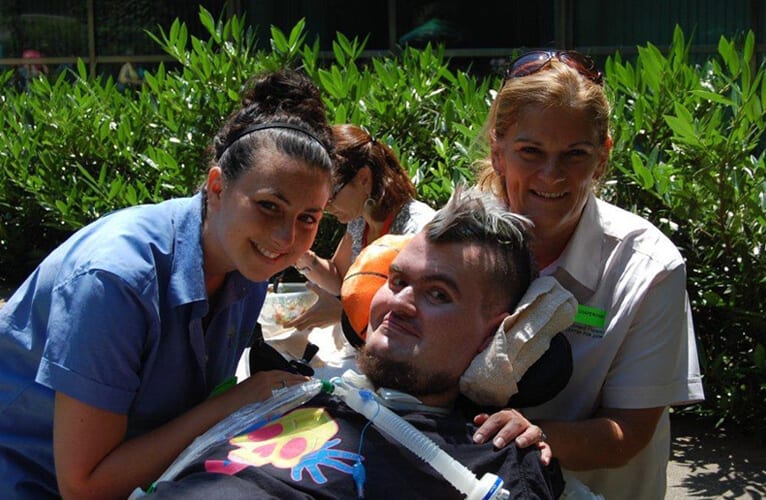 What are the best set-ups for INTENSIVE CARE AT HOME services? Do I need a big house?