Podcast: Play in new window | Download
Can a Long-Term Ventilated ICU Patient with ALS (Amyotrophic Lateral Sclerosis),
Diaphragm Pacer, Tracheostomy Post-Cardiac Arrest Go Home?
Today, I have another example of what clients and patients can leave intensive care safely and come to Intensive Care at Home. So, stay tuned.
My name is Patrik Hutzel from intensivecareathome.com. I have another case study today of what clients and long-term intensive care patients can safely go home with Intensive Care at Home.
So today, we are dealing with a male patient in his late 50s, and he’s been in intensive care since mid-September. The time of recording this video is early to mid-December. So, this gentleman has been in intensive care for 3 months now and doesn’t really have anywhere to go at the moment because he’s not ready to be weaned off the ventilator and he may not be ready to be weaned off the ventilator but let’s get through it step-by-step, so you can understand what clients are safe and appropriate to go home with Intensive Care at Home and improve their quality of life, of course.
So, the client has a history of ALS with the diaphragmatic pacer or stimulator, and he came into ICU after an out-of-hospital cardiac arrest, and he received bystander CPR for approximately 20 minutes prior to the emergency services’ arrival.
The initial ECG showed concern for ST changes in the lateral leads. Patient required defibrillation x 2, epinephrine/adrenaline, and amiodarone to achieve return of spontaneous circulation. Patient was intubated in the emergency department and repeat ECG did show concerns for ventricular fibrillation. Patient was started with amiodarone drip and transferred to the ICU.
ICU admission was prolonged by persistent mental status changes including persistent encephalopathy with hyperactive delirium, DVT (Deep Vein Thrombosis) of posterior tibial vein in the right lower extremity treated with Eliquis injections. He also has pulmonary bacteria with Klebsiella as well.
The primary hospital problem to this point remains the hyperactive delirium continuing to optimize psychiatric medications.
That is partly caused by a long-term stay in intensive care. There’s plenty of studies out there that prolonged induced coma and a prolonged stay in intensive care is causing ICU delirium and ICU psychosis. The minute patients can normalize their life, i.e., go home, this is very, very likely to improve because we’ve seen it many, many times with Intensive Care at Home when patients can finally go into their own habitat, so to speak, which is their own home.
Now, the patient is not only physically constrained at the moment, but he is also chemically constrained with medication such as Olanzapine, and that shouldn’t really happen. Not only do they restrain his limbs but also restraining chemically with Olanzapine, and that’s just not the best way to manage these situations. The best way to manage these situations is to treat patients in their own home and treat them like a human being in their own safe environment where they feel safe.
Now, currently during daytime, he is on a tracheostomy collar and with a tracheostomy, of course. On the night time, he’s on a volume control ventilation mode with a respiratory rate set at 10 breaths per minute, volume 570 mls per breath, and the PEEP of 5, and FiO2 of 21%. Sometimes he’s on up to 5 liters of oxygen when he’s on the tracheostomy collar. He’s got a PEG tube, gastrostomy tube, and he’s got a Shiley tracheostomy. He doesn’t have a central line anymore. So really, he’s all ready to go home at this particular point in time. He’s hemodynamically stable. His blood results are fine, and he needs to get out of the intensive care environment that’s probably making him worse because he’s not feeling safe and he’s not feeling like he’s in control of his own life and the family doesn’t feel like they’re in control of his life or of their life.
Given that he’s got ALS also known as Amyotrophic Lateral Sclerosis, it’s going to be difficult to wean him off the ventilator completely because the ALS is weakening muscles and impacts physical function because nerve cells break down, which reduces functionality in the muscles and therefore makes it more and more difficult to be someone off a ventilator. So, in this situation, we also advocate for a PEG tube because it’s unlikely that this gentleman can either eat and drink again anytime soon.
But the bottom line here is his quality of life is diminished in intensive care, especially since he can’t come off the ventilator at the moment. The best way forward here, which is why the family reached out to us is to take this gentleman home.
From an intensive care perspective, it’s a win-win situation as well because an intensive care bed costs $5,000 to $6,000 per bed day. It’s the most expensive and the most sought-after bed in a hospital and the intensive care unit needs the bed. Once again, going home is a win-win situation, not only from a cost perspective, definitely from a quality-of-life perspective for patients and families, but also from a bed management perspective for the hospital and for the intensive care unit. They free up the bed that can be used for another patient needing more acute critical care.
So, I hope that illustrates once again, what patients can safely go home with Intensive Care at Home.
Now, to wrap this all up, with Intensive Care at Home, we’re providing 24-hour critical care nurses at home and we are providing a genuine alternative to a long-term stay in intensive care for predominantly ventilated adults and children with tracheostomies, but also for Home BIPAP (Bilevel Positive Airway Pressure), Home CPAP (Continuous Positive Airway Pressure) ventilation without tracheostomy, tracheostomy clients without ventilation, Home TPN (Total Parenteral Nutrition), home IV potassium infusion, and home IV magnesium infusion. We’re also providing ventilation and tracheostomy weaning at home. We’re also providing palliative care at home. We’re providing port management, central line management, PICC (Peripherally Inserted Central Catheter) line management, as well as Hickman’s line management. We’re also providing nasogastric tube management and PEG (Percutaneous Endoscopic Gastrostomy) tube management at home.
We’re also sending our critical care nurses into the home for emergency department bypass services. We have done so successfully as part of a program at the Western Sydney Local Area Health District, they’re in-touch program, saving approximately $2,000 per patient that we keep at home instead of them going into the emergency department.
We’re also in a position to cut the cost of an intensive care bed by around 50% and intensive care beds cost around $5,000 to $6,000 per bed day. Our service costs around $2,500 to $3,000 per day and we’re freeing up the most sought-after bed in hospital, which is the intensive care bed. So, it’s a win-win situation all around. Once again, we’re improving the quality of life for patients and their families.
With Intensive Care at Home, we are currently operating all around Australia in all major capital cities as well as in all regional and rural areas. We are an NDIS (National Disability Insurance Scheme) approved service provider all around the country, TAC (Transport Accident Commission) and WorkSafe in Victoria, iCare in New South Wales, NIISQ (National Injury Insurance Scheme in Queensland), and the Department of Veteran Affairs all around the country. Our clients, and we as a provider, have also received funding through public hospitals, private health funds, as well as departments of health.
We are the only service provider in Australia in 2024 that has achieved third-party accreditation for Intensive Care at Home nursing. We’ve been achieving this level of accreditation since 2012, which is how long we’ve been in business for. No other provider has achieved this high level of accreditation in the community and has created this much intellectual property for Intensive Care at Home nursing than we have. This puts us in a position to employ hundreds of years of critical care nursing experience combined in the community for our clients. No other service provider employs a higher level of skill in the community than we do, which enables us to look after the highest acuity adults and children in the community. No other provider in Australia can take on a higher acuity level in the community than we can safely.
If you’re at home already and you’re watching this, and you realize that you don’t have the right level of support, I’ll give you a tangible example here. One of our first clients over 10 years ago was a client who was at home on a ventilator with a tracheostomy with a support worker model. Of course, support workers cannot keep looking after patients at home on ventilation with tracheostomy, that’s like flying the airplane with a cabin crew instead of the pilot because this client was at high risk of dying. He was going in and out of ICU because support workers simply could not keep him at home predictably, of course not. They have no skill, no experience, no knowledge how to look after the ventilator and the tracheostomy. It is an intensive care nursing skill. Period. Then eventually, the client found out about us, and we were providing our concept there very fast. When we started working with the client, he never ever went back into ICU ever again, and he was safe.
We can do the same for you if you’re not safe at home. If you don’t have enough funding, let us do the advocacy, let us help you. We can help you with all of it. Otherwise, we wouldn’t be in business. We have always successfully advocated for our clients.
That’s also why we’re providing Level 2 and Level 3 NDIS Support Coordination. We have a team of NDIS Support Coordinators, and they have a wealth of knowledge. I will put a link into the written version of this blog where I’ve done an interview with Amanda Riches, which is one of our NDIS Support Coordinators. We’re also providing TAC case management and WorkSafe case management in Victoria.
If you’re an NDIS Support Coordinator or case manager from another organization watching this, and you’re looking for nursing care for your participants, please reach out to us as well. If you’re looking for funding for nursing care for your participants and you don’t know how to go about it and what evidence to provide, I encourage you to reach out to us. We can help you with the right level of advocacy. We also provide NDIS specialist nursing assessments done by critical care nurses with a legal nurse consulting background.
If you’re a critical care nurse and you’re looking for a career change, we’re currently hiring for jobs for critical care nurses in the home in Melbourne, Sydney, Brisbane, in Albury, Wodonga, in Bendigo in Victoria, in Geelong in Victoria and in Warragul in Victoria. If you have worked in critical care nursing for a minimum of two years pediatric ICU, ED, and you have already completed a postgraduate critical care nursing qualification, we will be delighted hearing from you.
I have a disclaimer because we are offering a tailor-made solution for our clients, which includes regular staff, our clients do want the same staff coming over and over again because they are very vulnerable and very special, that’s why we need regular staff. So, if you are looking for agency work where you can come and go, this is not going to be the right fit for you. We are looking for consistency and our clients are looking for consistency. So please only put your application form with us if you can give us regular and consistent availabilities for shifts and you’re really keen on building relationships with us and with our clients, otherwise it’s not going to work.
If you’re an intensive care specialist or an ED specialist, we also want to hear from you. We are currently expanding our medical team as well. We can also help you eliminate your bed blocks in ICU and ED for your long-term patients or for your regularly readmitting patients with our critical care nursing team at home. We’re here to help you take the pressure off your ICU and ED beds and in most cases, you won’t even pay for it. Even if you do pay for it, it’s much more cost-effective than what you’re paying in ICU or in ED for, plus, you can free up a bed.
If you’re a hospital executive watching this and you have bed blocks in your ICU, ED, and respiratory wards, please reach out to us as well. We can help you there fast.
If you’re in the U.S. or in the U.K. and you’re watching this and you need help, we want to hear from you as well. We can help you there privately.
Once again, our website is intensivecareathome.com. Call us on one of the numbers on the top of our website or send us an email to [email protected].
If you like my videos, subscribe to my YouTube channel for regular updates for families with Intensive Care at Home and intensive care, click the like button, click the notification bell, comment below what you want to see next, what do you think about today’s topic, and what insights you have from this video.
Thank you so much for watching.
This is Patrik Hutzel from intensivecareathome.com and I will talk to you in a few days.
Take care for now.
RELATED LINKS:
 Breaking the vicious cycle of long-term ventilation in Intensive Care by creating a virtuous cycle
What are normal visiting hours in Intensive Care?
VENTILATION AND TRACHEOSTOMY – HOW LONG IS THE INTENSIVE CARE STAY?
Is it ethical to leave long-term ventilated adults& children with tracheostomies in Intensive Care?
Breaking the vicious cycle of long-term ventilation in Intensive Care by creating a virtuous cycle
What are normal visiting hours in Intensive Care?
VENTILATION AND TRACHEOSTOMY – HOW LONG IS THE INTENSIVE CARE STAY?
Is it ethical to leave long-term ventilated adults& children with tracheostomies in Intensive Care?
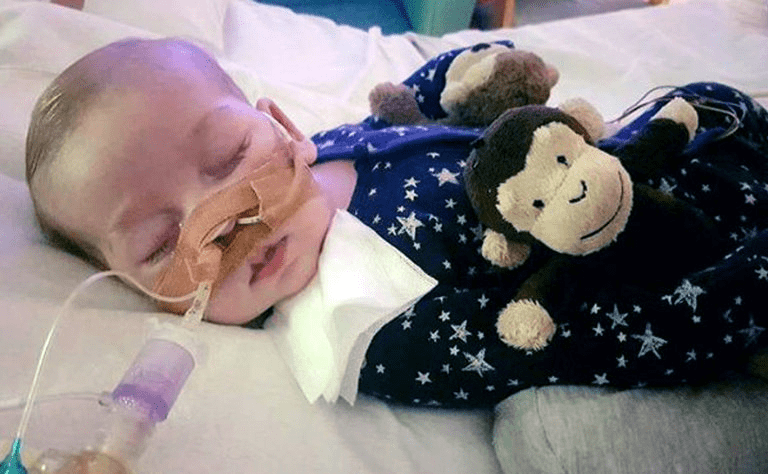 Charlie Gard, the little baby who wasn’t allowed to die at home!