Podcast: Play in new window | Download
My name is Patrik Hutzel from intensivecareathome.com, where we provide tailor-made solutions for long-term ventilated adults and children with tracheostomies, where we provide tailor-made solutions for long-term ventilated adults and children on BiPAP (Bilevel Positive Airway Pressure) and CPAP (Continuous Positive Airway Pressure), also known as non-invasive ventilation, where we provide tailor-made solutions for tracheostomy clients at home without ventilation for adults and pediatrics, where we provide ventilation weaning at home and cough assist management at home, home TPN (Total Parenteral Nutrition), home intravenous (IV) fluids, home IV antibiotic infusions, home IV magnesium and home IV potassium infusions, central line, PICC (Peripherally Inserted Central Catheter) line, Hickman’s line, and port management at home. PEG (Percutaneous Endoscopic Gastrostomy) tube, PEJ (Percutaneous Endoscopic Jejunostomy) tube, nasogastric tube, nasojejunostomy tube, IDC (Indwelling Catheter) and SPC (Suprapubic Catheter) management at home as well as palliative care.
Today I want to answer a question from Michelle, and Michelle says:
Hi Patrik,
My mom had a brain hemorrhage about one month ago. She has been in the ICU on the ventilator and tracheostomy for exactly one month and one week. She is under 65, and we are told she cannot stay in the ICU. We are told she must go to a respiratory ward or must go to a long-term weaning unit. I would much rather like her to stay in ICU for a bit longer and come home with a ventilator and tracheostomy with Intensive Care at Home, or for her to be weaned off completely.
I see her making some improvements, and I know they see some improvements as well, because they are no longer telling me my mom is not there, and they see her move and breathe sometimes, but not enough. I know they need the ICU bed space because I have been told exactly that, but my mom is a tax-paying patient too. Both long-term weaning units are at least one hour away from home and have at least three to four people in a room.
I would like my mom to come home with Intensive Care at Home as quickly as possible because I can take care of her and give her the time she needs, but they said she needs to go to either the respiratory ward or to a long-term weaning place first and be assessed, and then I can train on the ventilator machine.
I am worried about not being able to see her often and her catching an infection in one of these places because she has a tracheostomy, PEG tube, and she is nonverbal. She has an issue with her blood pressure. She had a brain injury several years ago, and I took care of her for years and she got a lot better. She ate and sat up and had no tubes. We do not understand why she became ill again, and I am worried now. Would you be able to give me some advice on what to do and how to take her home safely with Intensive Care at Home?
Thank you kindly.
From Michelle.
Let’s look at what happened to Michelle’s mom, understanding brain hemorrhage in the ICU.
A brain hemorrhage, also called an intracranial hemorrhage or a cerebral hemorrhage, means there has been bleeding inside the brain. Depending on where the bleed is and how significant it is, this can cause sudden unconsciousness, weakness, inability to breathe independently, and loss of the ability to swallow or speak. When someone cannot breathe on their own after a brain hemorrhage, the ICU team will insert a breathing tube, also known as an endotracheal tube, and connect the patient to a mechanical ventilator. If they remain ventilator-dependent beyond about two weeks, the standard of care is to perform a tracheostomy, a surgical opening in the front of the throat to allow safer long-term ventilation and to help wean the patient off the ventilator over time.
Michelle mentions that her mom is under 65, has a PEG tube, also known as a gastrostomy feeding tube, because she cannot yet swallow safely, is nonverbal, and has blood pressure issues. She also has a history of previous brain injuries from which she made a remarkable recovery, getting back to eating, sitting up, and living without tubes. That history matters enormously, it tells us this brain has recovered before. That is a powerful clinical sign.
The improvements Michelle is seeing, her mom moving, breathing on her own at times, the team no longer saying she is not there, are real neurological improvements and progress. These are signs the brain is waking up. In brain hemorrhage recovery, time and a calm, consistent, familiar environment are among the most powerful medicines available, together with a positive outlook and the right mindset.
Why is the ICU pressuring Michelle to move her mom? I want to be very direct with you, Michelle, because I think you already sense this, the pressure to move your mom out of the ICU is not primarily a clinical decision. It is a resource decision, or a perceived resource decision. ICU beds are the most expensive beds in any hospital. They are the most sought-after beds in a hospital. They are the most scarce beds in a hospital. Each ICU bed costs the health system $5,000 to $10,000 per bed day, and hospitals are under immense pressure from hospital administrators, government health departments, bed managers, ICU managers, and ICU doctors to move patients through the ICU and free up beds for the next acute admission.
You were told directly that the hospital needs the bed space. That is unusual candor, and I respect them for being honest, but what I want you to understand is that you do not have to simply accept whatever the hospital proposes to you as the only option. Your mom has rights. You have rights. And there are better options available to her than a long-term weaning unit or a long-term stay in the ICU, especially if the long-term weaning unit is one hour away with three or four people in a room.
It is really important to mention here that you do not have to simply accept the hospital’s plan of action. Hospitals have an obligation to discharge patients to an appropriate care environment and setting that you agree with. That does not mean you must accept a facility that is far away, shared, or inferior to what your mom actually needs. You have every right to advocate for a better option, including going home with specialist nursing with Intensive Care at Home.
Long-term weaning units, sometimes called respiratory support units, prolonged weaning facilities, or step-down ventilation units, are designed to care for patients who are too stable for the ICU but still need ventilator support and intensive care nursing. In theory, they bridge the gap. In practice, Michelle’s concerns are completely valid and they are backed by evidence.
Michelle’s mom has a tracheostomy, a PEG tube, is nonverbal, and is immunologically vulnerable after a major brain injury. Shared rooms with three or four other patients dramatically increase the risk of hospital-acquired infections, including respiratory infections, urinary tract infections, and wound infections, all of which can cause serious setbacks in a patient who is still on a ventilator. Tracheostomy sites in particular are vulnerable. A respiratory infection in a ventilator-dependent patient can undo weeks of weaning progress in days.
Michelle has already shown extraordinary commitment to her mom. She cared for her after the previous brain injury for years. Families who can visit frequently, hold hands, talk to their loved one, and provide familiar stimulation play a direct role in neurological recovery. Being one hour away in a facility with other patients in the room makes meaningful daily contact far harder.
Long-term weaning units have lower nurse-to-patient ratios than the ICU, and that is not appropriate for most patients. But your mom is still acutely complex. She has a tracheostomy, a PEG tube, blood pressure instability, and is in active neurological recovery. The level of observation she needs may well exceed what these facilities reliably provide.
When you look at our website intensivecareathome.com, our evidence-based Mechanical Home Ventilation Guidelines developed in line with national and international best practice clearly show that ventilator-dependent patients who are cared for at home with specialist 24/7 intensive care nursing support achieve:
- Lower rates of hospital-acquired infection
- Better quality of life for patients and families
- Faster ventilator weaning in a familiar, calm, family and patient-friendly environment
- Reduced rehospitalization rates
- Significantly better neurological recovery outcomes
You can check out our evidence-based Mechanical Home Ventilation Guidelines on our website at intensivecareathome.com and I will put a link to these guidelines in the written version of this blog below the video.
You mentioned in your message, Michelle, that you can train on the ventilator machine. This is the most important section of this video. Michelle, you write that the hospital told you your mom can go to a long-term weaning facility first, be assessed, and then you can train on the ventilator machine so you can take care of your mom. And you think you can take care of your mom and give her the time she needs.
Michelle, I need to say this to you with great care, but also with great directness, because I care about what happens to your mom. You training on a ventilator machine and then caring for your mom at home alone without specialist 24-hour critical care nursing support is not a safe plan, and if something goes wrong, it will kill her.
I know it is hard to hear, and I know you cared for your mom after her previous brain injury and she recovered beautifully. That speaks to your love, your commitment, and your exceptional dedication as a daughter. But this situation is clinically very different in ways that matter enormously.
Your mom is on a mechanical ventilator with a tracheostomy. She has a tracheostomy that requires regular suctioning, cleaning, and inner cannula changes. She has an unstable and artificial airway. She has a ventilator that can alarm, disconnect, or malfunction at any time, including 2:00 a.m., 2:00 p.m., at any time. She has blood pressure instability that requires nursing observation and clinical judgment. She has a PEG tube that requires careful feeding management, flushing, and monitoring for complications. She is neurologically vulnerable, any sudden deterioration requires immediate clinical responsiveness. She is nonverbal and cannot tell you if something is wrong.
A brief training course on a ventilator machine does not equip a family member to manage all of these issues simultaneously, especially around the clock seven days a week, without burning out and without risking a catastrophic error during a moment of fatigue, stress, or a clinical event that you are not trained to recognize. A ventilator disconnection for just a few minutes at the wrong moment, a mucous plug blocking the tracheostomy, a sudden blood pressure crisis at 3 a.m., these are scenarios where a trained, experienced, critical care registered nurse makes all the difference between life and death. And that must be 24/7, because your mom is currently looked after 24/7, and it is the same in a long-term weaning unit.
The hospital telling you to just get trained is not a discharge plan. It is a liability transfer. It is not acceptable. If you have watched my videos for any length of time, you would have seen me give real-world examples where people have died, where family members have looked after their ventilated loved one, where support workers have looked after their ventilated loved ones, where even a general registered nurse could not look after a ventilated and tracheostomy patient. Putting your mom at risk by getting trained and thinking you can do this all by yourself places her at death’s door. Family members cannot replace specialist ICU nurses at home. Caring for a ventilator-dependent loved one at home requires 24/7 rostered specialist intensive care nursing, not family training. The physical, emotional, and clinical demands are beyond what any family member can safely sustain alone.
Michelle, doing the work yourself will put your mom’s life at risk. Please do not attempt this without specialist support from Intensive Care at Home.
This is exactly what we built here at Intensive Care at Home and what we set out to do from day one. We have been doing this since 2012. We are currently the only third-party accredited Intensive Care at Home nursing service for ventilator-dependent and tracheostomy-dependent clients, adults and children at home in Australia. We are also NDIS registered, we passed our last audit, and you can verify all of our third-party accreditations on our website at intensivecareathome.com/accreditation_quality.
We have built the intellectual property for Intensive Care at Home. No other service provider has achieved that third-party accreditation and the intellectual property required to deliver Intensive Care at Home nursing every day to many clients in different locations. No other service provider in Australia holds this level of accreditation specifically for Intensive Care at Home. That matters to you because it means our clinical governance, our nurse training, our policies and procedures, our intellectual property, our skill set which includes hundreds of years of critical care nursing experience combined in the community and our outcomes have all been independently verified. You are not taking my word for it. You are taking the accreditor’s word for it.
What we provide is a rostered 24/7 critical care registered nursing team ICU nurses and critical care registered nurses (CCRNs) at home for your mom, 24 hours a day, seven days a week. Full management of the ventilator, tracheostomy, PEG tube, blood pressure monitoring, and all clinical needs are met. A personalized care plan is developed in conjunction with the ICU team, your mom, and your family. Weaning support is provided, our nurses work towards reducing ventilator dependence in a calm, familiar home environment. We have a team of over 150 critical care registered nurses operating all around Australia in all major capital cities as well as in all regional and rural areas. We provide support with NDIS funding, Transport Accident Commission (TAC), Department of Veterans’ Affairs (DVA), iCare, National Injury Insurance Scheme Queensland (NIISQ), and other funding pathways to make this possible.
Your mom, Michelle, does not have to go to a shared facility one hour away. She can come home to her own bed in her own room with you nearby, with specialist nursing support around the clock. That is what her recovery deserves. That is what you deserve.
We are Australia’s only third-party accredited Intensive Care at Home nursing service. No other provider has achieved that level of third-party and independently verified accreditation, which includes NDIS.
Here is my practical advice for Michelle, and for any family in a similar situation. Do not agree to a long-term weaning unit. Do not agree to a respiratory ward until you can go home with Intensive Care at Home. You are not obligated to accept the hospital’s first and only proposal. Ask for a formal discharge planning meeting. Put your objections in writing and ask what the clinical rationale is for the specific facility they are proposing not just that she needs to go somewhere else, but why that particular facility and why she cannot go home. You have choice and control. It is your and your mom’s life.
Contact us at Intensive Care at Home immediately. The sooner you contact us, the sooner we can start assessing your mom’s eligibility for Intensive Care at Home, explore funding options, and develop a transition plan. We have helped many families bring loved ones home from exactly this situation, ventilated with a tracheostomy, with a PEG tube, with blood pressure instability, in active neurological recovery.
Call us today at intensivecareathome.com or send us an email to [email protected]. Book a consulting call with me on the website. Read our evidence-based Mechanical Home Ventilation Guidelines, best practice guidelines which clearly state that only exclusively critical care trained nurses with a minimum of two years ICU nursing experience are safe to look after ventilated and tracheostomy patients at home, and it must be 24/7. I have made many videos about patients that have died at home prematurely and unnecessarily due to not having critical care nurses 24 hours a day, and I have all the evidence to back that up with incident reports that went to the NDIS.
Michelle, I want you to know that the love and determination you have shown for your mom, caring for her after her previous brain injury for years and watching her recover, is exactly what she needs now. That history of recovery is real. That recovery happened because of her brain’s resilience and your family’s commitment. She has done it before. She can do it again, but she needs the right support around her, not a shared room one hour away from home, and not a family member alone with a ventilator machine and a training certificate. It takes a registered nurse five years, including ICU training, postgraduate studies, and hands-on experience to be qualified to manage a ventilated patient. Training a family member on a ventilator is like flying the airplane with the cabin crew instead of the pilot. She needs ICU nurses and specialist critical care nurses at home, a calm and familiar environment, and the time that neurological recovery requires. That is why we do what we do with Intensive Care at Home, and that is what you and your mom deserves.
If you are in a similar situation, your loved one is in the ICU on a ventilator with a tracheostomy, on a long-term weaning ward, on a respiratory ward, with complex medical needs, and you want to bring them home, please reach out to us. We are here to help you. We have done this hundreds of times, and we can do it for your family as well.
with Intensive Care at Home, we are currently sending our critical care nurses into the home 24 hours a day. Therefore, we are providing a genuine alternative to long-term stay in intensive care for:
- Ventilation
- Tracheostomy
- Home BiPAP (Bilevel Positive Airway Pressure) and CPAP (Continuous Positive Airway Pressure)
- Tracheostomy care without ventilation
- Home TPN (Total Parenteral Nutrition)
- Home IV potassium
- Home IV magnesium
- Home IV antibiotics
- Home IV fluids
We’re providing:
- Cough assist management at home
- Ventilation weaning management at home
- central line, PICC (Peripherally Inserted Central Catheter) line, Hickman’s line as well as port management at home
- nasogastric tube, nasojejunostomy tube, PEG (Percutaneous Endoscopic Gastrostomy), PEJ (Percutaneous Endoscopic Jejunostomy) tube management at home
- IDC (Indwelling Catheter) and SPC (Suprapubic Catheter) management at home
- Palliative care services at home
We’re also sending our critical care nurses into the home for emergency department bypass services. We have done so successfully as part of the Western Sydney Local Health District’s In Touch program, saving approximately $2,000 per patient that we keep at home instead of them going into an emergency department.
That also means we’re in a position to cut the cost of an ICU bed by around 50%. An intensive care bed costs between $5,000 to $10,000 per bed day depending on location. Intensive Care at Home costs approximately 50% of that, and we’re freeing up the most sought-after bed in the hospital, which is the ICU bed. Most importantly, we’re improving the quality of life for patients and their families, which is a win-win situation for all stakeholders.
Our Coverage and Accreditation
With Intensive Care at Home, we’re currently operating all around Australia, in all major capital cities, as well as in all regional and rural areas. We are an NDIS approved service provider all around Australia, TAC (Transport Accident Commission) and WorkSafe in Victoria as well as the Department of Veterans Affairs all around Australia.
We’re also ISO 9001:2015 accredited. Our clients and we as a service provider have also received funding through public hospitals, private health funds as well as departments of health.
We are the only service provider in Australia that has achieved third-party accreditation for Intensive Care at Home nursing in 2025. We have been achieving this high level of accreditation since 2012. No other provider in Australia has achieved the Intensive Care at Home level of accreditation in the community and has created more intellectual property when it comes to Intensive Care at Home nursing than we have.
This puts us in a position to employ hundreds of years of critical care nursing experience combined in the community. No other service provider in 2025 employs a higher skill level in the community than we do. And that enables us to look after the highest acuity adults and children in the community in Australia safely.
If You Need Help
If you’re at home already and you’re watching this or you’re stuck in an ICU and you realize that you don’t have the right level of support, I can give you many examples where we helped clients with funding, how we advocate for funding. We had to advocate successfully for funding from our first case study to many other case studies where we had to advocate successfully for funding with the right evidence of course because it is crystal clear that disability support workers for example or registered nurses without ICU experience cannot look after ventilated clients at home whether adults or children with or without a tracheostomy and it’s simply dangerous and negligent.
There are plenty of examples where clients with support worker models or even RN (registered nurse) models without ICU experience have died at home and I have evidence to back up everything that I’m saying here because it’s a bit like flying the airplane with a cabin crew instead of the pilot and it could simply be deadly.
This can be avoided by having simply 24-hour critical care nurses at home because our clients are at high risk of medical emergencies or worse without critical care nurses 24 hours. This is actually also evidence-based in the community and is documented in our evidence-based Mechanical Home Ventilation Guidelines on our website at intensivecareathome.com.
Think about it: in an intensive care unit in a hospital, you wouldn’t have support workers or general registered nurses looking after a critical care patient on a ventilator with a tracheostomy. So why would anyone in their right mind do that in a home care environment where there are fewer resources?
Clients that have found us have been at home long-term predictably and permanently with critical care nurses. Their alternative would have been to either die or stay in ICU long-term, and our clients don’t go back to ICU. They stay at home permanently and predictably and the insurance bodies save half of the cost of an ICU. But it’s a win-win situation all around.
We can do the same for you if you’re stuck in ICU or if you’re not safe at home, which includes the advocacy for funding and the network that goes along with it. We have always successfully advocated for our clients or we have the network to successfully advocate for you and for your family member, otherwise we wouldn’t be in business. The same again is applicable for those stuck in an ICU which is similar to many of our, if not most of our cases.
Our Support Coordination Services
This is also why we are providing Level 2 and Level 3 NDIS support coordination. We have a team of experienced NDIS support coordinators, and they have a wealth of knowledge. We’re also providing TAC case management and WorkSafe case management in Victoria with Lucy McCotter.
If you’re an NDIS support coordinator or a case manager or a social worker from another organization or a hospital watching this and you’re looking for nursing care for your participants, please reach out to us as well. If you’re looking for funding for nursing care for your participants and you don’t know how to go about it and how to advocate for it, what evidence to provide, I encourage you to reach out to us as well. We have the network to make that happen. We will help you with the right level of funding and with the right level of advocacy.
We’re also providing NDIS specialist nursing assessments done by critical care nurses with a legal nurse consulting background.
Join Our Team
If you are a critical care nurse and you’re looking for a career change and you want to join a very progressive, dynamic, successful, and high-performing team of critical care nurses in the community, we are employing hundreds of years of critical care nursing experience combined.
If you’re looking for a career change, we’re currently hiring for jobs for critical care nurses in Melbourne, Sydney, Brisbane, Albury-Wodonga, Bendigo, Geelong, Warragul, and also in Wyelangta in Victoria.
If you have worked in critical care nursing for a minimum of two years, adult ICU, pediatric ICU, ED and you have already completed a postgraduate critical care nursing qualification, we will be absolutely delighted hearing from you.
I have a disclaimer though: Because we are offering tailor-made solutions for our clients which includes regular staff, our clients do also want the same staff coming over and over again because they are so vulnerable and so special. That’s why we need regular, reliable staff.
If you’re looking for agency work where you can come and go, this will not be the right fit for you. We’re looking for consistency and our clients are looking for consistency. So please only apply with us if you can give us regular and consistent availabilities for shifts and you’re really keen on building relationships with us and with our clients. Reliability is also a must.
For Medical Professionals and Healthcare Executives
If you’re an intensive care specialist or an ED specialist, we also want to hear from you. We’re currently expanding our medical team as well.
We can also help you eliminate your bed blocks in your ICU and in your ED for your long-term patients or for your regularly readmitting patients with our critical care nursing team at home. We’re here to help to take the pressure off your ICU and ED beds. In most cases, you won’t even pay for it. Even if you do pay for it, it is so much more cost-effective than what you’re paying for in ICU and ED settings, and you get the same level of care and simply more patient and family satisfaction because you also want to partner with your consumers.
If you are a hospital executive watching this, we can help you free up your ICU and ED beds.
International Support
If you’re in the U.S. or in the UK and you’re watching this and you need help, we want to hear from you as well. We can help you there privately with one-on-one consulting and with hiring nurses privately.
Once again, our website is intensivecareathome.com. Call us on one of the numbers on the top of our website or simply send us an email to [email protected].
If you like my videos, click the like button, subscribe to my YouTube channel for regular updates for families with Intensive Care at Home and intensive care. Click the like button, click the notification bell, and share this video with anyone who has a family member in intensive care long-term or needs to see this.
Thank you so much for watching.
This is Patrik Hutzel from intensivecareathome.com and I’ll talk to you in a few days.
Take care for now.
RELATED LINKS:
 Breaking the vicious cycle of long-term ventilation in Intensive Care by creating a virtuous cycle
What are normal visiting hours in Intensive Care?
VENTILATION AND TRACHEOSTOMY – HOW LONG IS THE INTENSIVE CARE STAY?
Is it ethical to leave long-term ventilated adults& children with tracheostomies in Intensive Care?
Breaking the vicious cycle of long-term ventilation in Intensive Care by creating a virtuous cycle
What are normal visiting hours in Intensive Care?
VENTILATION AND TRACHEOSTOMY – HOW LONG IS THE INTENSIVE CARE STAY?
Is it ethical to leave long-term ventilated adults& children with tracheostomies in Intensive Care?
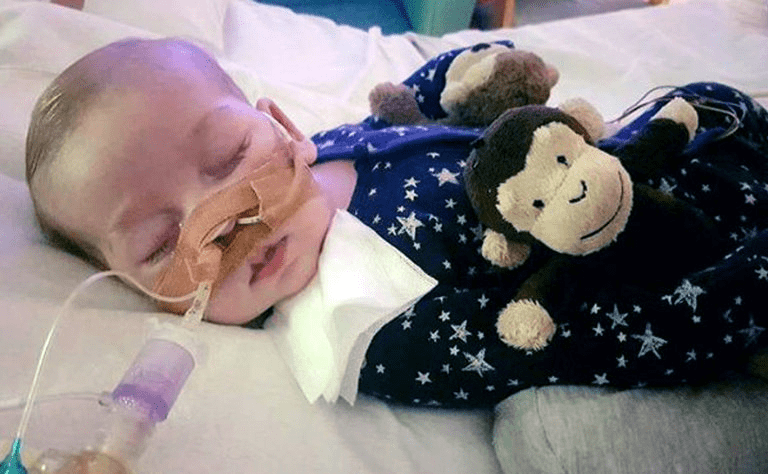 Charlie Gard, the little baby who wasn’t allowed to die at home!