Podcast: Play in new window | Download
My name is Patrik Hutzel from intensivecareathome.com, where we provide tailor-made solutions for long-term ventilated adults and children with tracheostomies at home, where we provide tailor-made solutions for long-term ventilated adults and children on non-invasive ventilation such as BiPAP (Bilevel Positive Airway Pressure) and CPAP (Continuous Positive Airway Pressure), where we provide tailor-made solutions at home for non-ventilated tracheostomy adults and children, home ventilation weaning, home cough assist management, home TPN (Total Parenteral Nutrition), home IV fluids, home IV antibiotic infusions, home IV potassium, home IV magnesium and other electrolyte infusions, home central line, PICC (Peripherally Inserted Central Catheter) line, Hickman’s line, port management at home, SPC (Suprapubic Catheter), IDC (Indwelling Catheter), nasogastric tube, nasojejunostomy tube, PEG (Percutaneous Endoscopic Gastrostomy) tube, PEJ (Percutaneous Endoscopic Jejunostomy) tube management at home, as well as palliative care management at home. We are also providing Level 2 and Level 3 NDIS support coordination, as well as TAC and WorkSafe case management.
Today I want to answer a very important question from Karen, who reached out to me about her husband — 63 years old, currently in the ICU, facing a tracheostomy because he cannot wean off the ventilator. Karen is not only an incredible wife, she is a fierce advocate for her husband, and I want to acknowledge her courage in seeking out solutions and refusing to accept ‘this is just how it is.’ Karen, you are doing exactly what families in this situation should do — you are asking the right questions, and I am glad you found us.
Here is Karen’s question in her own words:
“Hi Patrik,
M husband, 63 years old, is in the ICU. The doctor wants to take out the breathing tube in his throat and wants to do a tracheostomy. Because he’s not able to wean off, his diaphragm in his lungs is weakened from not using it for a long time. He cannot be weaned, having vomiting, unable to manage blood sugar levels, very anxious, and has had many incidents of dangerous things, like getting up but wasn’t able to get up or move around. He’s been in bed for 3 years now, so he has problems like pneumonia, urinary tract infections, but the doctor is telling me that his only problem now is that he can’t wean off the ventilator. So a tracheostomy makes sense to keep him alive. So they want to have him transferred to a facility, and it’s going to be far away. If we had just gone out and stayed at home, I don’t think that my husband would have had these many problems. And so, I had found your company. Intensive Care at Home — what is the look and see that is something I should try to do, if it’s an opportunity or not, for him to come home from the ICU at this point, because he’s not on any medications, everything’s stabilized — blood pressure and heart rate, was able to get him off dialysis. Can you tell me more about Intensive Care at Home, its services, types of patients accepted, like patients with breathing tubes, tracheostomy, ventilators, and feeding tubes? Will my husband continue to receive the care and treatment he needs for his safe and good recovery?”
Karen, this is an outstanding question, and the good news is — what you are describing is exactly the type of situation we help families with every single day. Let me break this all down for you.
What Is Happening to Karen’s Husband Right Now — and Why It Matters
Karen’s husband has been in ICU and bed-bound for 3 years. That is an extraordinarily long time, and it explains everything about his current clinical picture. Let me walk through what is going on:
Ventilator-Induced Diaphragmatic Dysfunction (VIDD)
When a patient is on a ventilator for a prolonged period, the diaphragm — the main breathing muscle — weakens from disuse. This is well-documented and is called Ventilator-Induced Diaphragmatic Dysfunction, or VIDD. The longer someone is on a ventilator, the harder it is for that muscle to ‘remember’ how to work independently. This is why Karen’s husband cannot wean off the ventilator.
Why a Tracheostomy Is the Right Next Step
A tracheostomy — where a breathing tube is placed directly into the throat through a small opening in the neck — is standard care for patients who cannot be weaned from a ventilator. It is more comfortable than an endotracheal tube (the tube through the mouth), allows for better oral care, and importantly, makes home ventilation possible. The ICU team is correct that this is the right clinical decision for Karen’s husband.
His Other Complications Are Manageable
Karen mentions pneumonia, urinary tract infections, blood sugar problems, anxiety, and episodes of trying to get up (which in the ICU setting can be dangerous). These are all well-recognized complications of prolonged ICU admission and bed rest. But here is what is critically important — the ICU team has already told Karen that his ONLY remaining problem is that he cannot wean off the ventilator. Blood pressure and heart rate are stable. He is off dialysis. This is a patient who is ready to move to the next phase of care.
Why a Faraway Facility May Not Be the Best Answer
The ICU team wants to transfer Karen’s husband to a facility — far away. I want to be honest with Karen: for many ventilator-dependent patients, placement in a facility away from family is associated with poorer outcomes, increased isolation, depression, and further deconditioning. We have seen this time and again.
Karen said something very powerful: “If we had just gone out and stayed at home, I don’t think that my husband would have had these many problems.” Karen, I believe you are right. The hospital environment — as good as ICU nurses and doctors are — carries real risks for long-term patients: hospital-acquired infections, deconditioning, loss of cognitive stimulation, and separation from the people who love them.
This is exactly why Intensive Care at Home exists.
What Is Intensive Care at Home and Can Karen’s Husband Come Home?
Intensive Care at Home is Australia’s only specialist intensive care at home nursing service. We are the only such service in Australia that is third-party accredited specifically for Intensive Care at Home nursing — ISO 9001:2015 certified, audited by BSI Group, with zero non-conformances. You can read more about our accreditation here: intensivecareathome.com/accreditationquality.
We employ hundreds of years of critical care nursing experience combined in the community. No other service provider employs a higher skill level in the community than we do, which enables us to look after the highest acuity adults and children in the community in Australia safely.
We operate all around Australia, in all major capital cities, as well as in all regional and rural areas. We are an NDIS approved service provider all around Australia, TAC (Transport Accident Commission) and WorkSafe, as well as the Department of Veterans Affairs.
If you are in the U.S, Canada, UK, India or any parts of the world, you can reach out as well. We can help you there privately with one-on-one consulting and with hiring nurses privately.
The Types of Patients We Support
Patients we care for at home include those with:
- Tracheostomies and mechanical ventilation — including 24/7 ventilator-dependent patients
- Feeding tubes (PEG, NG, NJ)
- Complex medication regimens
- Blood sugar (glucose) management challenges
- Recurrent infections such as pneumonia and urinary tract infections
- High levels of anxiety and cognitive challenges
- Conditions such as Motor Neurone Disease (MND), spinal cord injury, acquired brain injury, and other neuromuscular conditions
- Patients who have been hospitalized for months or even years — just like Karen’s husband
In short — Karen’s husband is exactly the type of patient we help come home.
What Care Would Karen’s Husband Receive at Home?
At Intensive Care at Home, we develop an individualized, evidence-based care plan for every patient. Our care is guided by our publicly available Mechanical Home Ventilation Guidelines — one of the most comprehensive clinical resources of its kind in Australia, developed and maintained by our clinical team to reflect best practice in home ventilation care.
For a patient like Karen’s husband, care at home would typically include:
Ventilator Management
- 24/7 or part-time Critical Care Registered Nurse support as clinically indicated
- Ventilator monitoring, circuit management, and troubleshooting
- Tracheostomy care including suctioning, inner cannula changes, and site care
- Guided by our Mechanical Home Ventilation Guidelines
Weaning Support
Here is something important for Karen to understand: weaning from a ventilator is not necessarily a hospital-only activity. There is growing evidence that patients can be weaned more successfully in a home environment — with lower stress levels, better sleep, familiar faces, and greater motivation. Our Critical Care Registered Nurses are skilled in supporting weaning trials at home in conjunction with the treating medical team.
Infection Prevention and Management
- Pneumonia prevention protocols
- Urinary tract infection prevention and monitoring
- Wound care and skin integrity management
- Early recognition and response to deterioration — with hospital-level assessment skills
Blood Sugar (Glucose) Management
- Monitoring and management of blood glucose levels
- Coordination with the medical team for insulin or medication adjustments
Anxiety and Wellbeing
Being at home — surrounded by family, in a familiar environment — is one of the most powerful interventions for anxiety in long-term ICU patients. Our nurses also provide emotional support and are trained to recognize and escalate mental health concerns.
Nutrition and Feeding Tube Management
- Nasogastric (NG), PEG, or other enteral feeding support
- Monitoring of nutritional status and fluid balance
Is It Safe for Karen’s Husband to Come Home?
This is the question families always ask, and it is the right one. The honest answer is: for many ventilator-dependent patients, home is actually safer than a facility — when the right nursing support is in place.
Think of it this way: in a hospital, a nurse may be responsible for 4, 6, or even 8 patients at a time. When our Critical Care Registered Nurses are in Karen’s husband’s home, they are focused on one patient only — him. That is a level of attention and monitoring that no facility can match.
We often use the analogy of a pilot in a cockpit: our nurses are like co-pilots, sitting alongside the patient, monitoring everything, responding immediately to any change. This is Intensive Care at Home — not just nursing home care, not just support work. This is ICU-level nursing, in your home.
Our third-party accreditation — ISO 9001:2015, BSI Group audited, zero non-conformances — means our clinical governance, quality systems, and safety processes have been independently verified to the highest standards. This is not self-certification. This is external, rigorous, independent audit.
What Should Karen Do Next?
Karen, here is my direct advice to you — do not wait. Your husband is stable. He is off dialysis. His blood pressure and heart rate are under control. His only remaining issue is ventilator dependency, which we manage every single day for patients exactly like him.
The most important next step is to get a proper assessment — understand what going home would actually look like for your husband specifically, what nursing hours would be needed, what equipment, what funding options might be available (including NDIS, TAC, and private funding). That is exactly what our consulting service helps you understand.
How to Get Help — Ways to Work With Us
Call us on 041-094-2230 (within Australia) or +61 3 8658 2138 (International) book a call with me here ( http://intensivecarehotline.com/scheduling-appointment/) or send us an email to [email protected]
Visit intensivecareathome.comto read our Mechanical Home Ventilation Guidelines and Accreditation/Quality certification in full.
Long-Term Care at Home with Intensive Care at Home
If Karen’s husband is ready to go home — and based on what Karen has described, he very well may be — Intensive Care at Home can provide the specialist nursing support to make that happen safely.
Here is what sets us apart:
intensivecareathome.com/accreditationquality
- We provide 24-hour nursing care with Critical Care Registered Nurse — not support workers, not agency staff — specialist ICU nurses
- We operate all around Australia, in all major capital cities, as well as in all regional and rural areas
- We are an NDIS registered provider, as well as TAC and WorkSafe
Mechanical Home Ventilation Guidelines
- We support patients with tracheostomies, mechanical ventilation, feeding tubes, complex medications, and more — exactly Karen’s husband’s situation
We do not send a support worker to sit with your loved one. We send a Critical Care Registered Nurse — someone who has worked in ICUs, who understands ventilators, who can recognize a deterioration and act on it immediately. That is Intensive Care at Home.
The Bottom Line for Karen
Karen, your instinct is right. Your husband has been in hospital for 3 years. He has been through so much — and so have you. The fact that he is now stable, off dialysis, with controlled blood pressure and heart rate, tells me he has fought incredibly hard to get to this point.
A tracheostomy and home ventilation is not the end. For many of our patients, it is the beginning of a better quality of life — at home, with family, with dignity, with specialist nursing care.
Please reach out to us. Call us on 041-094-2230 (within Australia) or +61 3 8658 2138 (International) book a call with me here ( http://intensivecarehotline.com/scheduling-appointment/) or send us an email to [email protected]. Our team is ready to help you take the next step.
With all of that said, with Intensive Care at Home, we are currently sending our critical care nurses into the home 24 hours a day. Therefore, we are providing a genuine alternative to long-term stay in intensive care for:
- Ventilation
- Tracheostomy
- Home BiPAP (Bilevel Positive Airway Pressure) and CPAP (Continuous Positive Airway Pressure)
- Tracheostomy care without ventilation
- home TPN (Total Parenteral Nutrition)
- Home IV potassium
- Home IV magnesium
- Home IV antibiotics
- Home IV fluids
We’re providing:
- Cough assist management at home
- Ventilation weaning management at home
- central line, PICC (Peripherally Inserted Central Catheter) line, Hickman’s line as well as port management at home
- nasogastric tube, nasojejunostomy tube, PEG (Percutaneous Endoscopic Gastrostomy), PEJ (Percutaneous Endoscopic Jejunostomy) tube management at home
- IDC (Indwelling Catheter) and SPC (Suprapubic Catheter) management at home
- Palliative care services at home
We’re also sending our critical care nurses into the home for emergency department bypass services. We have done so successfully as part of the Western Sydney Local Health District’s In Touch program, saving approximately $2,000 per patient that we keep at home instead of them going into an emergency department.
That also means we’re in a position to cut the cost of an ICU bed by around 50%. An intensive care bed costs between $5,000 to $10,000 per bed day depending on location. Intensive Care at Home costs approximately 50% of that, and we’re freeing up the most sought-after bed in the hospital, which is the ICU bed. Most importantly, we’re improving the quality of life for patients and their families, which is a win-win situation for all stakeholders.
Our Coverage and Accreditation
With Intensive Care at Home, we’re currently operating all around Australia, in all major capital cities, as well as in all regional and rural areas. We are an NDIS approved service provider all around Australia, TAC (Transport Accident Commission) and WorkSafe in Victoria as well as the Department of Veterans Affairs all around Australia.
We’re also ISO 9001:2015 accredited. Our clients and we as a service provider have also received funding through public hospitals, private health funds as well as departments of health.
We are the only service provider in Australia that has achieved third-party accreditation for Intensive Care at Home nursing in 2025. We have been achieving this high level of accreditation since 2012. No other provider in Australia has achieved the Intensive Care at Home level of accreditation in the community and has created more intellectual property when it comes to Intensive Care at Home nursing than we have.
This puts us in a position to employ hundreds of years of critical care nursing experience combined in the community. No other service provider in 2025 employs a higher skill level in the community than we do. And that enables us to look after the highest acuity adults and children in the community in Australia safely.
If You Need Help
If you’re at home already and you’re watching this or you’re stuck in an ICU and you realize that you don’t have the right level of support, I can give you many examples where we helped clients with funding, how we advocate for funding. We had to advocate successfully for funding from our first case study to many other case studies where we had to advocate successfully for funding with the right evidence of course because it is crystal clear that disability support workers for example or registered nurses without ICU experience cannot look after ventilated clients at home whether adults or children with or without a tracheostomy and it’s simply dangerous and negligent.
There are plenty of examples where clients with support worker models or even RN (registered nurse) models without ICU experience have died at home and I have evidence to back up everything that I’m saying here because it’s a bit like flying the airplane with a cabin crew instead of the pilot and it could simply be deadly.
This can be avoided by having simply 24-hour critical care nurses at home because our clients are at high risk of medical emergencies or worse without critical care nurses 24 hours. This is actually also evidence-based in the community and is documented in our evidence-based Mechanical Home Ventilation Guidelines on our website at intensivecareathome.com.
Think about it: in an intensive care unit in a hospital, you wouldn’t have support workers or general registered nurses looking after a critical care patient on a ventilator with a tracheostomy. So why would anyone in their right mind do that in a home care environment where there are fewer resources?
Clients that have found us have been at home long-term predictably and permanently with critical care nurses. Their alternative would have been to either die or stay in ICU long-term, and our clients don’t go back to ICU. They stay at home permanently and predictably and the insurance bodies save half of the cost of an ICU. But it’s a win-win situation all around.
We can do the same for you if you’re stuck in ICU or if you’re not safe at home, which includes the advocacy for funding and the network that goes along with it. We have always successfully advocated for our clients or we have the network to successfully advocate for you and for your family member, otherwise we wouldn’t be in business. The same again is applicable for those stuck in an ICU which is similar to many of our, if not most of our cases.
Our Support Coordination Services
This is also why we are providing Level 2 and Level 3 NDIS support coordination. We have a team of experienced NDIS support coordinators, and they have a wealth of knowledge. We’re also providing TAC case management and WorkSafe case management in Victoria with Lucy McCotter.
If you’re an NDIS support coordinator or a case manager or a social worker from another organization or a hospital watching this and you’re looking for nursing care for your participants, please reach out to us as well. If you’re looking for funding for nursing care for your participants and you don’t know how to go about it and how to advocate for it, what evidence to provide, I encourage you to reach out to us as well. We have the network to make that happen. We will help you with the right level of funding and with the right level of advocacy.
We’re also providing NDIS specialist nursing assessments done by critical care nurses with a legal nurse consulting background.
Join Our Team
If you are a critical care nurse and you’re looking for a career change and you want to join a very progressive, dynamic, successful, and high-performing team of critical care nurses in the community, we are employing hundreds of years of critical care nursing experience combined.
If you’re looking for a career change, we’re currently hiring for jobs for critical care nurses in Melbourne, Sydney, Brisbane, Albury-Wodonga, Bendigo, Geelong, Warragul, and also in Wyelangta in Victoria.
If you have worked in critical care nursing for a minimum of two years, adult ICU, pediatric ICU, ED and you have already completed a postgraduate critical care nursing qualification, we will be absolutely delighted hearing from you.
I have a disclaimer though: Because we are offering tailor-made solutions for our clients which includes regular staff, our clients do also want the same staff coming over and over again because they are so vulnerable and so special. That’s why we need regular, reliable staff.
If you’re looking for agency work where you can come and go, this will not be the right fit for you. We’re looking for consistency and our clients are looking for consistency. So please only apply with us if you can give us regular and consistent availabilities for shifts and you’re really keen on building relationships with us and with our clients. Reliability is also a must.
For Medical Professionals and Healthcare Executives
If you’re an intensive care specialist or an ED specialist, we also want to hear from you. We’re currently expanding our medical team as well.
We can also help you eliminate your bed blocks in your ICU and in your ED for your long-term patients or for your regularly readmitting patients with our critical care nursing team at home. We’re here to help to take the pressure off your ICU and ED beds. In most cases, you won’t even pay for it. Even if you do pay for it, it is so much more cost-effective than what you’re paying for in ICU and ED settings, and you get the same level of care and simply more patient and family satisfaction because you also want to partner with your consumers.
If you are a hospital executive watching this, we can help you free up your ICU and ED beds.
International Support
If you’re in the U.S. or in the UK and you’re watching this and you need help, we want to hear from you as well. We can help you there privately with one-on-one consulting and with hiring nurses privately.
Once again, our website is intensivecareathome.com. Call us on one of the numbers on the top of our website or simply send us an email to [email protected].
If you like my videos, click the like button, subscribe to my YouTube channel for regular updates for families with Intensive Care at Home and intensive care. Click the like button, click the notification bell, and share this video with anyone who has a family member in intensive care long-term or needs to see this.
Thank you so much for watching.
This is Patrik Hutzel from intensivecareathome.com and I’ll talk to you in a few days.
Take care for now.
RELATED LINKS:
 Cutting length of hospital stays could lead to big savings for Victorian health system: auditor-general!
 Do Intensive Care Units have a “ONE SIZE FITS ALL” approach when it comes to dying?
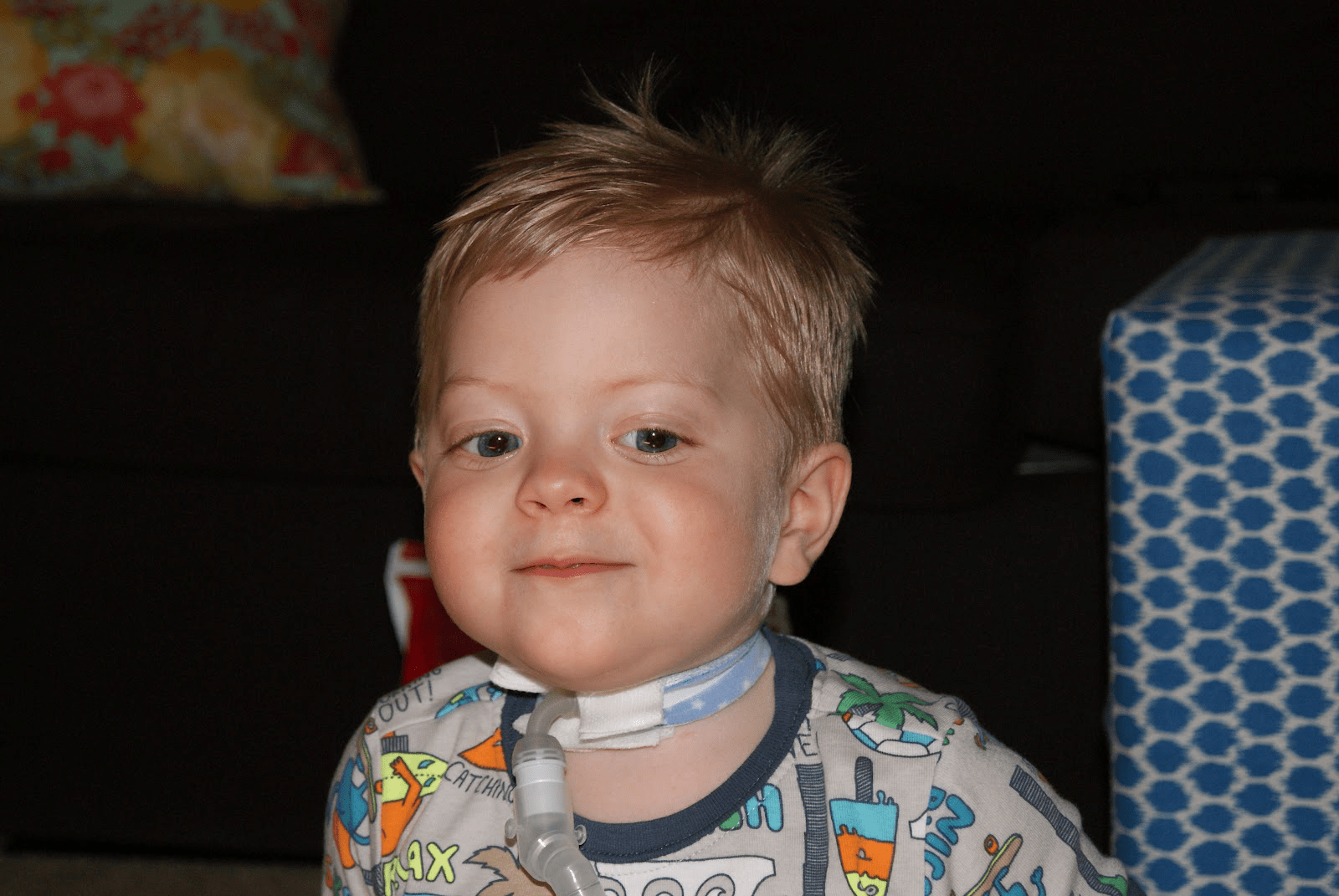 INTENSIVE CARE AT HOME services for a 15 month old toddler, another “win-win” situation and success story
 Ana-Carolina, the girl doctors said should be allowed to die, goes to school!
 My Husband has been in Intensive Care in Sydney for Six Weeks. He’s got a Tracheostomy and is Ventilated. Can He Go Home?