Podcast: Play in new window | Download
My name is Patrik Hutzel from intensivecareathome.com, where we provide tailor-made solutions for long-term ventilated adults and children with tracheostomies at home. Long-term ventilated adults and children on bilevel positive airway pressure (BiPAP), continuous positive airway pressure (CPAP) without tracheostomy. Tracheostomy adults and children without ventilation at home, home ventilation weaning, home tracheostomy weaning, home cough assist management, home total parenteral nutrition (TPN), home intravenous (IV) fluids, home IV antibiotics, home IV potassium, magnesium, and other electrolyte infusions at home. That goes hand in hand with central line, PICC (Peripherally Inserted Central Catheter) line, Hickman’s line, as well as port management at home. We also provide nasogastric tube, nasojejunal tube, percutaneous endoscopic gastrostomy (PEG), PEJ (Percutaneous Endoscopic Jejunostomy) tube, indwelling catheter (IDC), suprapubic catheter (SPC) management at home, as well as palliative care services at home.
We also provide level 2 and level 3 National Disability Insurance Scheme (NDIS) support coordination, as well as Transport Accident Commission (TAC) case management.
Today, I want to walk you through a real seizure emergency that happened with one of our clients.
We have an incident report, obviously, from one of our critical care registered nurses (CCRNs), and I want to talk through that today because this is exactly the kind of situation that shows why 24/7 critical care registered nurses are not a nice-to-have for complex home care, and the difference between a client coming home safely and a client not coming home at all, or a client being at home and actually sustaining either a medical emergency that cannot be managed, leading to hospital and intensive care unit (ICU) readmission, or a client passing away like Noah Johnston did earlier in the year, and his case was in the media.
If you are a family member, NDIS support coordinator, NDIS planner, any other case manager, NDIS participant, NDIS participant family member, currently weighing up whether to use a specialist Intensive Care at Home nursing provider like Intensive Care at Home or a lower-cost support worker model, read or watch this case study very carefully.
It is a real-world example of what clinical deterioration actually looks like in the community, and how it can be safely managed, and why the level of nursing skill in the room in that very moment matters more than almost anything else, and it is not negotiable.
Before I go into the details of today’s topic, you might be wondering what makes me qualified talking about a topic like this today.
I have worked in critical care nursing for over 25 years in three different countries, where I worked as a nurse manager for over five years in intensive care. I was part of setting up Intensive Care at Home successfully in Germany in the early 2000s, and I brought the concept to Australia successfully since 2012. That is how long we have been operating here in Australia, and I have also been running consultancy and advocacy for families in intensive care. I talk about intensive care and Intensive Care at Home all day long.
Now, let us look at what happened.
Jenny is one of our long-term clients, and I obviously have changed the name. It is not her real name, who lives with complex care needs, including severe cerebral palsy.
On the day of this incident, she was out with one of her CCRNs at a shopping center when things changed very fast, as seizures so often do.
Initially, it started subtly, what looked like a brief atonic drop lasting only two to three seconds, followed by flickering eye movement that did not settle.
Let me just pause there.
Let us just say that would have been a support worker, a disability support worker. They would not have even recognized the difference between an atonic drop and a seizure. They would not have even recognized those nuances.
How would they, with all respect to disability support workers, they might have worked in a supermarket last week stocking shelves, with all respect, and now they are meant to look after a critical care patient. It is just not possible, and it is life-threatening, and I will talk more about why it is life-threatening a bit later in more detail.
Our CCRN shift immediately recognized the early warning signs and began preparing pro re nata (PRN) anti-seizure medications such as midazolam.
Within moments, the client’s presentation progressed, nystagmus, which is a rhythmic eye movement, jolting, breathing that became irregular, and Jenny’s face began to change color.
Our nurse made a rapid clinical decision to abandon the slower oral route of medication and instead gave intranasal medication such as midazolam, a faster-acting route in an emergency.
Next, Jenny’s airway began to obstruct.
A CCRN reclined her chair, applied oxygen, and performed a jaw thrust to clear the obstruction, and it worked immediately.
Now, a jaw thrust once again, that is a skill of a critical care registered nurse, or sometimes of a general registered nurse (RN) as well, but jaw thrusts are done every day in an ICU, for example.
Next, the pulse oximeter was applied, but it did not read because Jenny’s hands were too cold, so our nurse fell back on clinical assessment skills alone, watching Jenny’s color and breathing pattern second by second.
Over the following minutes, our CCRN suctioned secretions from Jenny’s airway, administered a further dose of PRN midazolam as the seizure continued, and kept titrating oxygen up and down based on Jenny’s changing needs.
Midazolam is a benzodiazepine. It is there to treat seizures, but one of the side effects, for example, is that people or patients can stop breathing, so you have to not only manage the seizures, you also have to continue monitoring breathing rate, breathing patterns, respiratory rate, and you have to monitor the seizure. It is a highly complex situation where you need to make decisions in split seconds. You need to have the experience and the training to make those decisions, and that is what our CCRNs are trained to do.
The seizure finally resolved after close to 20 minutes of continuous hands-on critical care nursing. Pupil response, respiratory rate, heart rate, and skin color were all tracked throughout. Jenny was assessed as safe to travel home, monitored the entire way, and handed over. Handover was given to her mother.
What happened with a full clinical picture, including that Jenny’s oxygen saturation initially could not be monitored because her fingers were too cold. At home, things were fine, but she was put on BiPAP immediately. This whole event, from first twitch to full resolution, played out over roughly 20 minutes in public, away from a hospital, with nobody else there but one of our nurses and her clinical judgment.
Regular seizures and BiPAP ventilation in our client groups are usually linked to an underlying neurological condition. In this case, it is cerebral palsy. This can include epilepsy, acquired brain injury, or other complex neurological diagnosis as well.
Seizures can be triggered by illness, fatigue, missed medication, fever, sometimes by bright daylight, or sometimes with no identifiable trigger at all. What matters clinically is not just that a seizure can happen at any time in a 24-hour period. It shows how it is managed in the first 60 seconds and every minute after that.
Airway compromise, like the obstruction Jenny experienced, is one of the most dangerous parts of a prolonged seizure. If nobody in the room recognizes it or does not have the skills to intervene, that is when seizures can become or can develop into a medical emergency, hospital admission, or can become even fatal.
This case or this incident report is a textbook example of what proper seizure management looks like when it is delivered by a critical care registered nurse rather than a disability support worker or even a general registered nurse without ICU experience.
Number one, the early recognition of subtle pre-seizure signs, not just an obvious convulsion.
You need to have training. You need to have your eye trained on recognizing those subtle pre-seizure signs. Rapid, correct administration of PRN anti-seizure medication via the fastest appropriate route, in this case, intranasal, when the oral route became unsafe. Also have to keep in mind that during a tonic-clonic or a grand mal seizure, patients can vomit easily.
Next, continuous airway management, recognizing obstruction by sound and color change and clearing it with a jaw thrust. Oxygen therapy titrated up and down based on real-time clinical need, not a fixed protocol. Escalating oxygen therapy to BiPAP if needed. Suctioning to clear secretions and protect the airway.
Ongoing neurological observation, pupil size and reaction, level of consciousness, response to stimuli, vital sign monitoring throughout, and troubleshooting equipment failure, if that is the case, without losing focus on the client.
Clear escalation and handover, notifying family, documenting accurately, and flagging any equipment that is faulty or needs replacing. Every one of those steps requires critical care training in ICU and emergency department (ED).
A general registered nurse, a disability support worker, however well-meaning, is not trained or authorized to make these judgment calls in real time, and that gap in skill is exactly where things go wrong for other families in intensive care.
One of the reasons I am able to share this level of detail with you is because our CCRNs document everything in real time as clinically trained nurses. That incident report is a medical record. It captures timing down to the minute, medication doses, routes, vital signs, and clinical reasoning.
If you have a loved one in home care right now with similar circumstances, but you do not have 24-hour critical care nurses, I would strongly encourage you to ask for exactly this standard of care from your current provider, or you can come to us and we help you to implement this current standard of care.
We also help you implement this level of funding that is needed by providing the evidence because a disability support worker cannot even provide evidence as a non-health professional to the NDIS, for example, or to any other funding body.
For example, it needs to be documented at what time the event started, what medication was given, and because of what rationale, what dose, what route, and why.
The disability support worker is not qualified to explain why.
What were the vital signs?
Was oxygen used and why?
Was there an airway intervention?
If there was an airway intervention, again, disability support workers are not trained or qualified to manage unstable airways.
If your provider cannot answer those questions in this level of detail, that is a red flag worth taking seriously because in an emergency, the quality of the paperwork usually reflects the quality of the clinical care, which also reflects the level of funding when presented to NDIS or any other funding body.
Again, if you are navigating a situation like Jenny’s, a loved one with seizures, ventilation needs, or any complex ICU-level care at home, you do not have to work this out alone because here at intensivecareathome.com, we help you with all of the steps that need to be taken, which includes NDIS level 2 and level 3 support coordination, as well as TAC case management.
Cases like Jenny’s are exactly why I built Intensive Care at Home the way I did.
We are the only Intensive Care at Home nursing service in Australia that is actually third-party accredited, specifically for Intensive Care at Home nursing.
We have achieved International Organization for Standardization (ISO) 9001:2015 accreditation, as well as NDIS registration, and you can review our accreditation and quality standards on our website at intensivecareathome.com/accreditationquality, and I will link to that in the show notes.
We employ hundreds of years of critical care and intensive care nursing experience combined in the community, because all of our critical care registered nurses are trained to the standard you saw in this case study, because that is the standard our clients’ lives depend on.
Our care is built around the evidence-based mechanical ventilation guidelines, which clearly say that only 24-hour critical care nurses at home can keep ventilated, tracheostomy adults and children safe, but it must be 24 hours a day. That includes BiPAP and CPAP, and it definitely includes seizure management.
Now, we provide all of these services all around Australia, in all states and territories, in all metropolitan, regional, and remote areas.
Jenny’s seizure could have ended very differently without a critical care registered nurse recognizing the early signs, managing her airway, and making split-second clinical decisions.
That is not support workers’ scope of practice.
It is specialist intensive care nursing at home, delivered at home, 24-hour critical care registered nurses in the community, wherever your loved one needs it.
Some of you might have heard about the Noah Johnston example. Noah died because the NDIS removed 24-hour intensive care nursing, and we were flagging that with the NDIS and with the NDIS Quality and Safety Commission. The family was flagging it with the NDIS and with the NDIS Quality and Safety Commission. His case was at the tribunal, but the case never saw the light of the day because Noah passed away in the hands of support workers, just as everybody who knew him predicted.
Do not let that happen to your loved one. All of our clients get 24-hour nursing, assuming all the evidence is there. We can help you with the evidence.
We have the network to talk to doctors, nurses, occupational therapists (OTs), physiotherapists, etc., and we can help you getting and obtaining the funding, making sure your family member or yourself, if you are watching this yourself as a patient participant, whatever, making sure you are safe.
With all of that said, with Intensive Care at Home, we are currently sending our critical care nurses into the home 24 hours a day. Therefore, we are providing a genuine alternative to long-term stay in intensive care for:
- Ventilation
- Tracheostomy
- Home BiPAP (Bilevel Positive Airway Pressure) and CPAP (Continuous Positive Airway Pressure)
- Tracheostomy care without ventilation
- home TPN (Total Parenteral Nutrition)
- Home IV potassium
- Home IV magnesium
- Home IV antibiotics
- Home IV fluids
We’re providing:
- Cough assist management at home
- Ventilation weaning management at home
- central line, PICC (Peripherally Inserted Central Catheter) line, Hickman’s line as well as port management at home
- nasogastric tube, nasojejunostomy tube, PEG (Percutaneous Endoscopic Gastrostomy), PEJ (Percutaneous Endoscopic Jejunostomy) tube management at home
- IDC (Indwelling Catheter) and SPC (Suprapubic Catheter) management at home
- Palliative care services at home
We’re also sending our critical care nurses into the home for emergency department bypass services. We have done so successfully as part of the Western Sydney Local Health District’s In Touch program, saving approximately $2,000 per patient that we keep at home instead of them going into an emergency department.
That also means we’re in a position to cut the cost of an ICU bed by around 50%. An intensive care bed costs between $5,000 to $10,000 per bed day depending on location. Intensive Care at Home costs approximately 50% of that, and we’re freeing up the most sought-after bed in the hospital, which is the ICU bed. Most importantly, we’re improving the quality of life for patients and their families, which is a win-win situation for all stakeholders.
Our Coverage and Accreditation
With Intensive Care at Home, we’re currently operating all around Australia, in all major capital cities, as well as in all regional and rural areas. We are an NDIS approved service provider all around Australia, TAC (Transport Accident Commission) and WorkSafe in Victoria as well as the Department of Veterans Affairs all around Australia.
We’re also ISO 9001:2015 accredited. Our clients and we as a service provider have also received funding through public hospitals, private health funds as well as departments of health.
We are the only service provider in Australia that has achieved third-party accreditation for Intensive Care at Home nursing in 2025. We have been achieving this high level of accreditation since 2012. No other provider in Australia has achieved the Intensive Care at Home level of accreditation in the community and has created more intellectual property when it comes to Intensive Care at Home nursing than we have.
This puts us in a position to employ hundreds of years of critical care nursing experience combined in the community. No other service provider in 2025 employs a higher skill level in the community than we do. And that enables us to look after the highest acuity adults and children in the community in Australia safely.
If You Need Help
If you’re at home already and you’re watching this or you’re stuck in an ICU and you realize that you don’t have the right level of support, I can give you many examples where we helped clients with funding, how we advocate for funding. We had to advocate successfully for funding from our first case study to many other case studies where we had to advocate successfully for funding with the right evidence of course because it is crystal clear that disability support workers for example or registered nurses without ICU experience cannot look after ventilated clients at home whether adults or children with or without a tracheostomy and it’s simply dangerous and negligent.
There are plenty of examples where clients with support worker models or even RN (registered nurse) models without ICU experience have died at home and I have evidence to back up everything that I’m saying here because it’s a bit like flying the airplane with a cabin crew instead of the pilot and it could simply be deadly.
This can be avoided by having simply 24-hour critical care nurses at home because our clients are at high risk of medical emergencies or worse without critical care nurses 24 hours. This is actually also evidence-based in the community and is documented in our evidence-based Mechanical Home Ventilation Guidelines on our website at intensivecareathome.com.
Think about it: in an intensive care unit in a hospital, you wouldn’t have support workers or general registered nurses looking after a critical care patient on a ventilator with a tracheostomy. So why would anyone in their right mind do that in a home care environment where there are fewer resources?
Clients that have found us have been at home long-term predictably and permanently with critical care nurses. Their alternative would have been to either die or stay in ICU long-term, and our clients don’t go back to ICU. They stay at home permanently and predictably and the insurance bodies save half of the cost of an ICU. But it’s a win-win situation all around.
We can do the same for you if you’re stuck in ICU or if you’re not safe at home, which includes the advocacy for funding and the network that goes along with it. We have always successfully advocated for our clients or we have the network to successfully advocate for you and for your family member, otherwise we wouldn’t be in business. The same again is applicable for those stuck in an ICU which is similar to many of our, if not most of our cases.
Our Support Coordination Services
This is also why we are providing Level 2 and Level 3 NDIS support coordination. We have a team of experienced NDIS support coordinators, and they have a wealth of knowledge. We’re also providing TAC case management and WorkSafe case management in Victoria with Lucy McCotter.
If you’re an NDIS support coordinator or a case manager or a social worker from another organization or a hospital watching this and you’re looking for nursing care for your participants, please reach out to us as well. If you’re looking for funding for nursing care for your participants and you don’t know how to go about it and how to advocate for it, what evidence to provide, I encourage you to reach out to us as well. We have the network to make that happen. We will help you with the right level of funding and with the right level of advocacy.
We’re also providing NDIS specialist nursing assessments done by critical care nurses with a legal nurse consulting background.
Join Our Team
If you are a critical care nurse and you’re looking for a career change and you want to join a very progressive, dynamic, successful, and high-performing team of critical care nurses in the community, we are employing hundreds of years of critical care nursing experience combined.
If you’re looking for a career change, we’re currently hiring for jobs for critical care nurses in Melbourne, Sydney, Brisbane, Albury-Wodonga, Bendigo, Geelong, Warragul, and also in Wyelangta in Victoria.
If you have worked in critical care nursing for a minimum of two years, adult ICU, pediatric ICU, ED and you have already completed a postgraduate critical care nursing qualification, we will be absolutely delighted hearing from you.
I have a disclaimer though: Because we are offering tailor-made solutions for our clients which includes regular staff, our clients do also want the same staff coming over and over again because they are so vulnerable and so special. That’s why we need regular, reliable staff.
If you’re looking for agency work where you can come and go, this will not be the right fit for you. We’re looking for consistency and our clients are looking for consistency. So please only apply with us if you can give us regular and consistent availabilities for shifts and you’re really keen on building relationships with us and with our clients. Reliability is also a must.
For Medical Professionals and Healthcare Executives
If you’re an intensive care specialist or an ED specialist, we also want to hear from you. We’re currently expanding our medical team as well.
We can also help you eliminate your bed blocks in your ICU and in your ED for your long-term patients or for your regularly readmitting patients with our critical care nursing team at home. We’re here to help to take the pressure off your ICU and ED beds. In most cases, you won’t even pay for it. Even if you do pay for it, it is so much more cost-effective than what you’re paying for in ICU and ED settings, and you get the same level of care and simply more patient and family satisfaction because you also want to partner with your consumers.
If you are a hospital executive watching this, we can help you free up your ICU and ED beds.
International Support
If you’re in the U.S. or in the UK and you’re watching this and you need help, we want to hear from you as well. We can help you there privately with one-on-one consulting and with hiring nurses privately.
Once again, our website is intensivecareathome.com. Call us on one of the numbers on the top of our website or simply send us an email to [email protected].
If you like my videos, click the like button, subscribe to my YouTube channel for regular updates for families with Intensive Care at Home and intensive care. Click the like button, click the notification bell, and share this video with anyone who has a family member in intensive care long-term or needs to see this.
Thank you so much for watching.
This is Patrik Hutzel from intensivecareathome.com and I’ll talk to you in a few days.
Take care for now.
RELATED LINKS:
 Why specialized services for Long-term ventilated adults and children with Tracheostomy outside of Intensive Care in the community are becoming a vital necessity!
INTENSIVE CARE AT HOME is it evidence based?
ARE INTENSIVE CARE UNITS OPERATING IN A VACUUM WHEN IT COMES TO END OF LIFE SITUATIONS?
Is looking after long-term ventilated Patients with tracheostomies in Intensive Care “best practice”?
Why specialized services for Long-term ventilated adults and children with Tracheostomy outside of Intensive Care in the community are becoming a vital necessity!
INTENSIVE CARE AT HOME is it evidence based?
ARE INTENSIVE CARE UNITS OPERATING IN A VACUUM WHEN IT COMES TO END OF LIFE SITUATIONS?
Is looking after long-term ventilated Patients with tracheostomies in Intensive Care “best practice”?
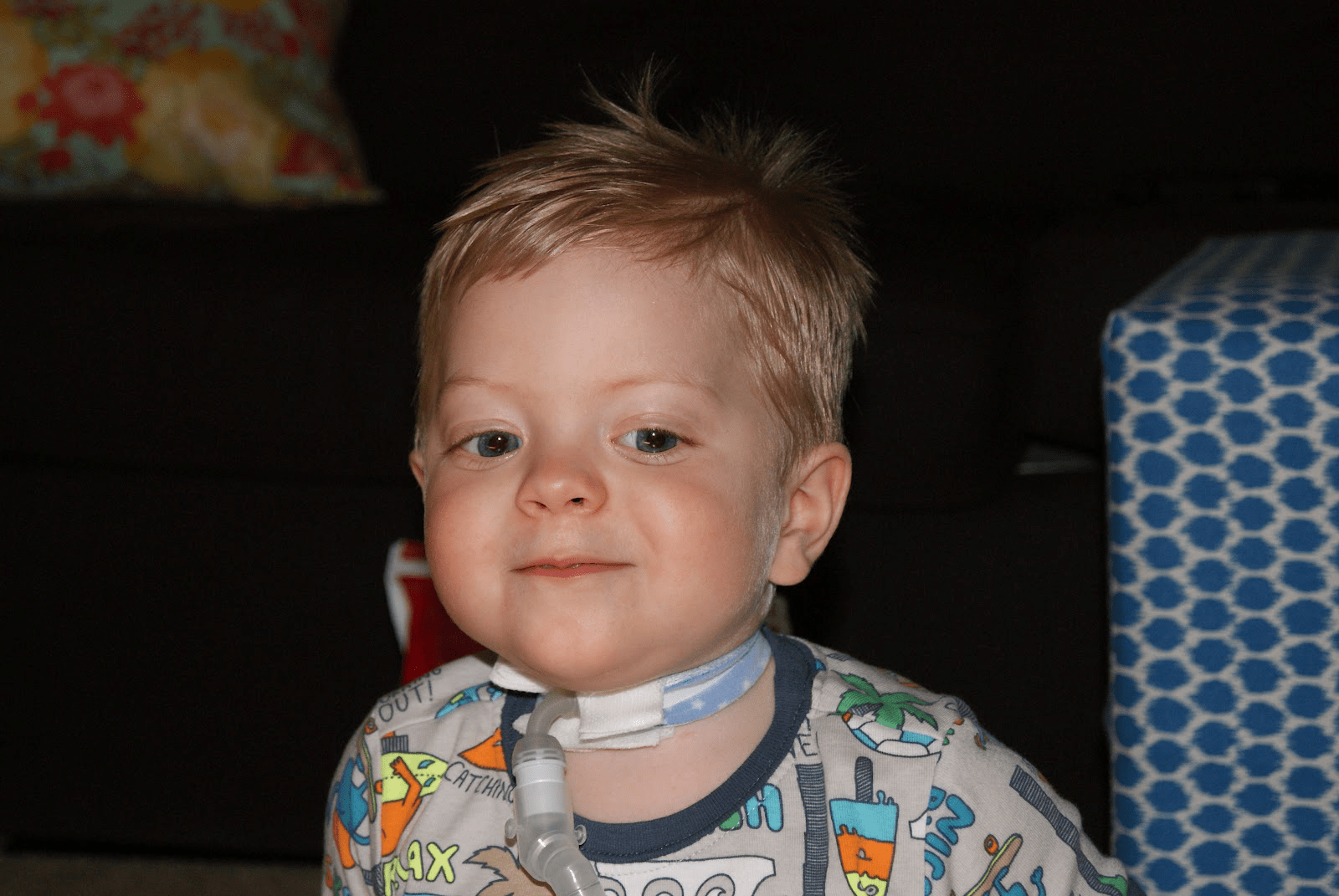 Freeing up hospital beds—how children can leave hospital sooner!