Podcast: Play in new window | Download
My name is Patrik Hutzel from intensivecareathome.com, where we provide tailor-made solutions at home for long-term ventilated adults and children with tracheostomies with 24-hour ICU critical care nurses, where we provide tailor-made solutions for long-term ventilated adults and children on BiPAP (Bilevel Positive Airway Pressure) and CPAP (Continuous Positive Airway Pressure) without tracheostomy with 24-hour critical care registered nurses, where we provide tailor-made solutions for long-term tracheostomy clients, adults and children, without ventilation with 24-hour ICU and critical care trained nurses, where we provide ventilation and tracheostomy weaning when medically appropriate, cough assist management at home, home TPN (Total Parenteral Nutrition), home IV (intravenous) antibiotics, IV fluids, IV potassium, magnesium and other electrolyte infusions, where we provide central line, PICC (Peripherally Inserted Central Catheter) line, Hickman’s line and port management at home, nasogastric tube, nasojejunostomy tube, PEG (Percutaneous Endoscopic Gastrostomy) and PEJ (Percutaneous Endoscopic Jejunostomy) tube, SPC (Suprapubic Catheter) and IDC (Indwelling Catheter) management at home, and where we provide palliative care services at home. We also provide Level 2 and Level 3 NDIS (National Disability Insurance Scheme) support coordination, as well as TAC (Transport Accident Commission) and WorkSafe case management.
The ICU team has called a goals of care meeting. If you’ve just heard those words, you’re probably scared. You probably don’t know exactly what that means. In today’s video, I’ll tell you what it usually means, how to prepare, the questions to ask, and the option that’s rarely raised in that meeting: bringing your loved one home with 24/7 ICU nurses with Intensive Care at Home. So stay with me.
Families in ICU ask me this almost every week: “The ICU team has called a goals of care meeting. What does it mean, and can we still fight for our loved one to come home?”
And before I answer that question, why would you listen to me? What makes me qualified to answer questions like today’s question? Well, I’ve worked in critical care and ICU nursing for over 25 years in three different countries, where I worked as a nurse manager for over 5 years in intensive care. And I started Intensive Care at Home here in Australia in 2012. That’s how long we’ve been operating for. I was also part of a pioneering Intensive Care at Home nursing service in Germany in the early 2000s. I worked there, saw it all happening, did the hands-on work, and then I brought the concept to Australia in 2012. And we’ve delivered millions of hours of Intensive Care at Home nursing, exclusively with intensive care nurses.
I also run a consulting and advocacy service for families in intensive care, and you can find more information at intensivecarehotline.com.
Before we go on: if the meeting hasn’t happened yet, talk to me and my team before it does, not after. Call me on one of the numbers on the top of our website at intensivecareathome.com, or if you’re in Australia, call me on my mobile phone number, 041 094 2230. If you’re in the US, in Canada, in the UK, in India, anywhere around the world, and you need help, call us on one of the international numbers on the top of our website at intensivecareathome.com, or book a call with me by clicking the schedule appointment button, or simply send me an email to [email protected]. And download our free Goals of Care Meeting Checklist, with 20 questions to ask the ICU team. The link is in the show notes below.
So what is a goals of care meeting? A goals of care meeting is a planned family meeting with the ICU team: the intensive care specialist, often a senior nurse, and sometimes a social worker. The stated purpose is to make sure that treatment matches what’s medically realistic and what matters to your loved one and your family.
But here’s something most families in intensive care don’t know. Even clinicians don’t agree on what “goals of care” really means. An Australian study found some use it for daily treatment goals, some for limiting treatment, and some for the patient’s wishes beyond ICU.
And in my extensive experience, when the ICU formally calls a goals of care meeting, they often want to talk about prognosis, a ceiling of care, a not for resuscitation order, a tracheostomy because your loved one can’t come off the ventilator, or moving to comfort care, which is a euphemism for palliative care, end-of-life care or hospice care.
Sometimes, after an open and honest conversation, comfort care or palliative care is the right decision, and the one your loved one would have wanted. That deserves respect. But very often, the options are framed as only two: a long-term stay in ICU, or withdrawing treatment.
But the good news is, here’s a third, proven option: a tracheostomy and going home with 24/7 critical care registered nurses with a third-party accredited Intensive Care at Home nursing service, Intensive Care at Home.
So how do you prepare for all of this? Never walk into a meeting unprepared.
- Request the medical records before the meeting. Nurses’ notes, doctor’s notes, specialist reports, CT (Computed Tomography) and MRI (Magnetic Resonance Imaging) scans, chest X-ray reports and films, ventilation settings, observation charts, arterial blood gases, weaning attempts, pathology results, lab results, medication lists and fluid balance charts. Leave no stone unturned.
- Know who the legal decision maker is, and whether there’s an advance care plan. The rules might differ slightly between states and countries.
- Write down what your loved one would want, or if you have it in writing from your loved one, bring it with you. Not what you want: what would they want?
- Bring a support person or an advocate to take notes. I’ve been in hundreds of meetings in intensive care with families, supporting them and advocating for them. I’ve also been in hundreds of family meetings in intensive care while I was working there. So I’ve seen both sides. I’ve been on both sides.
- Ask for the meeting agenda, and ask for the meeting to be documented, and for a copy of any goals of care or resuscitation form. I would not go into any meeting in intensive care without a documented meeting agenda and without having access to the medical records, period.
Next, the questions to ask, so you ask the right questions:
- What exactly is keeping my loved one in ICU right now?
- What’s a realistic prognosis, and how certain are you?
- What are all the options, not just two?
- Has a tracheostomy and home ventilation been considered?
- If they’re stable but ventilator dependent, why can’t they go home with Intensive Care at Home?
- Can we have a second opinion?
- Do we have to decide today? What are the timelines?
You don’t have to agree to anything in that room. You can ask for time, because time is often your friend.
Let’s now talk about your rights. What if you disagree? I’m not a lawyer, and this video is not legal advice, but in Australia, generally speaking, doctors are not obliged to provide treatment they consider non-beneficial, or if they perceive it as futile. However, you are entitled to information, to question, to ask for a second opinion, and you’re entitled to advocacy.
You can speak to patient liaison and ask about an interdisciplinary meeting. And if it can’t be resolved, each state in Australia has a tribunal or court process. So get legal advice and advocacy early. Most disagreements are resolved well before that, when families come with a realistic and proven alternative. A safe plan to go home with a third-party accredited and registered provider of Intensive Care at Home is a realistic and proven alternative.
That leads me to probably the most important question that you have: can my loved one go home? Can a ventilated and tracheostomy patient, adult or child, go home? In most cases, yes. Home ventilation and Intensive Care at Home have been standard in countries like Germany and Australia now for decades.
Our best practice and evidence-based Mechanical Home Ventilation Guidelines, which you can read on our website at intensivecareathome.com, say it’s very safe when the illness is stable, 24/7 funding for intensive care nursing at home is secured, and the right equipment and team are in place. And home can also mean palliative care at home, if that’s your loved one’s wish.
Let’s now look at the pilot in the cockpit, because who looks after your loved one? Our evidence-based and best practice mechanical home ventilation guidelines say home ventilation must only be provided by 24/7 critical care trained and ICU nurses.
I always compare it to flying an airplane. Your loved one has an ICU nurse in the cockpit right now, 24 hours a day. That doesn’t stop at home. It can’t stop at home, because otherwise, why would you need 24-hour intensive care nursing in a hospital?
You may be offered a delegated model of care. A registered nurse writes a care plan, trains disability support workers, and delegates the care to them. The RN (Registered Nurse) usually isn’t in the home. Under the NDIS, that’s allowed on paper. In my opinion, and in my extensive experience, it’s not safe for someone on a ventilator with a tracheostomy, and NDIS participants have died because the NDIS was only funding a delegated model of care. Therefore, they are responsible for some deaths.
You can delegate tasks, but you can’t delegate clinical judgment. A blocked tracheostomy tube or a disconnected ventilator is an emergency measured in minutes and seconds, and a phone call or an ambulance can be too late. Home has fewer resources than ICU, not more, and the risk ends up on the family.
Noah Johnston, a 22-year-old Australian on a ventilator with a tracheostomy, is a tragic example. As publicly reported in January 2026 in the Daily Telegraph, his ventilator connection came apart overnight on the 8th of December 2025, when no registered nurse was there, because the NDIS cut the overnight nurse funding. As we predicted at the time, as we shared with the NDIS at the time, and as his mother also shared with the NDIS at the time, Noah died. Do I have to say anything else?
Now, to all of the nurses watching: if you’re an RN, you’re registered with AHPRA (Australian Health Practitioner Regulation Agency) and regulated by the NMBA (Nursing and Midwifery Board of Australia). When you delegate, the NMBA standards say you keep the accountability for the decision to delegate, how it’s communicated, and the outcomes. The decision-making framework says delegation must be appropriate. You assess the risks, and whether the worker has the skills and supervision to do it safely. If it’s not safe, don’t delegate it. And the code of conduct expects you to speak up. If something goes wrong and there’s a notification, outcomes can range from a caution, to conditions, to suspension, and in serious cases, a tribunal can cancel registration.
So if you’re asked to sign off on a delegated care plan for a ventilated patient with a disability support worker, and you don’t think it’s safe, remember that the accountability sits with you and your registration.
So here is how Intensive Care at Home helps. To our knowledge, Intensive Care at Home is the only Intensive Care at Home nursing service in Australia in 2026 that is third-party accredited specifically for Intensive Care at Home nursing, with ISO (International Organization for Standardization) 9001:2015 certification for intensive care nursing services at home, including for ventilated and tracheostomy patients. We have built the intellectual property, and the policies and procedures, from scratch, and you can see our accreditation certificates on our website, which include our NDIS registration.
We provide 24/7 ICU nurses at home for adults and children with tracheostomies, on ventilation, BiPAP or CPAP. We help with discharge planning alongside your loved one’s specialists, home ventilation weaning when appropriate, palliative care, etc. And we understand funding options like the NDIS, TAC, WorkSafe, DVA (Department of Veterans’ Affairs), private health insurance, departments of health, etc. In our experience, it can cost around half of an ICU bed, and we operate in every state and territory in Australia.
And if you’re watching this and you’re in the US, in the UK, in Canada, India, wherever you are, and you are interested in Intensive Care at Home, please reach out to us as well at intensivecareathome.com.
So, the bottom line. A goals of care meeting is one of the most important conversations you’ll ever have about your loved one. Get the medical records. Get advocacy. Get us involved early on. Know who the decision maker is. Know what your loved one would want. Ask about every option, including going home with Intensive Care at Home. And if home is the goal, make sure there’s a pilot in the cockpit, i.e., 24/7 intensive care nurses.
Call us on one of the numbers on the top of our website. Remember, we also provide Level 2 and Level 3 NDIS support coordination, as well as TAC and WorkSafe case management. Call us on one of the numbers on the top of our website, or call me directly on my mobile phone, 041 094 2230, or book a call with me by going to the website and clicking on the schedule appointment button, or simply send me an email to [email protected].
Download the free checklist from the show notes. If this helped you, subscribe, comment, like, and share it with anyone with a loved one in ICU. This video is general information only and isn’t medical or legal advice. My name is Patrik Hutzel from intensivecareathome.com. Take care for now, and thanks for watching.
With all of that said, with Intensive Care at Home, we are currently sending our critical care nurses into the home 24 hours a day. Therefore, we are providing a genuine alternative to long-term stay in intensive care for:
- Ventilation
- Tracheostomy
- Home BiPAP (Bilevel Positive Airway Pressure), Home CPAP (Continuous Positive Airway Pressure) (https://intensivecareathome.com/quality-life-nursing-services-adults-children-requiring-non-invasive-mask-ventilation-cpap-bipap-andor-high-flow-oxygen-therapy/) ventilation without tracheostomy
- Tracheostomy care without ventilation
- Home TPN (https://intensivecareathome.com/tpntotal-parenteral-nutrition-administration-picc-line-central-line-care-community/)
- Home IV potassium
- Home IV magnesium
- Home IV antibiotics
- Home IV fluids
We’re providing:
- Cough assist management at home
- Ventilation weaning management at home
- Central line (http://intensivecarehotline.com/central-venous-lines/), PICC (Peripherally Inserted Central Catheter) line, Hickman’s line as well as port management at home
- Nasogastric tube, nasojejunostomy tube, PEG (Percutaneous Endoscopic Gastrostomy) (https://intensivecarehotline.com/your-loved-ones-treatment/peg-percutaneous-endoscopic-gastrostomy/), PEJ (Percutaneous Endoscopic Jejunostomy) tube management at home
- IDC (Indwelling Catheter) and SPC (Suprapubic Catheter) management at home
- Palliative care services at home
We’re also sending our critical care nurses into the home for emergency department bypass services. We have done so successfully as part of the Western Sydney Local Health District’s In Touch program, saving approximately $2,000 per patient that we keep at home instead of them going into an emergency department.
That also means we’re in a position to cut the cost of an ICU bed by around 50%. An intensive care bed costs between $5,000 to $10,000 per bed day depending on location. Intensive Care at Home costs approximately 50% of that, and we’re freeing up the most sought-after bed in the hospital, which is the ICU bed. Most importantly, we’re improving the quality of life for patients and their families, which is a win-win situation for all stakeholders.
Our Coverage and Accreditation
With Intensive Care at Home, we’re currently operating all around Australia, in all major capital cities, as well as in all regional and rural areas. We are an NDIS approved service provider all around Australia, TAC (Transport Accident Commission) and WorkSafe in Victoria as well as the Department of Veterans Affairs all around Australia.
We’re also ISO 9001:2015 accredited. Our clients and we as a service provider have also received funding through public hospitals, private health funds as well as departments of health.
We are the only service provider in Australia that has achieved third-party accreditation for Intensive Care at Home nursing in 2025. We have been achieving this high level of accreditation since 2012. No other provider in Australia has achieved the Intensive Care at Home level of accreditation in the community and has created more intellectual property when it comes to Intensive Care at Home nursing than we have.
This puts us in a position to employ hundreds of years of critical care nursing experience combined in the community. No other service provider in 2025 employs a higher skill level in the community than we do. And that enables us to look after the highest acuity adults and children in the community in Australia safely.
If You Need Help
If you’re at home already and you’re watching this or you’re stuck in an ICU and you realize that you don’t have the right level of support, I can give you many examples where we helped clients with funding, how we advocate for funding. We had to advocate successfully for funding from our first case study to many other case studies where we had to advocate successfully for funding with the right evidence of course because it is crystal clear that disability support workers for example or registered nurses without ICU experience cannot look after ventilated clients at home whether adults or children with or without a tracheostomy and it’s simply dangerous and negligent.
There are plenty of examples where clients with support worker models or even RN (registered nurse) models without ICU experience have died at home and I have evidence to back up everything that I’m saying here because it’s a bit like flying the airplane with a cabin crew instead of the pilot and it could simply be deadly.
This can be avoided by having simply 24-hour critical care nurses at home because our clients are at high risk of medical emergencies or worse without critical care nurses 24 hours. This is actually also evidence-based in the community and is documented in our evidence-based Mechanical Home Ventilation Guidelines on our website at intensivecareathome.com.
Think about it: in an intensive care unit in a hospital, you wouldn’t have support workers or general registered nurses looking after a critical care patient on a ventilator with a tracheostomy. So why would anyone in their right mind do that in a home care environment where there are fewer resources?
Clients that have found us have been at home long-term predictably and permanently with critical care nurses. Their alternative would have been to either die or stay in ICU long-term, and our clients don’t go back to ICU. They stay at home permanently and predictably and the insurance bodies save half of the cost of an ICU. But it’s a win-win situation all around.
We can do the same for you if you’re stuck in ICU or if you’re not safe at home, which includes the advocacy for funding and the network that goes along with it. We have always successfully advocated for our clients or we have the network to successfully advocate for you and for your family member, otherwise we wouldn’t be in business. The same again is applicable for those stuck in an ICU which is similar to many of our, if not most of our cases.
Our Support Coordination Services
This is also why we are providing Level 2 and Level 3 NDIS support coordination. We have a team of experienced NDIS support coordinators, and they have a wealth of knowledge. We’re also providing TAC case management and WorkSafe case management in Victoria with Lucy McCotter.
If you’re an NDIS support coordinator or a case manager or a social worker from another organization or a hospital watching this and you’re looking for nursing care for your participants, please reach out to us as well. If you’re looking for funding for nursing care for your participants and you don’t know how to go about it and how to advocate for it, what evidence to provide, I encourage you to reach out to us as well. We have the network to make that happen. We will help you with the right level of funding and with the right level of advocacy.
We’re also providing NDIS specialist nursing assessments done by critical care nurses with a legal nurse consulting background.
Join Our Team
If you are a critical care nurse and you’re looking for a career change and you want to join a very progressive, dynamic, successful, and high-performing team of critical care nurses in the community, we are employing hundreds of years of critical care nursing experience combined.
If you’re looking for a career change, we’re currently hiring for jobs for critical care nurses in Melbourne, Sydney, Brisbane, Albury-Wodonga, Bendigo, Geelong, Warragul, and also in Wyelangta in Victoria.
If you have worked in critical care nursing for a minimum of two years, adult ICU, pediatric ICU, ED and you have already completed a postgraduate critical care nursing qualification, we will be absolutely delighted hearing from you.
I have a disclaimer though: Because we are offering tailor-made solutions for our clients which includes regular staff, our clients do also want the same staff coming over and over again because they are so vulnerable and so special. That’s why we need regular, reliable staff.
If you’re looking for agency work where you can come and go, this will not be the right fit for you. We’re looking for consistency and our clients are looking for consistency. So please only apply with us if you can give us regular and consistent availabilities for shifts and you’re really keen on building relationships with us and with our clients. Reliability is also a must.
For Medical Professionals and Healthcare Executives
If you’re an intensive care specialist or an ED specialist, we also want to hear from you. We’re currently expanding our medical team as well.
We can also help you eliminate your bed blocks in your ICU and in your ED for your long-term patients or for your regularly readmitting patients with our critical care nursing team at home. We’re here to help to take the pressure off your ICU and ED beds. In most cases, you won’t even pay for it. Even if you do pay for it, it is so much more cost-effective than what you’re paying for in ICU and ED settings, and you get the same level of care and simply more patient and family satisfaction because you also want to partner with your consumers.
If you are a hospital executive watching this, we can help you free up your ICU and ED beds.
International Support
If you’re in the U.S. or in the UK and you’re watching this and you need help, we want to hear from you as well. We can help you there privately with one-on-one consulting and with hiring nurses privately.
Once again, our website is intensivecareathome.com. Call us on one of the numbers on the top of our website or simply send us an email to [email protected].
If you like my videos, click the like button, subscribe to my YouTube channel for regular updates for families with Intensive Care at Home and intensive care. Click the like button, click the notification bell, and share this video with anyone who has a family member in intensive care long-term or needs to see this.
Thank you so much for watching.
This is Patrik Hutzel from intensivecareathome.com and I’ll talk to you in a few days.
Take care for now.
RELATED LINKS:
 Best practice guidelines for Long-term ventilated Adults& Children with Tracheostomy at Home
Going HOME from Intensive Care after a STROKE, a REAL WORLD example!
5 CONFRONTING QUESTIONS YOU NEED TO ASK WHEN LONG-TERM VENTILATED ADULTS& CHILDREN WITH TRACHEOSTOMIES ARE IN INTENSIVE CARE!
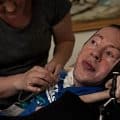 Dion’s fight to overcome muscular dystrophy so he can continue helping others
 How ICU/PICU nurses in the community help the health system cutting the cost of intensive care by 50%!