Podcast: Play in new window | Download
“Can tracheostomy patients go home safely? Intensive Care at Home solutions.”
Are you wondering if your loved one with a tracheostomy can go home safely after ICU? Maybe they’ve been discharged too early, bounced back into ICU or into hospital, or you’ve realized that home health nursing isn’t enough. Well, you’re not alone, and today, I’m going to show you exactly how Intensive Care at Home can help you, and your loved one to go safely home instead of staying in ICU or even going into a nursing home.
My name is Patrik Hutzel from intensivecareathome.com, where we provide tailor-made solutions for long-term ventilated adults and children with tracheostomies, but we also provide tailor-made solutions for adults and children on BIPAP (Bilevel Positive Airway Pressure), CPAP (Continuous Positive Airway Pressure) without tracheostomy at home, tracheostomy care at home without ventilation, Home TPN (Total Parenteral Nutrition), home IV potassium, home IV magnesium, Home IV antibiotic infusions, central line, PICC (Peripherally Inserted Central Catheter) line, Hickman’s line, port management at home, cough assist management at home, ventilation weaning at home, nasogastric tube, nasojejunostomy, PEG (Percutaneous Endoscopic Gastrostomy), PEJ (Percutaneous Endoscopic Jejunostomy) tube management at home, as well as palliative care services at home.
If you need help right now with a loved one in intensive care or at home, on a ventilator or tracheostomy, you can visit us at intensivecareathome.com.
So recently, one of our consulting clients, Sophia, reached out again about her dad. He suffered a heart attack, spent months in ICU, had a tracheostomy, and was eventually discharged home prematurely, but the home nursing service was not equipped to manage his care. Of course he bounced back and forth between ICU and home several times. In the process, developed a stage 4 to stage 5 pressure injury, and is now facing surgery because of poor hospital and home nursing management.
Sophia said, “You were right, Patrik, the home health nursing service could not manage the tracheostomy, let alone his complex care needs.” Sadly, this story is not uncommon and that’s why I’m sharing it today.
So, why non-specialized home health nursing often fail in those situations? Standard or general home nursing or home health services or agencies simply do not have ICU trained nurses. They don’t know how to manage tracheostomy safely, suctioning, elective or emergency decannulations, secretion protocols, suctioning, inner cannula changes, elective tracheostomy changes, dressing changes, tape changes, they can actually be life or death things that need to be carried out by the bedside nurse, and they can only be carried out safely by intensive care nurses and critical care nurses with a minimum of 2 years ICU and critical care nursing experience, that is evidence-based. You can check that out on our evidence-based Intensive Care at Home Mechanical Home Ventilation Guidelines that I’ll link towards in the written version of this blog.
Now also, it comes down to preventing pressure injuries, Sofia’s dad has pressure injuries, detecting early signs of respiratory distress or infection, provide rehabilitation, mobilization, and physiotherapy support. Without 24/7 intensive care registered nurses or CCRNs, patients like Sophia’s dad end up right back in ICU, and that’s where Intensive Care at Home makes all the difference.
So, let’s look at the solution, which is Intensive Care at Home. At Intensive Care at Home, we provide 24/7 ICU level nursing care for tracheostomy and ventilated patients in the comfort of their own home. We follow the evidence-based Mechanical Home Ventilation Guidelines that you can find on our website at intensivecareathome.com to ensure safety and quality of care equal to an ICU setting.
Our service includes tracheostomy and ventilation management, wound care and pressure injury prevention, mobilization and physiotherapy support, 24/7, of course, emergency response and monitoring, seamless communication with families, hospital teams. We don’t just get people home, we keep them at home safely, predictably, and permanently.
So what’s next for Sofia’s dad? For Sofia’s dad, the next steps are clear: complete his pressure sore surgery and wound healing in hospital, and then engage Intensive Care at Home for a clinical assessment and for a seamless transition to home with full tracheostomy and wound management by CCRNs 24/7.
We’ll also help Sophia rejoin our membership program with membership for families of critically ill patients in intensive care that I’ll link towards in this video, where we review medical records, liaise with doctors, with hospitals, and plan the discharge process properly.
If you’re in a similar situation, your loved one is in ICU, has a tracheostomy, or you’re struggling with home healthcare in general, don’t wait for another setback. Go to intensivecareathome.com, go to our contact page or simply contact us on one of the numbers on the top of our website or send us an email to [email protected].
Our team of critical care nurses and doctors can help you create a safe home care plan so your loved ones stays out of ICU permanently and predictably and out of hospital, of course, and finally, they can be where they belong, which is at home.
Now, with Intensive Care at Home, we are currently sending our ICU and critical care nurses into the home, 24 hours a day. We are providing the following:
- Home care services for ventilated adults & children with tracheostomies with critical care nurses 24 hours a day
- Genuine alternative to a long-term stay in intensive care or at long-term acute care
- Tracheostomy care for clients without ventilation
- Home care services for patients on non-invasive ventilation such as Home BIPAP (Bilevel Positive Airway Pressure), Home CPAP (Continuous Positive Airway Pressure)
- Home TPN (Total Parenteral Nutrition), which is also known as IV nutrition
- Home IV potassium and home IV magnesium infusions, IV fluids, and IV antibiotics
- Providing central line management, PICC (Peripherally Inserted Central Catheter) line management, Hickman’s line management, as well as port management at home.
- Providing nasogastric tube and PEG (Percutaneous Endoscopic Gastrostomy) tube management at home
- Use cough assist machines for our clients for airway clearance at home
- Palliative care services at home
- Ventilator weaning at home
We’re also sending our critical care nurses into the home for emergency department bypass services. We have done so successfully as part of the Western Sydney Local Area Health District, their in-touch program, saving approximately $2,000 per patient that we keep at home, instead of them going to an emergency department.
That also means, we’re also in a position to cut the cost of an intensive care bed by around 50%. An intensive care bed costs between $5,000 to $6,000 per bed day. Our services costs between $2,500 to $3,000 per bed day, and we’re freeing up the most sought-after bed in the hospital, which is the ICU bed. Most importantly, we’re improving the quality of life for patients and their families, which is a win-win situation for all stakeholders. Of course, quality of life is much improved surrounded by families and by a team of dedicated intensive care nurses in the home care setting instead of in an intensive care unit.
With Intensive Care at Home, we are currently operating all around Australia in all major capital cities as well as in all regional and rural areas. We work with NDIS (National Disability Insurance Scheme) clients all around Australia, TAC (Transport Accident Commission) and WorkSafe in Victoria, Department of Veteran Affairs (DVA) all around Australia. Our clients and we, as a service provider, have also received funding through public hospitals, private health funds, as well as Departments of Health.
We are having policies and procedures for Intensive Care at Home nursing and we’ve built all the intellectual property for Intensive Care at Home since 2012. No other provider in Australia has created more intellectual property when it comes to Intensive Care at Home nursing than we have. This puts us in a position to employ hundreds of years of critical care nursing experience combined in the community. No other service provider in 2025 employs a higher skill level in the community than we do, which enables us to look after the highest acuity adults and children in the community in Australia safely.
If you’re at home already and you’re watching this, or you’re stuck in an ICU long-term, or if you’re going to the hospital and ED all the time, and you realize that you don’t have the right level of support at home, or if you are stuck in an ICU, I’ll give you a real-world example today, how we can help you.
One of our first clients when we first got started in 2012 was a client who was at home initially on a ventilator with a tracheostomy with a support worker model 24/7. Of course, support workers are not equipped to look after a client at home on a ventilator with a tracheostomy. That is dangerous and it’s simply negligent. Having support workers looking after a client at home on a ventilator with a tracheostomy is like flying the airplane with a cabin crew instead of the pilot. Because anyone on a ventilator with a tracheostomy is at very high risk of medical emergencies 24/7, or even at high risk of dying if they don’t have a team of dedicated critical care nurses looking after them 24/7 at home. This is actually evidence-based and is documented in our Mechanical Home Ventilation Guidelines that you can find on our website at intensivecareathome.com.
Think about it, in an intensive care unit in a hospital, you wouldn’t have support workers looking after your critically ill loved one or after any critically ill patient on a ventilator with a tracheostomy. So, why would anyone in their right mind do that in the home care environment in the community?
So, this client at the time found out about us eventually, and the ICU that he was basically living in also knew about us and eventually reached out to us. We were proving our concept with this client very fast. When we worked with this particular client, we sent him critical care nurses, 24 hours a day. He never ever went back into ICU ever again, as long as we were working with this client.
We can do the same for you if you’re not safe at home and help you with keeping you at home predictably. Otherwise, we would not be in business. Again, the same is applicable for those stuck in an ICU, similar to this case study that I’ve just given you, or if you’re going back to ED all the time, please reach out to us. We can help you with taking you through the right steps, including how to get funding with different funding bodies.
This is also why we are providing NDIS Support Coordination. We have a team of NDIS Support Coordinators, and they have a wealth of knowledge. I’ve done an interview with Amanda Riches (one of our NDIS support coordinators, and I’ll put a link to an interview with Amanda in the written version of this blog. We’re also providing TAC case management and WorkSafe case management in Victoria with Lucy McCotter.
If you’re an NDIS support coordinator or a case manager from another organization watching this, and you’re looking for nursing care for your participants, please reach out to us as well. If you need more evidence for nursing care, we are also writing NDIS nursing assessments with legal nurse critical care consulting nurses.
If you are a critical care nurse and you’re looking for a career change and you want to join a very progressive, dynamic, and high performing team of critical care nurses in the community, we’re employing hundreds of years of critical care nursing experience combined. You can join this high performing team if you are a critical care nurse.
If you are looking for a career change as a critical care nurse, we’re currently hiring for jobs for critical care nurses in Melbourne, Sydney, Brisbane, in Albury, Wodonga, in Bendigo, in Geelong, in Warragul in Victoria. If you have worked in critical care nursing for a minimum of 2 years pediatric ICU, ED, and you have already completed a postgraduate critical care nursing qualification, we will be delighted hearing from you.
I do have a disclaimer though, because we are offering a tailor-made solution for our clients, which includes regular staff, our clients also do want the same staff coming over and over again because they are so vulnerable and so special. That’s why we need regular staff. So, if you’re looking for agency work, where you can come and go, this will not be the right fit for you. We are looking for consistency and our clients are looking for consistency. So please, only apply with us if you can give us regular and consistent availabilities for shifts, and you’re really keen on building solid relationships with us and with our clients.
If you’re an intensive care specialist or an ED specialist, we also want to hear from you. We’re currently expanding our medical team as well. We can also help you eliminate your bed blocks in your ICU and in your ED for your long-term patients, or for your regularly readmitting patients with our critical care nursing team at home. We’re here to help you take the pressure off your ICU and ED beds. In most cases, you won’t even pay for it. Even if you do pay for it, it is so much more cost-effective than what you’re paying for in ICU and ED, and you get the same level of care.
If you’re a hospital executive watching this and you have bed blocks in your ICU, ED, and respiratory wards, or for home TPN, please reach out to us as well. We can help you eliminate your bed blocks very fast.
If you’re in the U.S. and in the U.K. and you’re watching this, and you need help, we want to hear from you as well. We can help you there privately with one-on-one consulting and with hiring nurses privately.
Once again, our website is intensivecareathome.com. Call us on one of the numbers on the top of our website, or simply send us an email to [email protected].
If you like my videos, subscribe to my YouTube channel for regular updates for families with Intensive Care at Home and intensive care. Click the like button, click the notification bell, share this video with your friends and families, and comment below what you want to see next or what questions and insights you have from this video.
Thank you so much for watching.
This is Patrik Hutzel from intensivecareathome.com and I will talk to you in a few days.
Take care for now.
RELATED LINKS:
 Introduction
Tracheostomy and weaning off the ventilator in Intensive Care, how long can it take?
From and with “HIGH TECH” medicine to “HIGH TOUCH” INTENSIVE HOME CARE services!
ABC reports, Home health care “cheaper and safer”!
Introduction
Tracheostomy and weaning off the ventilator in Intensive Care, how long can it take?
From and with “HIGH TECH” medicine to “HIGH TOUCH” INTENSIVE HOME CARE services!
ABC reports, Home health care “cheaper and safer”!
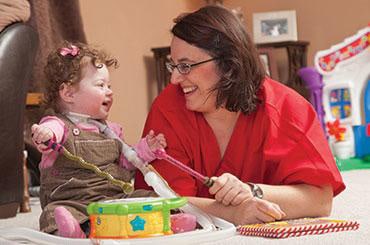 How to transition a ventilated adult or child from Intensive Care to a home care environment!